
The measure significantly expands Argentina’s immigration enforcement powers by allowing certain forms of speech or conduct to affect visa eligibility and residency status.
The government said the decree was introduced after weeks of criticism directed at Argentina following the country’s World Cup victory.
Government Cites Growing Hostility
Argentina’s presidential office said the decree responds to what it described as increasing hostility from celebrities, rival football supporters and social media users following refereeing controversies during the World Cup.

According to the government, criticism broadened beyond the national football team to target Argentina and its citizens.
The decree amends Argentina’s immigration law by allowing authorities to refuse entry, revoke visas or deport foreigners found to have promoted hatred against Argentines through spoken or written statements or by desecrating national symbols.
“In light of recent displays of hostility toward the Argentine Republic and Argentines, the national government reaffirms that the defense of the nation, its citizens and its symbols is non-negotiable,” Milei’s office said.
“Anyone who attacks the Argentine Republic is not welcome in our country.”
Immigration Policy Continues to Tighten
The decree marks another shift in Argentina’s immigration policy under Milei.
Argentina’s Constitution encourages immigration, and the country has traditionally offered broad civil rights to foreign residents along with relatively accessible pathways to legal residency, public education and health care.
Since taking office, Milei has introduced stricter immigration measures, including tighter residency requirements and expanded authority to deport foreigners accused of criminal offenses.
■ Related News



His administration has frequently presented those policies using rhetoric similar to that of U.S. President Donald Trump’s administration.
The latest decree follows heightened international attention after Argentina’s World Cup victory.
According to the supplied material, criticism intensified after a post-final altercation involving Argentine players and staff, as well as online campaigns calling for Argentina’s exclusion from future World Cup tournaments.
FIFA has opened disciplinary proceedings against the Argentine Football Association over the post-match confrontation, alleged racist abuse and fan misconduct.
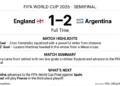
The organization is also investigating players’ display of a banner asserting Argentina’s claim to the Falkland Islands after the team’s semifinal victory over England.
Critics Question Scope of the Decree
Milei, a close political ally of Trump, has described the criticism as part of a coordinated “anti-Argentina campaign.”
According to the supplied material, he alleged without presenting evidence that the governments of Brazil and Mexico, together with the U.S. Democratic Party, financed efforts to undermine his administration.
Those allegations contributed to a diplomatic dispute with Brazil, which recalled its ambassador following Milei’s remarks and comments directed at Brazilian President Luiz Inácio Lula da Silva.
The decree states that ideological disagreement and political, academic and civic criticism protected under Argentina’s Constitution remain exempt from the new penalties.
However, it does not explain how immigration authorities will distinguish protected speech from prohibited hate speech.
The decree also does not specify whether officials will review foreigners’ social media activity or how broadly the new powers will apply to tourists, temporary visitors or long-term residents.
Debate Over Free Expression
Opposition lawmaker Maximiliano Ferraro questioned both the legal clarity and practical enforcement of the measure.
“Who and how will apply those grounds? How will it be determined that a person has engaged in such ambiguous assumptions as a ‘hate message’ toward the country or our population?” Ferraro said.
He argued that the decree represents a political gesture rather than a necessary policy change.
The measure is expected to fuel further debate over the balance between protecting national interests and safeguarding freedom of expression, while also drawing renewed attention to Argentina’s evolving immigration policy and its diplomatic implications.
This report is based on reporting by The Associated Press.