CARACAS, Venezuela — Two powerful earthquakes struck off Venezuela’s Caribbean coast on Wednesday evening, triggering building collapses, infrastructure disruptions and widespread panic as residents rushed into the streets in the capital and other cities across the country.
The back-to-back quakes, among the strongest recorded in Venezuela in more than a century, were felt across northern South America and parts of the Caribbean, prompting evacuations and emergency response efforts in multiple countries.
Authorities were still assessing the full extent of the damage several hours after the earthquakes, while officials worked to determine whether there were casualties or major infrastructure losses.

Twin Quakes Shake Coastal Region
According to the U.S. Geological Survey, the first earthquake measured magnitude 7.2 and struck west of the coastal community of Morón shortly after 6 p.m. local time. The quake occurred at a depth of approximately 22 kilometers (14 miles).
Roughly one minute later, a second and stronger earthquake measuring magnitude 7.5 struck near the same area at a shallower depth of about 10 kilometers (6 miles).
The epicenters were located along Venezuela’s Caribbean coastline, west of Caracas.
The close timing and strength of the earthquakes intensified shaking across a wide geographic area, causing concern among residents and emergency officials.
Caracas Experiences Structural Damage
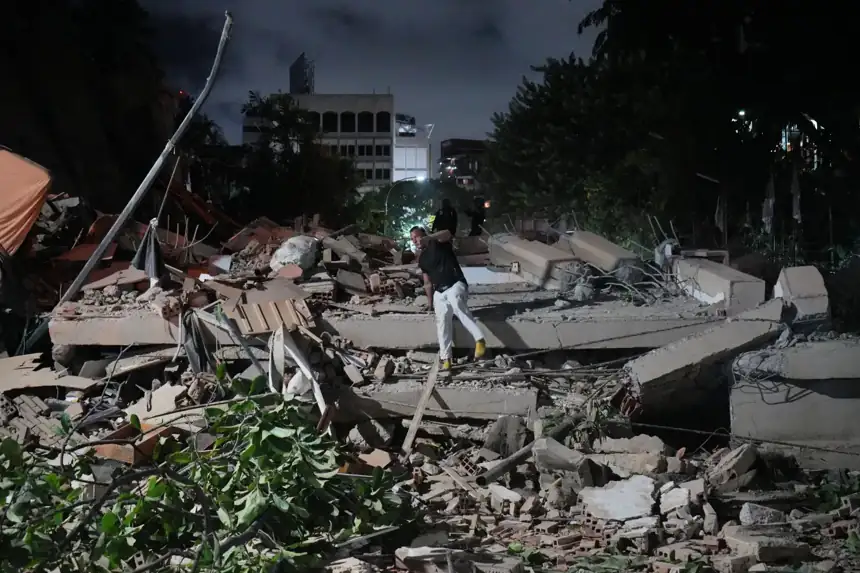
In Caracas, people evacuated apartment buildings, offices, restaurants and commercial establishments as structures swayed during the prolonged shaking.



Witnesses reported seeing collapsed walls, damaged buildings and clouds of dust rising from several neighborhoods. Debris littered some streets, while fallen utility poles and damaged infrastructure complicated movement around parts of the city.
Several districts experienced interruptions to electrical service and mobile communications, making it difficult for families to contact relatives and assess their safety.
Residents remained outdoors for hours after the earthquakes, fearing aftershocks and additional structural failures.
Many gathered in open spaces with family members and pets as emergency crews moved through affected areas.
Officials Launch Emergency Response
Interior Minister Diosdado Cabello said the earthquakes were felt in multiple Venezuelan states and acknowledged reports of significant damage in parts of Caracas.
He urged residents to follow emergency protocols and remain cautious because aftershocks could further weaken already damaged buildings.
Authorities deployed emergency personnel, rescue teams and medical responders to affected locations while conducting damage assessments.
Acting President Delcy Rodríguez prepared a national address following the disaster, although some political figures criticized the delay in providing detailed public information during the initial hours after the earthquakes.
Opposition leaders called for clear communication regarding rescue efforts, damage assessments and any reports of injuries or fatalities.
Tremors Felt Across the Region
The earthquakes were felt far beyond Venezuela’s borders.
In neighboring Colombia, residents in Caribbean and northeastern regions reported noticeable shaking, though authorities said there were no immediate reports of injuries or significant damage.
Brazilian media reported evacuations in several Amazon-region cities, including Manaus, Belém and Macapá, located more than 1,700 kilometers (1,050 miles) from the epicenter.
The widespread impact highlighted the extraordinary strength of the seismic event.
Tsunami Alerts Issued
The earthquakes also prompted tsunami monitoring and precautionary alerts in parts of the Caribbean.
The U.S. Pacific Tsunami Warning Center issued alerts for some island territories following the earthquakes, while authorities in several Caribbean nations monitored coastal conditions.
Officials in Colombia stated that the country’s Caribbean coastline was not at risk of a tsunami.
Emergency management agencies continued evaluating ocean conditions and monitoring for potential aftershocks.
Rare Event for Venezuela
Although Venezuela lies near several geological fault systems, major earthquakes of this magnitude are relatively uncommon compared with countries along Latin America’s Pacific coast.
Nations such as Chile, Peru and Mexico experience frequent seismic activity because they sit along the Pacific Ring of Fire, one of the world’s most active earthquake zones.
The twin earthquakes on Wednesday rank among the most powerful seismic events recorded in Venezuela in modern history and are likely to prompt renewed discussion about disaster preparedness and infrastructure resilience in the country.
As rescue operations continued late into the evening, authorities urged residents to remain vigilant and follow official safety guidance while engineers assessed damaged structures and emergency crews searched affected areas.
Tags: Venezuela, Caracas, Earthquake, Natural Disaster, Caribbean, Morón, Seismic Activity, Colombia, Brazil, Tsunami Alert, Emergency Response, South America