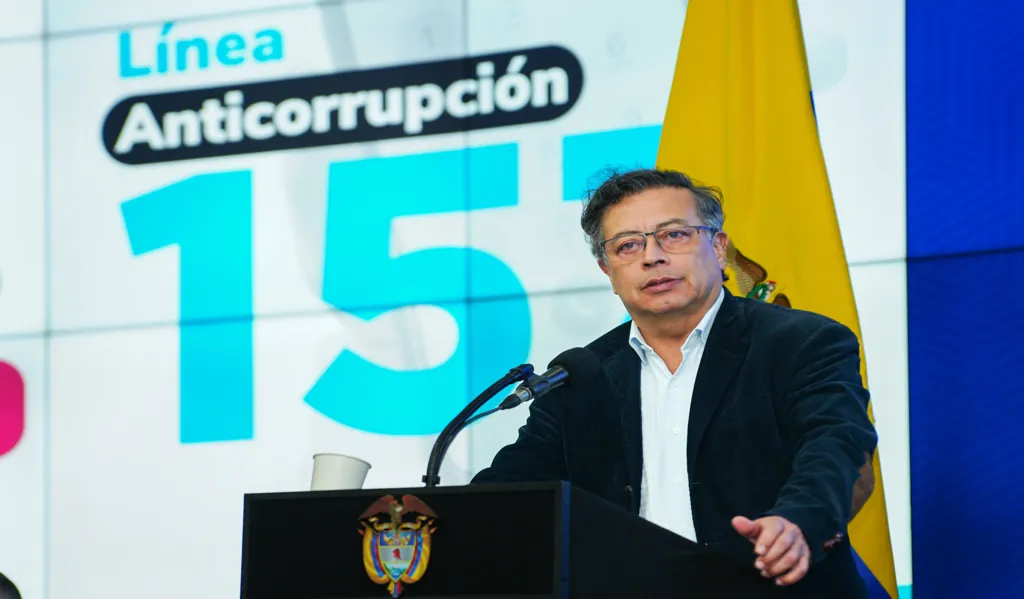
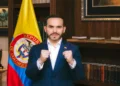
BOGOTA, Colombia – Colombian President Gustavo Petro renewed his allegations of election fraud on Monday, rejecting the certified results of the country’s June presidential election just days before President-elect Abelardo de la Espriella is scheduled to be sworn into office.
Speaking during a news conference, Petro claimed that thousands of election tally sheets were altered after vote totals had been electronically transmitted to Colombia’s National Registry, the agency responsible for administering the country’s elections.
Colombia’s electoral authorities and international election observers have rejected those allegations. Election officials certified in late June that conservative lawyer Abelardo de la Espriella defeated Petro ally Iván Cepeda by about 250,000 votes. De la Espriella is scheduled to begin a four-year term during Friday’s inauguration before a joint session of Congress.

Petro Rejects Certified Election Results
Petro has refused to accept the official outcome since the election concluded.
On Monday, he described the vote as an “obscure” process that he alleged had been influenced by foreign actors. He also argued that election authorities failed to release metadata associated with scanned tally sheets published online for public review.
“We are facing a profound institutional problem,” Petro said. “And it’s the inauguration of an illegitimate president.”
Despite those claims, Colombia’s legal framework provides no mechanism for preventing the inauguration once electoral authorities have formally certified the results.
Analysts Warn of Rising Political Polarization
Political analysts said Petro’s continued allegations could deepen divisions in Colombia and undermine confidence in the incoming administration among his supporters.
Iván Cepeda said he plans to organize demonstrations against the incoming government and will not recognize De la Espriella as Colombia’s president unless several conditions are met, including that the president-elect renounce his dual U.S. citizenship.
Petro also called on residents in rural areas to establish what he described as “liberation guards” to resist military units he alleged were cooperating with criminal organizations.
Andrés Macías, a political science professor at Colombia’s Externado University, warned that such rhetoric could be interpreted as encouraging civilians to organize armed groups in regions already affected by violence involving security forces, criminal organizations and rebel movements.
Presidential Transition Set to Proceed
Petro said he intends to continue challenging the legitimacy of the election after leaving office.
“I’ve been told to behave well,” Petro said. “But as a democrat I cannot accept this electoral fraud.”
Despite the dispute, Colombia’s constitutional transition of power is expected to proceed as scheduled, with President-elect Abelardo de la Espriella set to assume office on Friday following the official certification of the election results.
This report is based on reporting by The Associated Press.