SAO PAULO, Brazil – Brazilian President Luiz Inácio Lula da Silva officially launched his reelection campaign on Sunday, placing national sovereignty and economic policy at the center of his bid as his governing party warned of growing foreign political influence ahead of October’s presidential election.
Lula secured the endorsement of the governing Workers’ Party during its national convention, confirming what is expected to be his seventh presidential campaign and likely his final run for Brazil’s highest office.
Addressing party delegates, the 80-year-old president pledged to strengthen Brazil’s defense industry, protect the country’s strategic mineral resources and reinforce national sovereignty.

“No Chinese, no American, no French will touch” Brazil’s rare mineral reserves without respecting the country’s sovereignty, Lula said, adding that his government must be “much more daring” in pursuing national development.
Workers’ Party Raises Foreign Influence Concerns
Party leaders used the convention to warn about what they described as growing attempts by foreign political figures to influence Brazil’s election.
Workers’ Party chairman Edinho Silva said the outcome of the vote would have consequences beyond Brazil, arguing that it could shape the political direction of Latin America.
Lula enters the campaign with stronger polling numbers than he had six months ago.
His administration has promoted tax relief for lower-income Brazilians and introduced a debt forgiveness program that party officials say has gained broad public support.
■ Related News




Campaign Begins Amid Diplomatic Tensions
Lula is expected to face Sen. Flávio Bolsonaro, the son of former President Jair Bolsonaro.
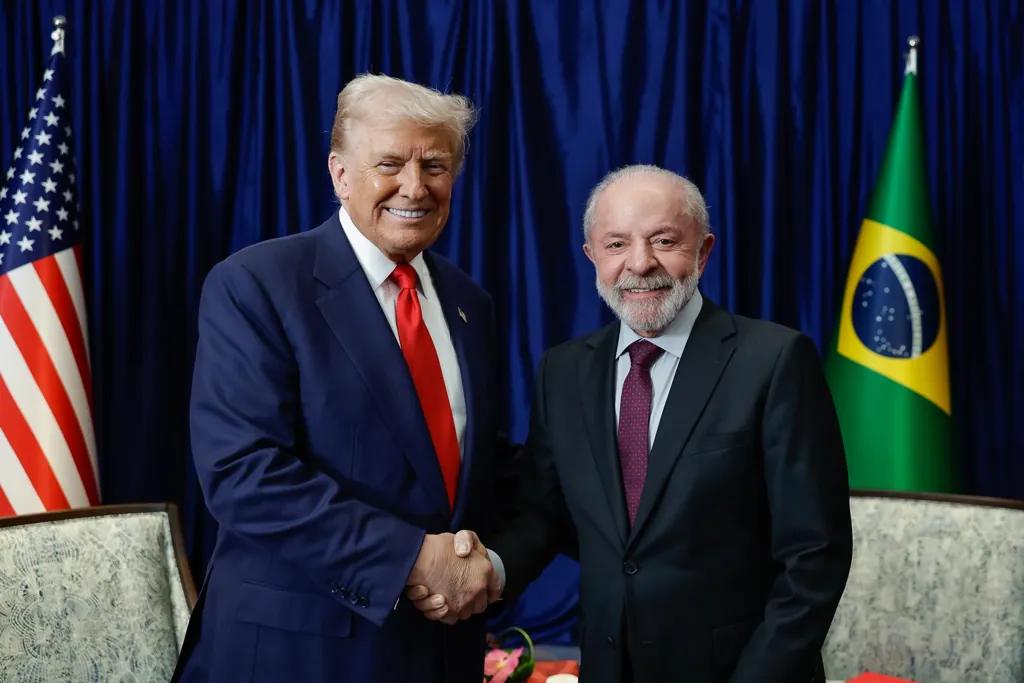
According to the Associated Press, Flávio Bolsonaro has received public support from members of U.S. President Donald Trump’s administration, Argentine President Javier Milei and Israeli Prime Minister Benjamin Netanyahu.
Jair Bolsonaro, a longtime ally of Trump, is serving a 27-year sentence under house arrest after being convicted over an attempted coup.
The Workers’ Party has also warned about potential online influence campaigns, including automated social media activity that it says could affect voters or undermine confidence in Brazil’s electronic voting system.
Vice President Geraldo Alckmin, who will again serve as Lula’s running mate, defended the country’s voting system during the party convention.
“The electronic voting system is so good that it doesn’t take votes from Argentines and Americans,” Alckmin said, referring to Milei and Trump.
Foreign Relations Become Campaign Issue
Brazil’s election campaign is unfolding alongside growing diplomatic tensions with several countries.
The Trump administration recently imposed new tariffs on Brazilian exports and redesignated two Brazilian criminal organizations as terrorist groups.
Legal experts cited by the Associated Press said the measures could affect companies operating in Brazil and potentially create new avenues for foreign involvement.
Both actions followed a visit by Flávio Bolsonaro to the White House and the U.S. Department of State.
Relations with neighboring Argentina have also become strained.
On July 25, President Javier Milei attended the Liberal Party convention in São Paulo, where he criticized Lula and the Brazilian Supreme Court justice who oversaw Jair Bolsonaro’s trial, triggering a diplomatic dispute.
Netanyahu also released a video expressing support for Lula’s political opponent.
Meanwhile, Lula has continued to emphasize Brazil’s independent foreign policy. He recently held an extended telephone conversation with Chinese President Xi Jinping as Brazil seeks to strengthen trade and economic ties with one of its largest trading partners.
Supporters of the president say another Lula administration could help advance new trade agreements within the Mercosur bloc, which includes Brazil, Argentina, Paraguay and Uruguay.
Election Security Remains a Key Issue
Brazil’s electronic voting system has again emerged as a central campaign issue.
Like his father, Flávio Bolsonaro has repeated unfounded claims questioning the reliability of electronic voting. Brazilian electoral authorities have consistently rejected those allegations.
The dispute has also affected Brazil’s diplomatic relations.
In July, Brazil’s Foreign Ministry denied visas to two U.S. Department of State officials amid concerns they intended to promote similar claims about the country’s electoral system. The U.S. State Department denied the allegation.
This report is based on reporting by The Associated Press.