CARACAS, Venezuela — A Venezuelan merchant who survived both the catastrophic 1999 Vargas Tragedy and the powerful earthquakes that recently struck La Guaira says he will never return to the coastal state after escaping death for a second time, according to The Associated Press.
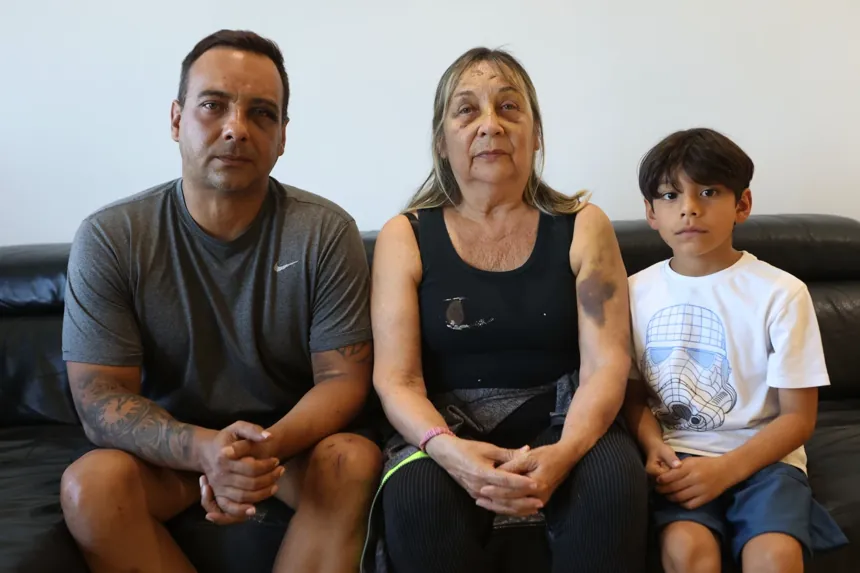
Grian Serrano, 46, was rescued alongside his 8-year-old son and his 69-year-old mother after their eight-story apartment building collapsed in the city of Caraballeda, one of the areas hardest hit by the magnitude 7.2 and 7.5 earthquakes.
Bruised but alive, Serrano described their survival as extraordinary after the family became trapped beneath concrete and twisted steel.

“It is a miracle from God,” Serrano said, recalling how he dug through debris with his bare hands in complete darkness before two passersby helped free his son and mother.
Thousands Affected by Powerful Earthquakes
Government authorities said the twin earthquakes killed more than 1,700 people and injured over 5,000.
Hundreds of buildings either collapsed or sustained significant structural damage, with La Guaira suffering the greatest destruction. Damage was also reported across Caracas and the neighboring states of Carabobo, Miranda, Aragua and Yaracuy.
La Guaira, located about 30 kilometers (19 miles) north of Caracas, is one of Venezuela’s most strategically important states. It is home to the country’s main international airport and second-largest seaport, while much of its population depends on tourism, commerce and transportation-related industries.
Memories of the 1999 Vargas Tragedy Return
The recent disaster revived painful memories for Serrano of Dec. 15, 1999, when torrential rainfall triggered catastrophic floods and landslides that devastated the region.


He recalled being awakened by screams after a nearby river overflowed, watching from his apartment window as floodwaters swept away trees, enormous boulders and vehicles carrying people desperately trying to escape.
Serrano fled to the roof of his apartment building with his mother, sister and their household employee, fearing the structure would collapse under the force of the rushing water and debris.
When the rain finally eased, the family crossed mud-filled streets littered with fallen trees and rocks to reach relatives living nearby.
According to Ángel Rangel, who directed rescue operations as head of Venezuela’s Civil Protection agency during the disaster, the 1999 floods and landslides claimed 782 lives, left another 2,000 people missing and affected approximately 250,000 residents.
Expert Points to Geological Risks
Still shaken after surviving two major disasters in the same region, Serrano believes La Guaira is cursed.
“It isn’t normal for such horrible things to happen in the same place,” he said.
Disaster specialist Ángel Rangel offered a scientific explanation, saying many buildings in La Guaira were constructed on ground formed over centuries by sediment washed down from the surrounding Ávila mountain range.
He said such terrain presents significant risks for construction and requires strict compliance with seismic-resistant engineering standards introduced after the powerful 1967 earthquake that struck Caracas.
Many of the buildings that collapsed in the recent earthquakes were built during the 1970s, and authorities have not yet determined whether they complied with those engineering requirements.
Looking Ahead After Losing Everything
Having lost his apartment and nearly all of his belongings, Serrano said he remains uncertain about what the future holds for his family.
One decision, however, has already been made.
After surviving two of Venezuela’s deadliest natural disasters in the same coastal region over a span of more than two decades, he says he will never again make La Guaira his home.
“That’s twice now,” Serrano said. “Sometimes I think if there’s a third time, it’s going to win the battle.”
Tags: Venezuela, La Guaira, Caracas, Grian Serrano, Earthquake, Vargas Tragedy, Natural Disaster, Ángel Rangel, Building Collapse, Civil Protection, Seismic Safety, Humanitarian Crisis