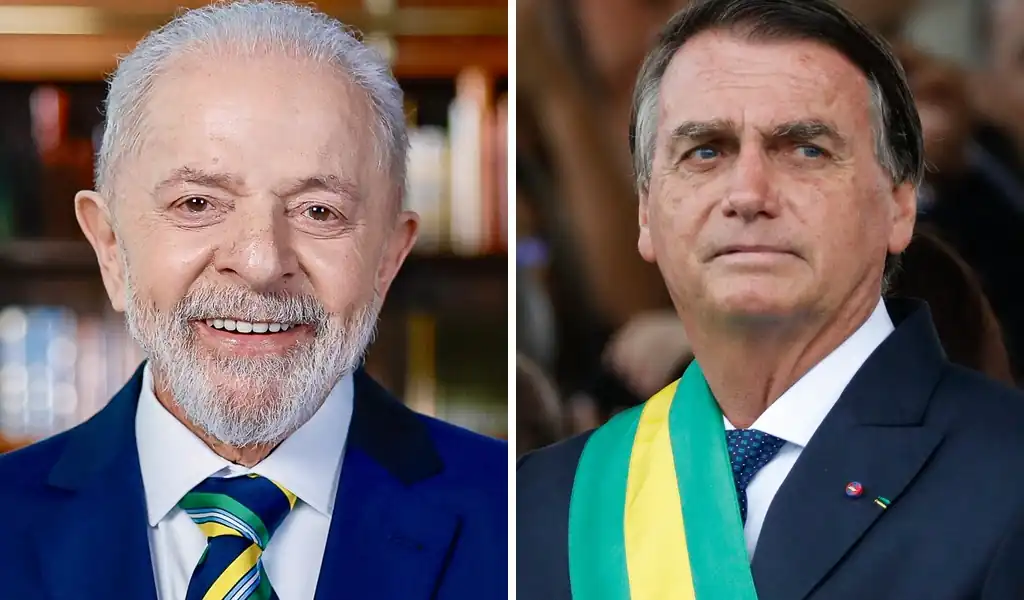
SÃO PAULO, Brazil – Brazilian President Luiz Inácio Lula da Silva and Senator Flávio Bolsonaro traded corruption accusations and challenged each other’s records during their first televised head-to-head debate of the presidential runoff campaign on October 18, shifting repeatedly between personal attacks and arguments over the economy, crime and Brazil’s international relationships. <Cite refs={[“turn900653view0″,”turn900653view1”]}/>
The debate, broadcast by Band TV, took place seven days before the October 25 election. It was the candidates’ first direct televised encounter of the runoff campaign, after both had declined earlier debate opportunities during the first round.
Official results published by Brazil’s Superior Electoral Court, known as the TSE, show that Bolsonaro received 56.1 million votes, or 47.03% of valid votes, in the October 4 first round. Lula received 53.9 million votes, or 45.16%. Neither secured an outright majority, sending the election to a runoff.

Corruption accusations dominate the debate
The candidates repeatedly challenged each other over corruption allegations involving relatives, associates and financial relationships.
Lula pressed Bolsonaro about his reported links to Daniel Vorcaro, a former banker associated with financing a film about Jair Bolsonaro, the senator’s father and Brazil’s former president. Bolsonaro questioned Lula over allegations involving the president’s son and a pension-fraud scandal. Both used the exchanges to question the other’s credibility.
One of the most prominent exchanges came when Lula challenged Bolsonaro to make their personal finances available for scrutiny before the runoff. The challenge was a campaign demand, not evidence that either candidate had committed a crime.
The exchanges also drew on the candidates’ broader political histories. Lula’s corruption conviction from 2017 was later annulled following legal challenges to the proceedings. Jair Bolsonaro, meanwhile, was sentenced to 27 years in prison for plotting a coup after losing the 2022 election, according to Reuters. Those cases involve different people and legal circumstances and should not be conflated with allegations concerning Flávio Bolsonaro.
Police request involving Bolsonaro remains a separate legal matter
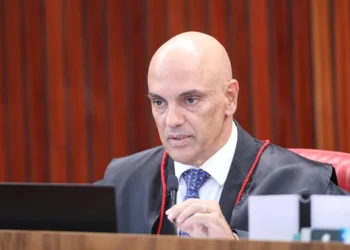
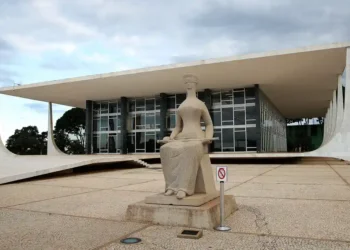
On October 18, Brazil’s Federal Police reportedly sent a request to the Supreme Federal Court to open an investigation into Flávio Bolsonaro over a money-laundering allegation involving lawyer Willer Tomaz, who is also under investigation in a separate case concerning alleged fraud involving Brazil’s social-security system. Folha de S.Paulo reported that the request had reached the court and that Justice Alexandre de Moraes had been designated as rapporteur.
■ Related News




Bolsonaro’s campaign disputed the description of his legal status, telling Folha that he was not formally under investigation in that matter because the request had not yet been converted into an inquiry and neither the prosecutor-general’s office nor a judge had issued a decision on it. The report said the police allegations included financial relationships and access to a bank account associated with an offshore company linked to Tomaz.
Bolsonaro has described his relationship with Tomaz as a friendship and denies wrongdoing, according to Folha. The police request must not be presented as a judicial finding of guilt or as proof that the alleged conduct occurred. The underlying request and the court’s subsequent procedural decisions should be checked against official records before publication.
The candidates’ allegations against one another also require separate verification. Statements made during a televised debate do not independently establish criminal conduct, and the status of each case depends on the relevant evidence and legal proceedings.
Food prices and economic management
The cost of living featured prominently as Bolsonaro challenged Lula over food prices. Reuters reported that Bolsonaro asked whether food had become more expensive or cheaper and questioned how long the president had gone without personally buying meat for his household. The exchange highlighted the political sensitivity of grocery prices even as inflation had fallen and unemployment had reached a record low, according to Reuters’ reporting.
Bolsonaro argued that Brazil’s economy would improve if Lula left office and the government fought corruption. Lula defended his economic record and social programmed, arguing that economic growth should put more money into the hands of ordinary people. He also pointed to minimum-wage increases above inflation during his presidency.
Those arguments reflected competing assessments of the government’s performance rather than a settled factual conclusion from the debate. Evaluating them requires comparing official data on inflation, food prices, wages, employment and household purchasing power over consistent periods.
The candidates’ remarks also exposed a distinction between aggregate economic performance and the pressures experienced by households. Even when national indicators improve, changes in the price of frequently purchased goods can remain politically important. The debate itself did not provide a comprehensive statistical assessment of household finances.
Public security and criminal justice
Public security provided another point of contrast. Bolsonaro pledged to classify Brazil’s major criminal gangs and militias as narco-terrorist organizations and to create more than 500,000 additional prison spaces, Reuters reported.
Lula challenged Bolsonaro over alleged links to paramilitary groups in Rio de Janeiro, using the term “militiaman” during the debate. That characterization was a political accusation, not a judicial finding established by the exchange. Bolsonaro, in turn, attacked Lula’s integrity and record on corruption.
Bolsonaro’s proposals would require consideration of legal definitions, implementation, costs and the responsibilities of federal and state authorities. The debate coverage reviewed for this draft does not establish the funding or implementation details for the proposed prison expansion, nor does it provide evidence sufficient to assess the likely effects of the proposals.
Foreign relations become a campaign battleground
The candidates also accused each other of compromising Brazil’s national sovereignty through their international relationships.
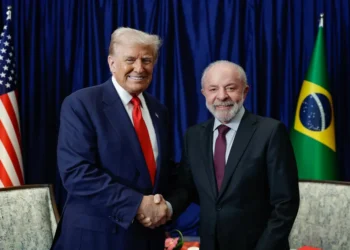
Lula accused the Bolsonaro family of seeking US pressure on Brazil through tariffs and said the family was too closely aligned with American interests. Bolsonaro rejected the criticism, arguing that Lula’s government was subordinate to what he described as globalist and terrorist interests.
The exchange reflected contrasting campaign narratives about Brazil’s position in international affairs. Lula has advocated maintaining relationships with a range of partners, including China, while Bolsonaro has been aligned with US President Donald Trump. Reuters and the Associated Press have described the election as consequential for the direction of Brazil’s relationships with Washington and Beijing.
The debate did not establish that either candidate’s foreign-policy approach would necessarily undermine national sovereignty. Such assessments would depend on concrete policy decisions, trade arrangements and diplomatic commitments rather than the candidates’ characterizations of one another.
Final debate scheduled before the runoff
TV Globo’s published election coverage lists a further debate between Lula and Bolsonaro for October 23 at its studios in Rio de Janeiro, to be broadcast after Jornal Nacional and carried by GloboNews and g1. The broadcaster identified it as the final debate before the October 25 vote.
The October 18 debate took place amid a close electoral contest following Bolsonaro’s first-round lead. That result establishes the candidates’ starting positions for the runoff, but it does not determine the final outcome.
The remaining campaign gives both candidates an opportunity to set out their proposals and answer questions about their records. The central issues raised during the Band debate—corruption, food prices, public security and Brazil’s international relationships—will require voters to distinguish between documented facts, proposed policies and allegations that remain unresolved.
The debate underscored the sharp differences between the candidates, but the merits of their arguments cannot be determined by the intensity of their exchanges. They depend on verifiable evidence, the legal status of the cases discussed and the practical details of the policies each candidate proposes.
Reporting Credit: Reuters and Associated Press reporting on the debate; Band TV’s published debate coverage; Brazil’s Superior Electoral Court for official first-round results; TV Globo’s published debate schedule; and Folha de S.Paulo reporting on the police request and the campaign’s response.