CARACAS, Venezuela – Venezuela reports 303.7 billion barrels of proven oil reserves, the largest total of any country. However, energy specialists question whether the figure accurately reflects how much oil the country can extract under current economic and technical conditions.
The difference matters as Venezuela seeks investment to rebuild its oil industry and the United States pursues access to Venezuelan oil fields. The value of those resources depends not only on how much oil lies underground, but also on how much producers can recover at a reasonable cost.
The US Energy Information Administration (EIA) reported that Venezuela held about 303 billion barrels of proven crude oil reserves in 2023, accounting for roughly 17% of the global total. Yet the country produced only 0.8% of the world’s crude oil that year.

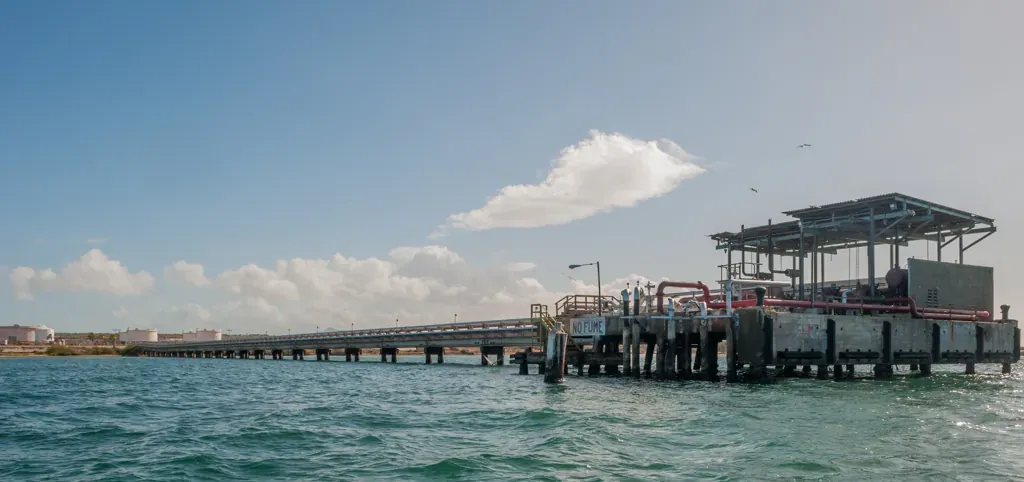
The gap between reported reserves and actual production highlights the challenges facing Venezuela’s oil sector. Much of its oil is extra-heavy crude that requires specialized technology, substantial investment and suitable infrastructure to extract and process.
How Venezuela reached its record reserve figure
Venezuela’s reserve estimate rose sharply during a government-led assessment of the Orinoco Belt, a vast oil-producing region in eastern Venezuela.
Under former President Hugo Chávez, the government launched a project to measure the area’s resources. State-owned oil companies from several countries took part, and the government hired US-based consulting firm Ryder Scott to study the deposits.
However, the government calculated the final proven-reserves figure itself. The consulting firm did not approve the final estimate, according to the historical account available for this story.
In 2011, Venezuela’s state-owned oil company, Petróleos de Venezuela S.A. (PDVSA), reported an increase of about 82 billion barrels in proven reserves. The company attributed the increase to revisions in estimated recovery rates but did not provide detailed supporting calculations.


Venezuela subsequently appeared at the top of international reserve rankings. The Organization of the Petroleum Exporting Countries (OPEC) continued to report the country’s reserves at more than 300 billion barrels in its official statistics.
The official figure remains widely cited. However, the lack of detailed public information about the underlying calculations has made it difficult for outside specialists to assess the estimate independently.
Why proven reserves are different from oil underground
Proven reserves do not include every barrel of oil beneath a country’s surface. The term refers to quantities that companies can recover with reasonable certainty under defined technical and economic conditions.
That distinction is especially important in Venezuela because much of its oil lies in the Orinoco Belt. The region contains extra-heavy crude, which is thick and difficult to move through conventional production systems.
Producers may need specialized extraction methods, blending materials and upgraded facilities to turn that crude into commercially useful products. These requirements can increase costs and limit the amount that companies can recover profitably.
Francisco Monaldi, director of the Latin America Energy Program at Rice University’s Baker Institute for Public Policy, has previously questioned whether Venezuela can recover the full amount it reports. In an earlier interview, he discussed a more conservative estimate of about 80 billion to 100 billion barrels under the conditions he assessed.
That range is an expert estimate, not a replacement figure formally adopted by Venezuela or OPEC. Determining the country’s recoverable reserves would require transparent data on the deposits, recovery rates, production costs and assumptions used in the calculations.
US oil agreement adds to the debate
The dispute has taken on greater importance following a US-Venezuela oil agreement announced by President Donald Trump in August 2026.
A White House fact sheet said the arrangement would give the US government substantial control over access to oil fields with approximately 65 billion barrels of reported proven reserves. It also described plans to attract private investment and expand production.
However, the volume of oil assigned to a project does not automatically equal the amount that can be produced profitably. Some fields may require extensive development, while others may face infrastructure problems or low recovery rates.
The White House’s published account did not provide a detailed technical breakdown of the reserve calculation. Without field-level data and independently reviewable assumptions, investors cannot determine from the headline figure alone how much oil the agreement could deliver.
The distinction also affects estimates of future revenue. The amount Venezuela or its partners could earn depends on production rates, development costs, oil prices, taxes and the terms governing each project.
Production challenges remain
Venezuela’s large reported reserves have not translated into production on a similar scale.
The EIA identifies limited investment, financial constraints at PDVSA, shortages of qualified personnel and international sanctions as factors that have hindered the country’s oil and gas development. It also notes that much of Venezuela’s crude requires more technical expertise to produce than conventional oil.
Addressing those obstacles would require sustained investment in wells, processing facilities, pipelines and other infrastructure. Companies would also need confidence that their contracts and investments would remain secure.
Even if production increases, the pace and cost of development will determine how much of Venezuela’s reported resources becomes commercially recoverable.
Transparency will be key for investors
Venezuela’s 303.7 billion-barrel figure remains part of the official international reserve record. But the number alone does not establish how much oil the country can produce under current conditions.
Investors need reliable information about recovery rates, field conditions, production costs and the assumptions behind reserve estimates. Detailed disclosures would also help independent specialists compare Venezuela’s claims with recognized technical and economic standards.
The country’s oil resources remain substantial. The unresolved question is how much of that resource qualifies as proven reserves under transparent, independently assessable conditions—and how much investment would be required to develop it.
Reporting Credit: U.S. Energy Information Administration — Venezuela Country Analysis. Supports the reported reserve figure, historical production share and technical and investment challenges. Organization of the Petroleum Exporting Countries — Annual Statistical Bulletin 2025. Provides historical member-country reserve statistics. The 2026 bulletin should be checked directly for the latest figure. The White House — Fact Sheet: President Donald J. Trump Announces Historic Oil Agreement to Secure American Energy Dominance and Drive Venezuela’s Economic Recovery. Establishes what the US administration announced about the agreement and its stated reserve figure. Rice University’s Baker Institute for Public Policy — Baker Briefing: Unpacking Venezuela’s Opaque Oil Deal. Provides expert analysis by Francisco Monaldi on the oil agreement and uncertainty surrounding the development of the fields.