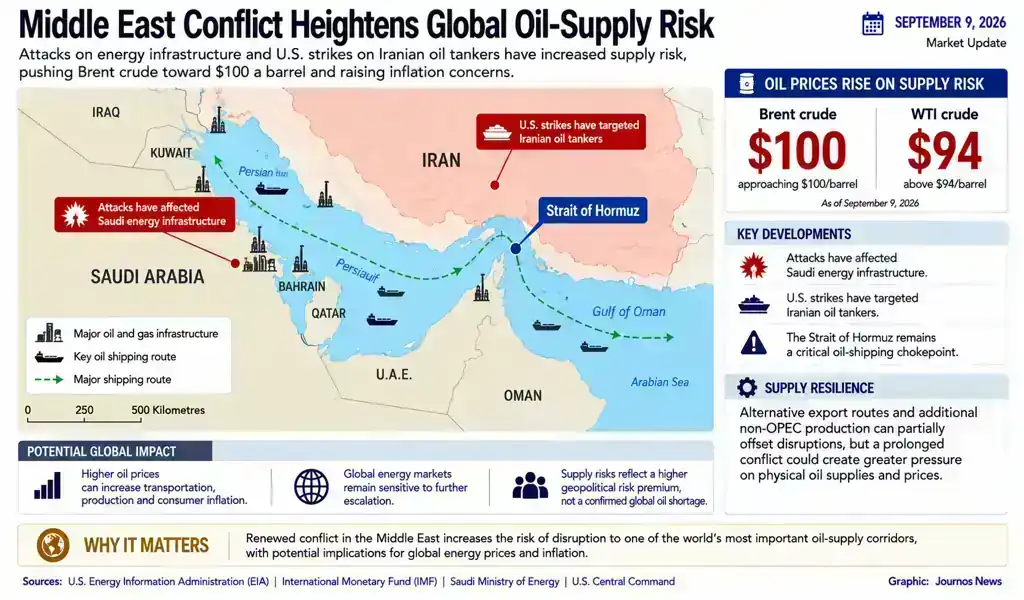
LONDON, United Kingdom — Oil prices are approaching $100 a barrel as renewed fighting across the Middle East threatens energy infrastructure and shipping routes, increasing the risk that higher fuel costs will feed into inflation worldwide.
Brent crude reached about $99 a barrel in recent trading, while U.S. West Texas Intermediate crude climbed above $94. The latest gains followed attacks on Saudi energy facilities by Iran-backed Houthi forces, U.S. strikes on Iranian oil tankers and further Iranian attacks in the region.
The escalation has renewed concerns about the reliability of oil supplies from the Persian Gulf. It also raises the prospect of higher transportation and production costs if disruptions persist.

Attacks increase pressure on regional oil supplies
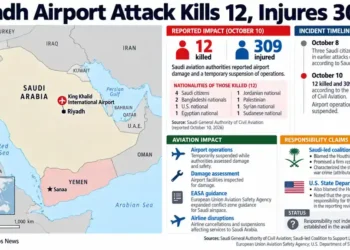
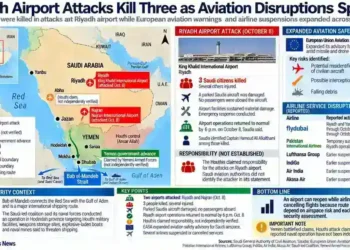
The latest price increase came after Houthi forces attacked several locations in southern Saudi Arabia, including energy infrastructure. Saudi authorities said the attacks caused fires and temporarily disrupted some operations.
The attacks followed further U.S.-Iran hostilities. U.S. Central Command said American forces destroyed five additional Iranian oil tankers after missile attacks on a U.S. Navy warship. The latest action brought the number of Iranian tankers targeted by the United States since the weekend to eight, according to the Financial Times.
Iran has continued retaliatory military operations, while Iran-backed Houthi forces have expanded attacks against Saudi targets. The combination has increased concern that the conflict could disrupt both production and transportation of oil.
Strait of Hormuz remains the central supply risk
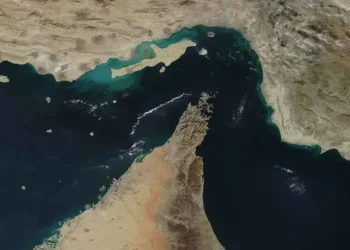
The Strait of Hormuz is a critical route for oil shipments from the Persian Gulf, making any prolonged disruption potentially significant for global energy markets.
The U.S. Energy Information Administration has said renewed attacks on ships using the strait have reduced oil shipments and contributed to higher and more volatile prices. Alternative export routes can provide some relief, but they cannot fully eliminate the risks created by disruption in the waterway.
■ Related News



Recent market movements show that traders are already pricing in a higher geopolitical risk premium. Brent had remained below $100 despite major supply disruptions, partly because some Gulf producers have redirected exports through alternative routes and additional production from countries outside OPEC has helped offset losses.
A prolonged deterioration in shipping conditions would make those alternatives harder to rely on.
Higher oil prices threaten inflation
The main economic concern is that sustained oil prices near or above $100 could raise costs across the wider economy.
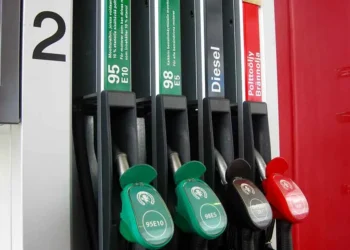
Fuel is a direct household expense, but higher crude prices also affect transportation, manufacturing, agriculture and other industries that depend on petroleum products. Businesses may absorb some of those costs, but prolonged increases can eventually pass through to consumers.
The International Monetary Fund has described energy as a major transmission channel from the Middle East conflict into the global economy. For countries that import fuel, a sharp energy-price increase can act like a sudden reduction in household and business purchasing power.
Higher energy costs can therefore complicate the work of central banks. Policymakers must balance the inflationary effect of expensive fuel against the risk that higher interest rates could weaken economic activity.
Markets face competing supply and demand forces
The oil market is not facing a simple shortage. Supply disruptions are occurring alongside changes in global demand, production and inventories.
The EIA has previously noted that additional output from producers outside OPEC, including the United States, Canada and Guyana, can partly offset losses from the Middle East. It has also pointed to weaker demand in China and substantial Chinese oil inventories as factors limiting upward pressure on prices.
Those factors help explain why Brent has approached $100 rather than moving decisively above it.
But continued attacks could change that balance. Damage to production facilities, restrictions on tanker movements or a sustained reduction in exports through the Gulf would tighten physical supplies and increase pressure on prices.
Inflation risks depend on how long disruption lasts
The immediate question for the global economy is not simply whether oil reaches $100, but how long elevated prices remain there.
A brief price spike would have a smaller economic effect than a prolonged period of disrupted shipments and damaged energy infrastructure. The longer the conflict affects production and transportation, the greater the possibility that higher fuel costs will spread through broader consumer prices.
For now, the market is responding to a rapidly changing security environment. Brent’s approach toward $100 reflects growing concern over supply rather than evidence that a permanent global oil shortage has already emerged.
The next moves in the conflict, particularly around the Strait of Hormuz and major Gulf energy facilities, will determine whether the latest surge becomes a temporary risk premium or develops into a broader energy-price shock.
Reporting Credit: U.S. Energy Information Administration — analysis of oil flows through the Strait of Hormuz, supply disruptions and factors affecting global crude prices; International Monetary Fund — assessment of the Middle East conflict’s effects on energy markets, trade and inflation; Saudi Ministry of Energy — official information concerning disruptions and incidents affecting Saudi energy facilities.