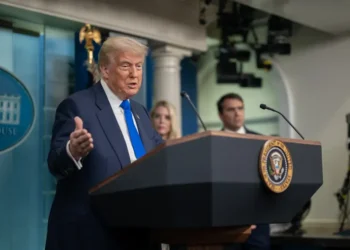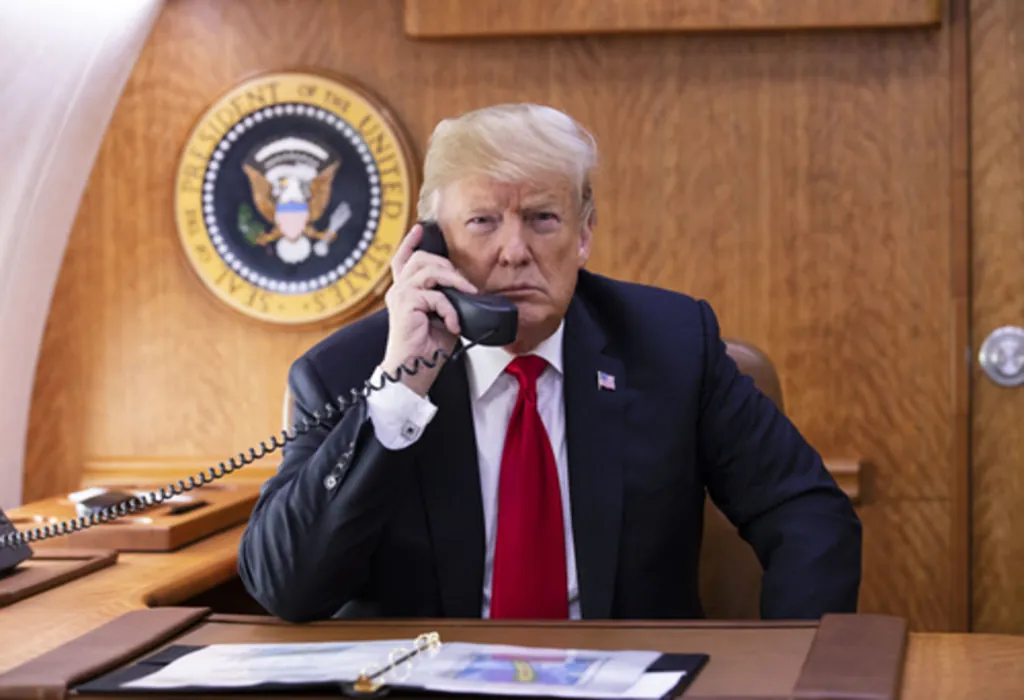
WASHINGTON — President Donald Trump said the United States has reached an agreement with Venezuela that would give U.S. interests majority control of more than 65 billion barrels of Venezuela’s proven oil reserves, describing the arrangement as the “biggest oil deal in world history.”
Trump announced the agreement Friday, saying it was negotiated by Secretary of State Marco Rubio, Secretary of War Pete Hegseth and Venezuela’s interim President Delcy Rodríguez, with private businesses involved in the arrangement.
The announcement immediately placed Venezuela’s enormous petroleum reserves at the center of a new U.S.-Venezuela economic relationship, while important details about how the agreement will work remain unclear.

Trump says U.S. will hold majority control
Trump said the agreement gives the United States majority control of more than 65 billion barrels of proven Venezuelan oil reserves and claimed the arrangement would come at no cost to American taxpayers.
He also said the deal would more than double U.S. oil reserves, increase oil supplies and eventually lower gasoline prices for American consumers.
The statement did not initially provide detailed information about the legal structure of the agreement, which oil fields are included or which U.S. companies will operate them.
Reuters reported that the arrangement is expected to involve a public-private partnership, with the United States taking a majority operational position. The exact terms, however, remain subject to further clarification.
Venezuela has the world’s largest proven oil reserves
Venezuela possesses an estimated 303 billion barrels of proven crude oil reserves, the largest national reserve base in the world.


The 65 billion barrels cited by Trump therefore represent roughly one-fifth of Venezuela’s total proven reserves.
Despite its enormous resource base, Venezuela currently produces only a small fraction of global oil output. Years of underinvestment, deteriorating infrastructure, sanctions and political instability have severely reduced the country’s production capacity.
That gap between the size of Venezuela’s reserves and its current production is one of the central reasons the Trump administration is seeking major investment in the country’s oil industry.
Deal expected to bring major investment
Secretary of State Marco Rubio said the agreement could bring nearly $100 billion in private investment into Venezuela.
The investment would be aimed at restoring and expanding oil production, upgrading infrastructure and developing fields that have suffered from years of declining investment.
The Associated Press reported that the proposed arrangement would involve development of 17 oil fields through a new company jointly owned by U.S. interests and an unnamed operator. Under the reported structure, the U.S. side would hold a 55% operational share and purchase oil at cost.
Venezuelan interim President Delcy Rodríguez has said the agreement could generate more than $209 billion in tax revenue for Venezuela.
The figures remain projections rather than guaranteed economic returns.
Washington wants more Venezuelan oil
The agreement comes as the Trump administration faces pressure over U.S. fuel prices and global energy supplies.
The continuing war involving Iran has disrupted energy markets and complicated shipping through the Strait of Hormuz, increasing the importance of alternative sources of crude oil.
Venezuela’s geographic position and enormous reserves make it strategically attractive to the United States.
Trump has argued that increased Venezuelan production could expand global oil supplies and eventually reduce prices for American consumers.
But increased production would not happen immediately.
Venezuela’s oil infrastructure requires substantial investment, and analysts have warned that rebuilding production capacity could take years.
What “control” means remains important
Trump’s description of the agreement as giving the United States control of 65 billion barrels does not necessarily mean the United States is taking ownership of Venezuela’s entire oil reserves.
The distinction between ownership of underground petroleum resources, operating rights, investment stakes and control of individual oil fields is significant.
The terms announced so far indicate a commercial and operational arrangement involving U.S. interests and Venezuelan authorities rather than a straightforward transfer of ownership of Venezuela’s national oil reserves.
The precise legal and financial structure remains one of the most important unanswered questions surrounding the deal.
Venezuela’s oil sector faces legal questions
The agreement could also face legal and regulatory challenges inside Venezuela.
Venezuela has historically maintained strong state control over its petroleum industry, and changes to foreign participation in the sector have been politically sensitive.
The Rodríguez administration has recently moved toward greater privatization and foreign participation in oil production, creating the legal framework for expanded international investment.
Whether the new arrangement can operate under Venezuela’s existing legal framework — and how future governments might treat it — will be closely watched by investors.
U.S. oil companies face a difficult calculation
The deal could create enormous opportunities for American energy companies, but returning to Venezuela also carries significant risks.
The country’s oil industry has suffered from aging infrastructure, declining production capacity and years of political instability.
Companies will need to determine whether the potential returns justify the financial, legal and political risks associated with large-scale investment.
The size of the announced reserves alone does not guarantee profitable production.
Heavy crude from Venezuela’s major oil fields also requires specialized refining capacity, meaning additional infrastructure and transportation investment may be necessary before higher production can translate into substantial additional supplies for U.S. consumers.
A major shift in U.S.-Venezuela relations
The agreement represents a dramatic shift in the relationship between Washington and Caracas.
For years, U.S. policy toward Venezuela focused heavily on sanctions and political pressure.
The Trump administration has now moved toward direct economic involvement in Venezuela’s most valuable industry.
The agreement follows the removal of former Venezuelan President Nicolás Maduro from power earlier this year and the establishment of an interim government led by Rodríguez. The political circumstances surrounding that transition remain central to understanding the new U.S. role in Venezuela’s economy.
Gasoline prices are a key political issue
Trump has repeatedly emphasized the potential impact of the deal on U.S. gasoline prices.
His administration is under pressure to address elevated fuel costs, particularly as the Iran conflict continues to affect global energy markets.
Trump said the Venezuelan arrangement would substantially lower gasoline prices “for all Americans.”
But energy analysts caution that the effect on pump prices will depend on how quickly Venezuelan production can recover, how much additional crude reaches international markets and broader global oil-market conditions.
A deal covering tens of billions of barrels does not mean tens of billions of barrels will immediately enter the market.
The scale of the announcement is unprecedented
The 65-billion-barrel figure makes the announcement unusually large by international energy standards.
If implemented as described, the agreement would give U.S. interests a major position in a portion of the world’s largest proven oil reserve base.
It could also reshape Venezuela’s economy by bringing tens of billions of dollars in new investment and potentially increasing government revenue.
For Washington, the deal offers the possibility of greater access to nearby oil supplies.
For Caracas, it offers the prospect of rebuilding an industry that has been central to the country’s economy but has suffered a prolonged decline.
Whether those benefits materialize will depend on implementation.
Many details remain unresolved
Despite the sweeping claims surrounding the announcement, several critical questions remain unanswered.
It is not yet clear:
- Which 17 oil fields will be included.
- Which U.S. companies will participate.
- How the reported 55% operational share will be structured.
- How revenues and profits will be divided.
- What legal protections investors will receive.
- How quickly production can increase.
- Whether the agreement will survive future political changes in Venezuela.
- How much additional oil will ultimately reach U.S. consumers.
Those details will determine whether the announcement becomes a transformative energy agreement or remains primarily a political and investment framework.
What happens next
The immediate focus will be on the release of the agreement’s full terms and the companies expected to participate.
Investors will also watch for details on financing, field development, infrastructure spending and production targets.
For the United States, the central test will be whether Venezuelan production can increase sufficiently to influence domestic and global oil markets.
For Venezuela, the test will be whether foreign investment can revive the petroleum sector while generating meaningful revenue for the government and economy.
Trump has presented the agreement as a historic victory for both countries.
The next stage will be turning that announcement into an operating oil industry.
Key Facts
- Announcement: August 28, 2026
- Countries: United States and Venezuela
- Oil reserves cited: More than 65 billion barrels
- Venezuela’s total proven reserves: About 303 billion barrels
- Reported U.S. operational share: 55%
- Oil fields: 17 reported fields
- Potential private investment: Nearly $100 billion
- Projected Venezuelan tax revenue: More than $209 billion
- U.S. objective: Increase oil supply and reduce energy costs
- Current status: Agreement announced; implementation details emerging
Reporting Credit: U.S. Department of State — Marco Rubio and U.S.-Venezuela policy; White House — President Donald Trump’s announcement; Venezuela — Interim President Delcy Rodríguez and government statements on the oil agreement.