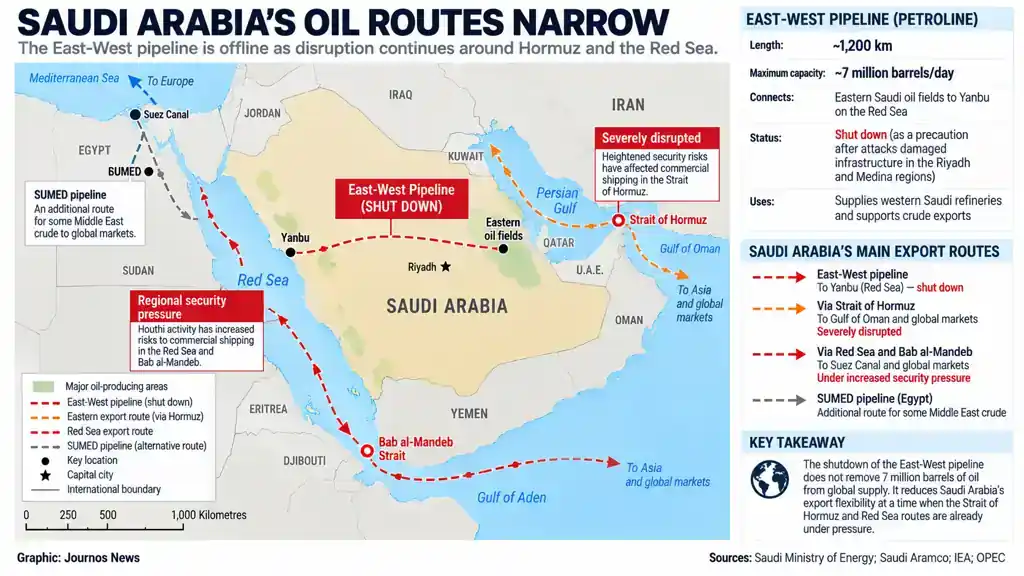
RIYADH, Saudi Arabia – Saudi Arabia’s shutdown of its East-West oil pipeline is putting additional pressure on global crude supplies, with the kingdom facing fewer viable routes for moving oil to international markets as disruptions persist around the Strait of Hormuz and the Red Sea.
Saudi Arabia’s Energy Ministry said the 1,200-kilometer pipeline was shut as a precaution after attacks damaged infrastructure in the Riyadh and Medina regions. Emergency and technical teams were deployed to secure the system and assess the damage.
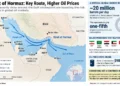
The pipeline, also known as the Petroline, connects Saudi oil fields in the east with the Red Sea port of Yanbu. Its strategic value has increased sharply because it provides a route that avoids the Strait of Hormuz, where oil tanker traffic has been severely disrupted by the regional conflict.

Fewer routes for Saudi crude
The shutdown does not mean the entire theoretical capacity of the pipeline has disappeared from global markets. Its maximum capacity is about 7 million barrels per day, but actual volumes have varied significantly.
Recent tanker-tracking estimates put Yanbu loadings below that maximum, while Saudi Arabia had increased westward flows during periods when shipping through Hormuz became more difficult. The pipeline can also supply refineries on Saudi Arabia’s western coast, meaning not all of its capacity is intended for export.
The immediate problem is that crude produced in eastern Saudi Arabia cannot simply be sent west to Yanbu while the pipeline remains offline.
Saudi Arabia can draw on oil already stored at western facilities and use other routes where possible. Some Saudi crude can also move through Egypt, including via the SUMED pipeline linking the Red Sea with the Mediterranean. But those routes cannot easily replace the capacity and strategic flexibility provided by the East-West system.
Oil markets face a tighter supply cushion
The pipeline disruption comes after months of pressure on Middle Eastern oil exports.
■ Related News


The Strait of Hormuz, through which a major share of global oil normally passes, has seen flows fall sharply during the conflict. Industry estimates cited in recent reporting put current traffic through the strait at roughly 6 million to 9 million barrels per day, far below normal levels.
Saudi Arabia had used the East-West pipeline to reduce its dependence on the strait. With that alternative now unavailable, more crude may have to rely on routes that are themselves exposed to regional security risks.
The situation is further complicated by developments in Yemen. Houthi forces have expanded their presence around the Red Sea and Bab al-Mandeb, another important maritime passage for oil shipments moving between the Middle East and Europe.
That combination leaves the global market with less room to absorb another major disruption.
Storage provides only a temporary buffer
Saudi Arabia has some ability to maintain exports from crude already positioned at western facilities.
Industry sources cited in recent reporting estimated that Yanbu’s available stocks could sustain exports for only about five to seven days if the pipeline does not resume operations. Additional stocks held at Egyptian facilities could provide some extra flexibility, but those supplies are also finite.
The length of the outage therefore matters as much as the initial shutdown.
Saudi authorities have not provided a definitive public timetable for restoring the pipeline. Estimates reported by industry sources have varied from a relatively short repair period to several weeks, depending on the extent of the damage.
The International Energy Agency has already reported that Saudi oil supply fell to its lowest level in more than three decades in August as disruptions affected flows through both Hormuz and the Red Sea.
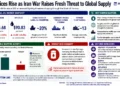
If the pipeline remains offline while those other routes stay constrained, Saudi Arabia could face increasing difficulty maintaining normal export commitments. The immediate effect would be tighter availability of crude in an already disrupted market, adding further upward pressure to oil prices.
For now, the key variable is whether Saudi Arabia can restore the East-West route before western inventories are substantially depleted. If repairs take longer, the pressure on alternative export routes — and on global oil markets — is likely to intensify.
Reporting Credit: Saudi Arabian Ministry of Energy — pipeline shutdown, attacks and emergency response; Saudi Aramco — East-West pipeline and crude transportation infrastructure; International Energy Agency — Saudi oil supply and global market conditions; Saudi Arabia’s OPEC reporting — production levels and oil-market data.