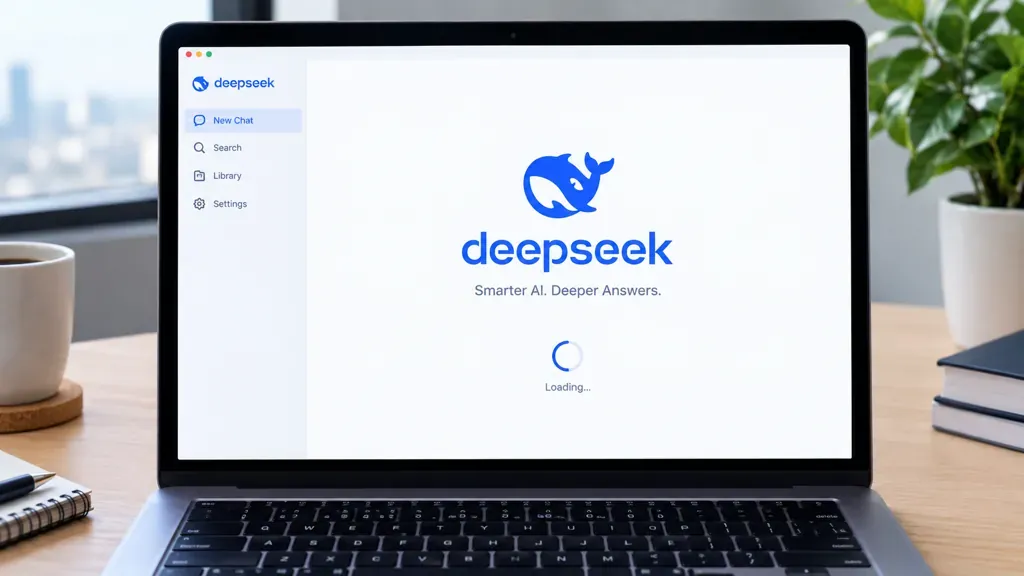
HONG KONG – China has condemned a U.S. government order barring the use of artificial intelligence products from Chinese startup DeepSeek across federal civilian agencies, sharpening a dispute over data security, technology restrictions and competition in advanced AI.
The U.S. Department of Homeland Security (DHS) published the order in the Federal Register on October 20, requiring civilian agencies to remove DeepSeek products, affiliated products and third-party services developed using DeepSeek technology from their information technology systems. The order also excludes the company’s products and services from federal civilian procurement.
China’s Foreign Ministry said Beijing opposes what it described as an excessive use of national security arguments to restrict technology and trade. The Ministry of Commerce separately criticized the U.S. decision and warned that China would take measures to protect its interests, according to the Associated Press.

The dispute highlights the difficulty of separating AI security concerns from the broader technology rivalry between the world’s two largest economies.
US Order Targets Government Systems and Procurement
The DHS order covers products and services developed by Hangzhou DeepSeek Artificial Intelligence Co. and its affiliated entities. It also extends to third-party products and services developed using DeepSeek implementations.
The department issued the order under the Federal Acquisition Supply Chain Security Act of 2018, following a review of a recommendation from the Federal Acquisition Security Council and supporting evidence.
The notice says DeepSeek’s models present multiple potential security risks. Among the concerns described in the supplied reporting is the possibility that Chinese authorities could access sensitive U.S. data through infrastructure operated in China.
These are security concerns cited by the U.S. government, rather than evidence presented in the announcement that sensitive information has been transferred to Chinese authorities.



The restriction applies to federal civilian agencies. The order does not, by itself, establish a general prohibition on private individuals or businesses in the United States using DeepSeek’s publicly available AI models.
Beijing Condemns Technology Restrictions
China’s Foreign Ministry spokesperson Mao Ning addressed the decision at a regular press conference on October 20.
Mao said Beijing opposed the excessive use of national security arguments and the politicization of technology and trade issues. She added that China would protect the lawful rights and interests of Chinese businesses.
China’s Ministry of Commerce also expressed strong opposition to the U.S. measure. According to the Associated Press, the ministry accused Washington of disregarding understandings reached between Chinese President Xi Jinping and U.S. President Donald Trump and of using national security as a pretext to restrict Chinese companies.
The ministry said China would monitor developments and take necessary measures to defend its interests. The statement did not specify what retaliatory action Beijing might pursue.
DeepSeek did not immediately respond to a request for comment, the Associated Press reported.
Open-Source AI Adds to the Security Debate
DeepSeek’s models are widely available, including in the United States, and many can be used at little or no cost. Their availability has helped make the company’s technology part of a broader debate over how organizations should assess AI systems developed outside their own jurisdictions.
The U.S. restriction focuses on government systems and procurement rather than imposing a blanket ban on access to DeepSeek models. Its wider significance lies in how public institutions evaluate the risks associated with AI services, including where systems are hosted, how data may be handled and whether external parties could gain access to sensitive information.
The order also covers third-party services built using DeepSeek implementations, extending the restriction beyond products directly developed by the startup.
For technology providers serving government customers, such requirements can affect procurement decisions and the use of AI components incorporated into wider software systems.
AI Competition Remains Entangled With Chip Restrictions
The DeepSeek dispute comes amid broader U.S. restrictions on China’s access to some advanced AI chips and the equipment used to manufacture them.
Washington has also accused Chinese AI startups, including DeepSeek, of large-scale model distillation: a process in which one AI system is used to extract capabilities from another. Beijing has rejected those allegations, according to the supplied reporting.
The claims and counterclaims reflect competing concerns over technology security, access to advanced computing resources and the development of domestic AI capabilities. The DeepSeek order adds a government procurement restriction to an already extensive set of technology controls.
China has also proposed new restrictions on exports of certain advanced technologies, including AI-related technologies, according to the supplied report. Those proposals form part of a wider policy debate over control of strategically important technology.
AI Governance Remains on the US-China Agenda
Despite the dispute, Washington and Beijing have continued discussions on aspects of AI governance. The supplied reporting says the two countries have made progress on proposals that include a notification system for incidents involving national security.
However, cooperation on selected governance issues has not resolved disagreements over technology access, security and commercial restrictions.
AI is expected to feature in a meeting between Trump and Xi on the sidelines of the Asia-Pacific Economic Cooperation summit in Shenzhen in mid-November, according to the supplied reporting.
The extent to which the DeepSeek dispute affects those discussions remains unclear. Neither the U.S. order nor China’s public response, as described in the available material, establishes whether the two governments will reach an agreement on the restrictions.
For the AI industry, the immediate impact is clearest in U.S. federal civilian procurement and IT systems. The broader issue is how governments balance access to increasingly capable AI tools against concerns about data protection, supply-chain security and strategic dependence.
Reporting Credit: U.S. Department of Homeland Security, Notice of Order Regarding Exclusion and Removal of DeepSeek Products from Federal Civilian Executive Branch Information Technology Systems and Procurements, published in the Federal Register on October 20, 2026; China’s Ministry of Foreign Affairs, regular press conference transcript dated October 20, 2026. Secondary reporting: The Associated Press, reporting by Chan Ho-Him.