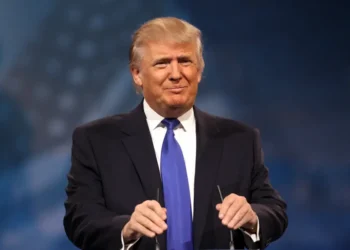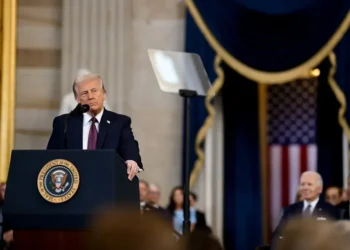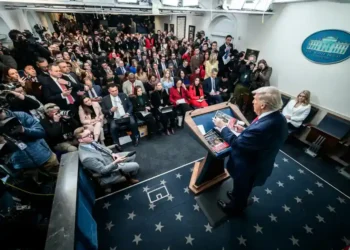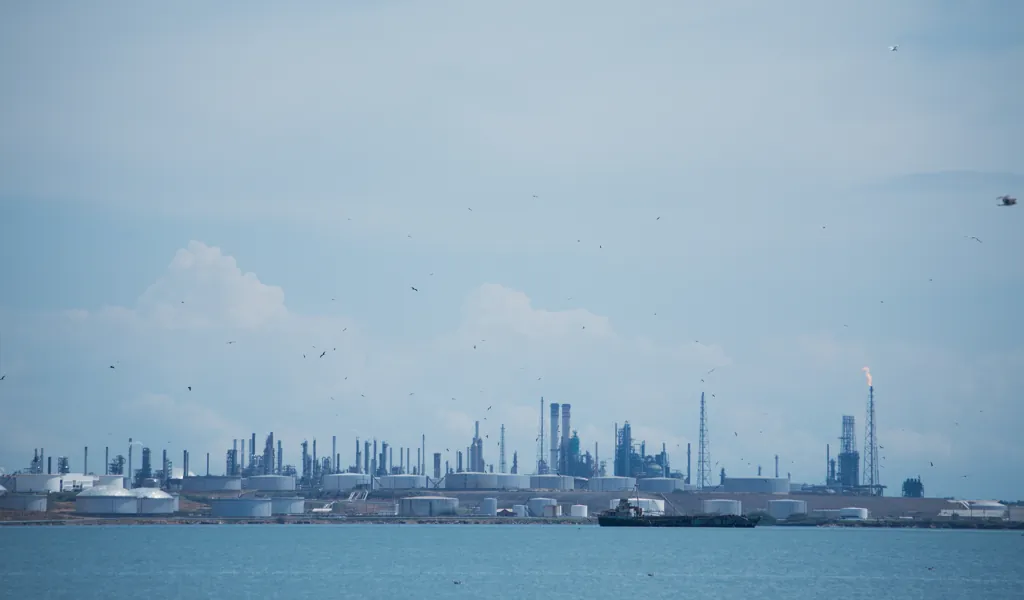
WASHINGTON — President Donald Trump says the United States has reached a sweeping agreement with Venezuela that would give a U.S.-linked private venture majority control over access to more than 65 billion barrels of proven oil reserves. Trump called it the “biggest oil deal in world history,” but the full text of the agreement has not been publicly released, leaving major questions about its legal structure, financing and implementation.
The agreement involves 17 Venezuelan oil fields, primarily in the Orinoco Belt and around Lake Maracaibo. Venezuela’s interim government says the development could attract about $100 billion in investment and generate more than $209 billion in taxes and royalties for the Venezuelan state.
What exactly did the U.S. get?
The arrangement is not a straightforward purchase of Venezuela’s oil reserves.

According to U.S. officials cited by the Associated Press, the U.S. government and an unnamed private operator would establish a new company with rights to develop the fields.
The company would receive long-term development rights, with one U.S. official saying the arrangement provides 100-year rights to the fields. The United States would receive 55% of the company’s effective output, through a combination of an ownership interest and the right to purchase oil at cost.
That distinction is important.
The 65 billion barrels remain underground. The agreement is intended to give the new venture access to develop and produce them rather than immediately transferring 65 billion barrels of physical crude to the United States.
Why Venezuela’s oil matters
Venezuela has the world’s largest proven crude-oil reserves, estimated at roughly 303 billion barrels.

Yet its production is a fraction of what the country once achieved.
Years of underinvestment, sanctions, mismanagement and deteriorating infrastructure have severely weakened the industry. Venezuela currently produces roughly 1.2 million to 1.3 million barrels of crude per day, according to recent estimates.
Much of Venezuela’s crude is also particularly heavy and requires specialized processing and infrastructure.
The challenge is therefore not finding oil.
It is extracting, processing and transporting it economically.
Trump says the deal will lower U.S. gasoline prices
Trump has argued that increased Venezuelan production will eventually provide additional crude to U.S. markets and help lower gasoline prices.
The administration also says oil purchased from the new venture will help replenish the U.S. Strategic Petroleum Reserve and supply the U.S. military.
That objective has become more politically important as gasoline prices have risen during the continuing war involving Iran and disruption around the Strait of Hormuz.
But consumers should not expect an immediate effect.
Energy analysts say repairing Venezuela’s damaged oil infrastructure and developing currently inactive fields will require substantial capital and could take years.
The infrastructure problem
Several of the fields included in the agreement lack functioning infrastructure needed to produce and move crude efficiently.
Other fields have existing infrastructure that has deteriorated after years of inadequate maintenance.
Reuters reported that the fields include both undeveloped areas and mature production sites, creating the possibility of increasing output gradually as infrastructure is repaired and new production is developed.
The investment requirement could therefore be enormous.
Although the Venezuelan government has cited approximately $100 billion in expected investment, it remains unclear exactly which companies will provide the capital and how the financing will be structured.
Who will operate the fields?
One of the biggest unanswered questions is the identity of the private companies that will operate the venture.
Trump and U.S. officials have not publicly disclosed the final operating structure.
Reuters reported that North American Blue Energy Partners, associated with Venezuelan businessman Alejandro Betancourt, could play a role, although the precise arrangement has not been fully disclosed.
Chevron, which is already operating in Venezuela, has declined to comment publicly on the new arrangement. ExxonMobil has also declined to comment.
Legal questions remain
The agreement is also raising legal questions inside Venezuela.
Venezuela’s existing legal framework traditionally gives the state a central role in controlling its oil resources.
Reuters reported that experts are questioning whether the new arrangement complies with Venezuelan law and whether future governments could challenge or change the agreements.
The lack of a publicly released contract makes it difficult to independently assess those questions.
The issue is particularly significant because oil projects require investments that can take decades to recover.
Companies considering investing billions of dollars will want assurances that their rights will remain protected under future Venezuelan governments.
The agreement is politically controversial in Venezuela
The deal has also triggered criticism from Venezuelan opposition figures and other political groups.
Critics argue that the interim government does not have sufficient constitutional legitimacy to make such a long-term commitment involving national resources.
Supporters of the agreement argue that Venezuela’s devastated oil industry needs foreign investment, technology and capital to recover.
Interim President Delcy Rodríguez has defended the arrangement, saying Venezuela retains sovereignty over its natural resources while gaining investment and revenue from their development.
The disagreement could become more significant if Venezuela eventually holds elections and a new government seeks to review agreements made during the current transition.
The U.S. also has a stake in the arrangement
The agreement represents an unusually direct U.S. role in Venezuela’s oil industry.
Washington previously relied primarily on sanctions and licensing restrictions to influence Venezuela’s energy sector.
The new arrangement instead places the United States in a position to participate directly in the development and purchase of Venezuelan crude.
The White House had already established mechanisms for managing Venezuelan oil revenues earlier this year, including placing certain Venezuelan oil proceeds into U.S.-controlled accounts.
The latest agreement goes considerably further by linking U.S. interests to future oil production.
It could strengthen U.S. energy security
From Washington’s perspective, Venezuelan crude offers a potentially important source of additional supply within the Western Hemisphere.
The United States currently imports substantial amounts of crude from Canada, Mexico and other international suppliers.
Expanding Venezuelan production could diversify supply and reduce some dependence on more distant sources.
The strategic value is particularly significant while the Strait of Hormuz remains disrupted by the Iran conflict.
But Venezuela cannot immediately replace millions of barrels of disrupted Middle Eastern supply.
Production growth would depend on investment, equipment, infrastructure, security and political stability.
The deal will not immediately double U.S. oil production
Trump has emphasized the enormous size of Venezuela’s reserves.
But reserves are not the same as production.
The 65 billion barrels represent oil believed to be recoverable from the fields included in the agreement. They do not mean that 65 billion barrels will suddenly become available to American consumers.
Reuters reported that developing the fields could take more than 25 years, while analysts have emphasized that major production increases would require sustained investment.
That makes the agreement a long-term energy strategy rather than an immediate solution to high gasoline prices.
What remains unknown
Several important details have yet to be made public:
- The complete text of the agreement
- The identity of all participating private companies
- The exact ownership structure
- How the 55% U.S. effective share will be calculated
- Who will finance the infrastructure investment
- How Venezuelan laws will apply to the arrangement
- What happens if a future Venezuelan government challenges the agreement
- How quickly production can increase
- The timetable for additional oil reaching U.S. markets
Reuters reported Monday that energy experts and lawyers are calling for greater transparency and questioning the agreement’s legal and financial structure.
A major test for Venezuela’s oil industry
If successfully implemented, the agreement could transform Venezuela’s petroleum industry.
The country has enormous underground resources but has struggled to convert them into sustained production and government revenue.
New investment could repair pipelines, upgrade processing facilities, restore wells and increase exports.
But the scale of the challenge means the outcome is far from guaranteed.
For the United States, the potential payoff is access to a large source of crude close to home.
For Venezuela, the agreement could provide billions of dollars for rebuilding an economy heavily dependent on oil.
For both countries, however, the biggest question is whether the political and legal foundations of the agreement are strong enough to support investments lasting decades.
What Happens Next
The next stage will be the formal implementation of the agreement and the identification of companies responsible for developing the 17 fields.
Venezuelan authorities are expected to finalize new exploration and production arrangements, while U.S. and private-sector officials work on financing, infrastructure and production plans.
The agreement’s impact on U.S. gasoline prices will likely take much longer to determine.
For now, the deal gives Washington a potentially powerful position in Venezuela’s oil industry—but not immediate access to 65 billion barrels of ready-to-use crude.
Key Facts
- Countries: United States and Venezuela
- Oil reserves covered: More than 65 billion barrels
- Fields: 17
- Main regions: Orinoco Belt and Lake Maracaibo
- U.S. effective output share: 55%
- Potential investment: About $100 billion
- Projected Venezuelan taxes and royalties: More than $209 billion
- Development: Expected to take years
- Main U.S. goal: Additional crude supply and Strategic Petroleum Reserve replenishment
- Main Venezuelan goal: Oil-sector investment and economic recovery
- Major uncertainty: Legal structure, financing and participating companies
- Status: DEVELOPING
Reporting Credit: U.S. Department of Energy — Venezuela energy policy and U.S.-Venezuela oil arrangements; White House — Venezuelan oil revenue and energy policy; Venezuelan interim government — agreement and oil-sector development plans; Venezuelan oil authorities — field, reserves and production information.