Journos News - Breaking News, World News, Top Stories, Todays Headlines and Flash Reports
Wednesday, September 2, 2026
  • Login
  • Home
  • World
    • Africa
    • Americas
    • Asia
    • Europe
    • Middle East
    • Oceania
  • Politics
  • Business
  • Technology
  • Health
  • Science
  • Sports
  • Entertainment
  • Culture
No Result
View All Result
  • Home
  • World
    • Africa
    • Americas
    • Asia
    • Europe
    • Middle East
    • Oceania
  • Politics
  • Business
  • Technology
  • Health
  • Science
  • Sports
  • Entertainment
  • Culture
No Result
View All Result
Journos News - Breaking News, World News, Top Stories, Todays Headlines and Flash Reports
No Result
View All Result
Home World News Middle East

Gulf Conflict Forces Strategic Contraction in Global Helium Supply Chain

Disruptions in Qatar’s production expose vulnerabilities in semiconductor, medical, and aerospace industries as supply tightens

The Daily Desk by The Daily Desk
March 22, 2026
in Middle East, World News
0
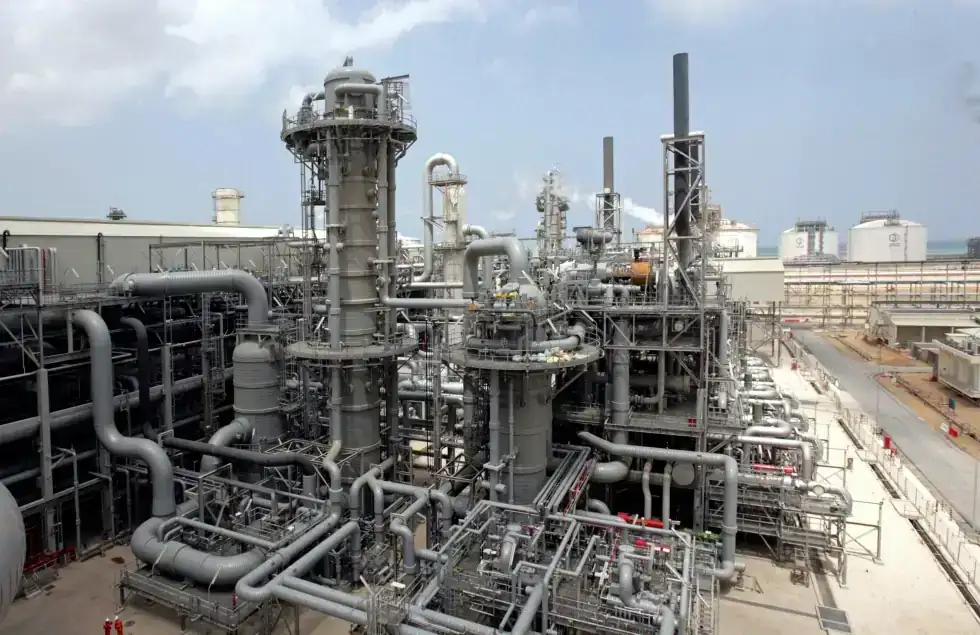
Helium storage containers at Qatar gas facility after conflict disruption - AP Photos/Maneesh Bakshi, File

Qatar’s helium production halt tightens global supply chains across critical industries - AP Photos/Maneesh Bakshi, File

LONDON — A series of Iranian strikes on Qatar’s energy infrastructure is rapidly constraining one of the world’s most specialized industrial supply chains, raising concerns that disruptions in helium production could ripple through critical sectors from semiconductor manufacturing to medical imaging.

As first reported by the Associated Press, Qatar’s halt in liquefied natural gas operations earlier this month has now evolved into a deeper supply contraction, with state energy officials signaling prolonged damage to facilities that underpin nearly a third of global helium output.

The emerging strain is not yet visible in end markets, but analysts warn the disruption is entering a phase where logistical bottlenecks and inventory depletion may converge.

Production Halt Signals Structural Supply Retrenchment

Qatar’s Ras Laffan complex—central to its liquefied natural gas and helium operations—has become a focal point of the disruption after sustaining repeated strikes. The shutdown of “associated products,” including helium, has removed a critical volume from a market already characterized by limited redundancy.

Industry observers say the issue is no longer a temporary outage but a structural contraction. Repair timelines extending into years, combined with constrained replacement capacity elsewhere, suggest that global helium availability could remain below baseline levels for an extended period.

The decision to invoke force majeure on supply contracts underscores the scale of disruption, effectively suspending Qatar’s obligations to buyers across Asia and Europe.

Price Signals Begin Reflecting Tightening Conditions

Early market indicators point to tightening supply conditions. Spot helium prices have already doubled since the onset of hostilities, according to industry consultants, though the broader impact remains muted due to the dominance of long-term contracts.

This lag, however, may only delay the adjustment. As contract renegotiations begin, buyers could face significantly higher costs, particularly if the outage persists beyond initial expectations.

■ Related News
Masoud Pezeshkian, president of Iran, appears during an interview with Khamenei.ir in 2025.

Iran President Offers Return to Ceasefire if U.S. Does as Mideast Tensions Rise

September 1, 2026
Amuay oil refinery complex in Venezuela, showing industrial processing facilities and infrastructure at the major petroleum refining site.

What We Know About Trump’s Deal Giving U.S. Access to Vast Venezuelan Oil Reserves

August 31, 2026
Graphic explaining Iran war economic impacts, showing costs for consumers and farmers, beneficiaries, oil prices, markets, and global trade pressures.

Investors Prosper as Consumers Pay the Price of Six Months of Iran War

August 31, 2026
Pacific Islands Forum leaders meet during a regional leaders meeting in 2017.

Great Power Rivalry Threatens to Overshadow Pacific Islands Summit

August 31, 2026

The more immediate pressure point lies in transit: shipments that were scheduled before the escalation are still arriving, masking the underlying shortage. Analysts anticipate a sharper supply imbalance within weeks as these flows diminish.

Industrial Dependence Narrows Strategic Flexibility

The contraction carries disproportionate implications for industries where helium is not easily substituted. Semiconductor fabrication, in particular, depends on helium’s thermal properties to stabilize wafer temperatures during high-precision manufacturing processes.

Companies such as Samsung Electronics and SK Hynix—key players in memory chip production—are closely exposed, with South Korea sourcing a significant share of its helium imports from Qatar.

According to analysts cited in industry research, existing inventories may provide a short-term buffer. However, prolonged disruption would require accelerated diversification of supply sources, a process complicated by the limited number of global producers.

The absence of viable substitutes in current chipmaking processes further reduces flexibility, reinforcing helium’s role as a bottleneck input despite its relatively small share of overall production costs.

Logistics Constraints Deepen the Supply Shock

Beyond production losses, the supply chain faces operational constraints tied to helium’s physical properties. Transport requires specialized, high-cost containers capable of maintaining extremely low temperatures for limited periods.

Roughly 200 such containers are currently stranded in the region, according to industry estimates, complicating efforts to reroute supply. With each unit valued at around $1 million and limited global availability, repositioning them introduces additional delays.

This logistical rigidity amplifies the initial shock: even if alternative production sources ramp up, the infrastructure required to move helium efficiently cannot be expanded quickly.

Strategic Industries Brace for Allocation Pressures

The unfolding disruption is prompting contingency planning across sectors reliant on stable helium access. Semiconductor manufacturing, medical imaging, and space launch operations all face varying degrees of exposure.

Companies such as Taiwan Semiconductor Manufacturing Company have indicated no immediate operational impact, but continue to monitor developments closely. Meanwhile, aerospace demand—driven by firms like SpaceX and Blue Origin—adds further pressure to an already constrained supply base.

In previous shortages, the industry has prioritized allocation toward critical uses, a mechanism likely to re-emerge if supply tightens further. Even so, such prioritization may not fully shield downstream industries from cost increases or production delays.

Strategic Contraction Signals Broader Supply Chain Vulnerability

The disruption underscores a broader structural risk: the concentration of critical industrial inputs within a narrow set of geographic and logistical nodes.

While a full-scale helium crisis remains unlikely in the near term, the current contraction highlights how quickly localized conflict can translate into global supply constraints—particularly for niche commodities with limited substitutes and complex transport requirements.

If the conflict persists, the recalibration of helium supply chains may extend beyond short-term mitigation, prompting longer-term shifts in sourcing strategies and industrial resilience planning.


Tags: #AerospaceIndustry#ChipManufacturing#EnergySecurity#Geopolitics#GlobalSupplyChains#HeliumSupply#IndustrialSupply#MedicalTechnology#MiddleEastConflict#QatarCrisis#SemiconductorIndustry#TechSupplyRisk
The Daily Desk

The Daily Desk

The Daily Desk is a contributor at JournosNews.com covering politics, media, governance, and the evolving dynamics of public discourse. Stories published under this byline are produced in accordance with JournosNews' editorial standards, with an emphasis on verified reporting, accuracy, context, and impartiality.

Related Posts

Russian President Vladimir Putin stands with Indian Prime Minister Narendra Modi and Chinese leader Xi Jinping before a BRICS Summit meeting.

China, Russia and India Leaders Gather for SCO Summit as U.S. Influence Faces Challenge

August 31, 2026
Donald Trump speaks at the Conservative Political Action Conference in Washington, D.C., in 2011 during a political address.

After Six Months of Iran War, U.S. Goals Have Shifted. Strait of Hormuz Is Now a Top Concern

August 27, 2026
Russian President Vladimir Putin attends a ceremony presenting Hero of Labour medals and state awards in Russia.

Putin Opens Door to State Control of Russian Sites Hit by Ukrainian Drones

August 26, 2026
Strait of Hormuz connecting the Gulf of Oman and Persian Gulf, photographed from the International Space Station.

LIVE: Middle East Conflict — Ongoing Coverage

August 12, 2026
Map showing reported Houthi attack near Bab el-Mandeb and U.S. maritime operations across the Gulf of Oman and Strait of Hormuz

Houthi Attack Kills Six as U.S. Forces Strike Ship Near Iranian Blockade

August 12, 2026
USCGC Aquidneck transits the Strait of Hormuz during U.S. naval operations on December 2, 2020.

LIVE: Middle East Conflict — Ongoing Coverage

August 11, 2026
Iranian President Masoud Pezeshkian speaks during an interview with Khamenei.ir in 2024.

Iran urges internal unity as Hormuz standoff deepens across Middle East

August 10, 2026
An Iraqi Special Operations Forces armored personnel carrier drives along a street in Mosul during the battle against Islamic State forces.

Iraq Struggles to Balance U.S. and Iran as Regional War Intensifies

August 10, 2026
Load More
Next Post
Strait of Hormuz tensions amid U.S. Iran conflict escalation - AP Photo

Ultimatum Diplomacy Tests U.S. Strategy as Strait Crisis Enters Unstable Phase

Long airport security lines during US government shutdown staffing crisis - AP Photo/Yuki Iwamura

U.S. Airport Security Strains Deepen as Shutdown Forces Unconventional Staffing Shift

JournosNews logo

Journos News delivers globally neutral, fact-based journalism that meets international media standards — clear, credible, and made for a connected world.

  • Categories
  • World News
  • Politics
  • Business & Markets
  • Technology
  • Health
  • Science
  • Sports
  • Arts & Culture
  • Resources
  • Editorial Standards
  • Submit a Story
  • Advertise with Us
  • Syndication & Partnerships
  • Site Map
  • Press & Media Kit
  • Editorial Team
  • Careers

Join thousands of readers receiving the latest updates, tips, and exclusive insights straight to their inbox. Never miss an important story again.

  • About Us
  • Editorial & Trust Center
  • Contact Us
  • Privacy Policy
  • Terms of Use & Copyright Notice

© JournosNews.com All rights reserved.

Welcome Back!

Login to your account below

Forgotten Password?

Retrieve your password

Please enter your username or email address to reset your password.

Log In
JournosNews

Independent Journalism.
Verified Facts.

You're about to read a professionally edited article from JournosNews.com.

Every article is produced in accordance with our editorial standards, emphasizing factual accuracy, transparent attribution, fairness, editorial independence, and meaningful context.

Editorial Standards
No Result
View All Result
  • Home
  • World
    • Africa
    • Americas
    • Asia
    • Europe
    • Middle East
    • Oceania
  • Politics
  • Business
  • Technology
  • Health
  • Science
  • Sports
  • Entertainment
  • Culture

© JournosNews.com All rights reserved.

This website uses cookies. By continuing to use this website you are giving consent to cookies being used. Visit our Privacy and Cookie Policy.