The U.S.-Iran confrontation has increasingly reached commercial shipping lanes around the Strait of Hormuz, with both sides reporting attacks involving oil tankers as military tensions intensified on Sept. 5.
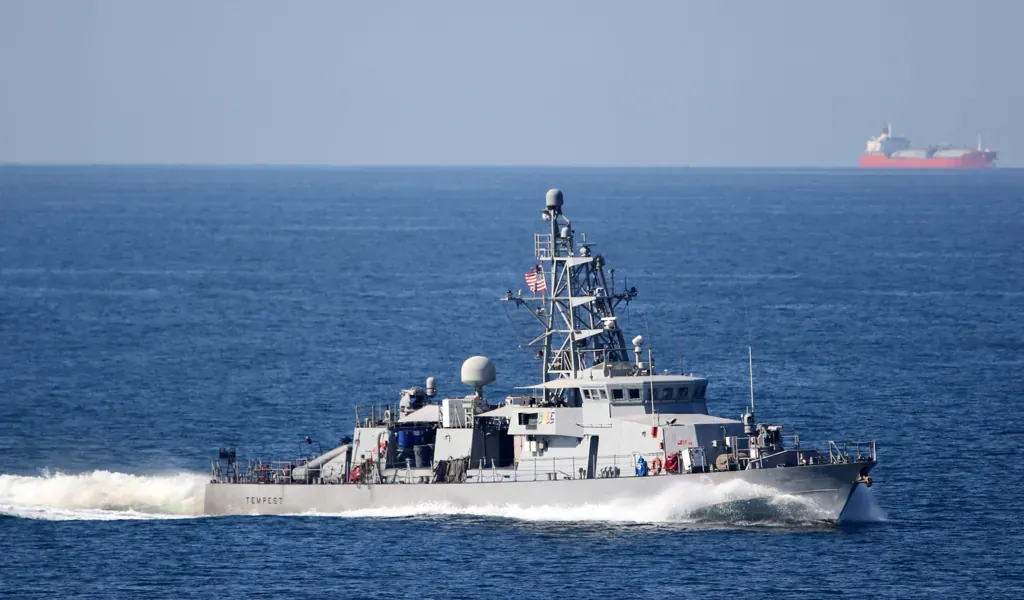
U.S. Central Command said American forces struck three Iranian crude-oil carriers after Iran’s Islamic Revolutionary Guard Corps launched ballistic missiles toward two U.S. Navy warships operating in regional waters. CENTCOM said the three tankers were disabled or destroyed.
The Revolutionary Guard later said it had targeted three oil tankers using routes that Tehran had not authorized, as well as three U.S.-linked vessels elsewhere in the region. Those Iranian claims were not independently confirmed in the available official material.

Commercial vessels drawn deeper into the confrontation
The latest exchange marks a significant expansion of the maritime risks surrounding the conflict because commercial vessels are increasingly becoming part of the confrontation rather than simply operating near it.
CENTCOM said the three vessels targeted by U.S. forces were Iranian crude carriers connected to an oil network supporting the Revolutionary Guard. It said the M/T Downy and M/T Stark 1 were permanently disabled, while the unladen M/T Kylo, also known as the Noxen, was destroyed in the Gulf of Oman after its crew was ordered to abandon ship.
Washington characterized the strikes as retaliation for the Iranian missile attacks directed at U.S. naval vessels.
The Iranian military response adds another layer of uncertainty for commercial operators, particularly where Tehran and Washington apply competing interpretations of which maritime movements are permitted.
Iran issues warnings over Strait routes
The Revolutionary Guard said the tankers it targeted were traveling through routes that had not been authorized by Iran and warned other vessels against similar movements, according to Iranian reporting cited in the supplied material.
■ Related News




For shipping operators, such warnings add to an already complex security environment in which vessels must account for military threats, competing claims of authority and the possibility of interference while transiting the region.
The U.S. Maritime Administration’s current advisory warns that threats to commercial vessels from Iran include direct missile attacks, armed drones and unmanned surface vessels.
U.S. advisory warns of continued commercial shipping risks
The U.S. government has formally warned commercial operators about the deteriorating security environment across the Persian Gulf, Strait of Hormuz and Gulf of Oman.
The Maritime Administration advises U.S.-flagged vessels to conduct risk assessments, coordinate with U.S. naval authorities and take additional precautions when operating in the area. It recommends that vessels remain as far from Iran as safely possible and, when traveling eastbound through the Strait of Hormuz, remain closer to Oman.
The advisory remains active through Sept. 9 and says the risk of Iranian attacks on commercial shipping remains high.
Shipping traffic falls as security risks increase
The maritime confrontation comes after months of disruption around one of the world’s most important energy corridors.
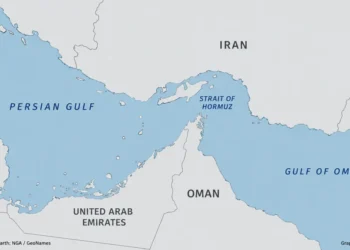
The Strait of Hormuz links the Persian Gulf with the Gulf of Oman and the wider Indian Ocean, making restrictions on traffic through the waterway significant for crude-oil movements as well as broader commercial shipping.
Recent reporting based on maritime tracking data cited in the supplied material showed traffic falling sharply during the latest escalation, with an average of about 10 commodity ships a day transiting the Strait over the preceding 10 days.
The decline points to the operational risks confronting shipowners and crews as they assess whether vessels can safely continue using the route.
Tanker attacks create wider energy and trade risks
Oil tankers are central to the crisis because the Strait of Hormuz is a major route for international energy supplies.
Threats or attacks against tankers can lead operators to delay voyages, alter routes or seek military protection. Even when vessels avoid physical damage, those measures can raise transportation and operating costs.
The consequences extend beyond the immediate U.S.-Iran confrontation. Shipping companies, insurers, energy traders and governments must account for the possibility that further attacks could interrupt already disrupted flows through a strategically important maritime corridor.
Crews face an increasingly uncertain operating environment
For commercial mariners, the risks are different from the strategic calculations made by governments.
A vessel can have no direct connection to either side and still face the possibility of being mistaken for a military or politically affiliated target. The U.S. Maritime Administration also warns of potential targeting, interference with navigation and significant GPS disruption in the region.
The agency urges operators to maintain heightened awareness and report suspicious activity.
Such uncertainty can affect shipping decisions even without an attack occurring, as companies weigh the security of crews and cargo against the importance of maintaining established trade routes.
Military retaliation and economic pressure increasingly overlap
The latest exchange highlights how military confrontation and economic pressure are becoming increasingly difficult to separate at sea.
Washington has sought to restrict Iran’s ability to export oil, while Tehran has used its strategic position around the Strait of Hormuz as leverage against the United States.
The Sept. 5 strikes demonstrate how those pressures can interact. An attack involving military forces can lead to retaliation against oil vessels, followed by additional threats against commercial shipping.
That sequence increases the possibility that vessels with no direct role in the confrontation could become involved.
Hormuz remains a critical point of international risk
The Strait’s strategic importance makes any sustained disruption particularly consequential for international commerce and energy markets.
The United States has said it seeks to preserve freedom of navigation and protect commercial movement, while its maritime advisory simultaneously warns operators about the risks created by the conflict.
Iran continues to assert authority over how vessels move through waters it considers subject to its control.
The competing positions leave commercial operators facing a maritime security environment that can change rapidly and in which military and commercial activity increasingly overlap.
Further attacks could broaden the disruption
The immediate concern is whether the latest exchange remains focused on Iranian and U.S.-linked vessels or expands to involve a wider range of commercial shipping.
Iran’s reported warning to vessels using routes it does not authorize adds to that uncertainty. The United States has also indicated that it will respond militarily when its forces are attacked.
For shipping companies, continuing to use the Strait preserves access to an important trade corridor while exposing crews and cargoes to a conflict that is becoming increasingly difficult to separate from commercial maritime activity.
The next developments will depend in part on whether further attacks or restrictions affect additional vessels. The U.S. maritime advisory remains in effect through Sept. 9, leaving commercial operators under heightened security guidance as the confrontation continues.
Reporting Credit: U.S. Central Command; U.S. Department of Transportation Maritime Administration; Islamic Revolutionary Guard Corps statements as reported through Iranian official media.