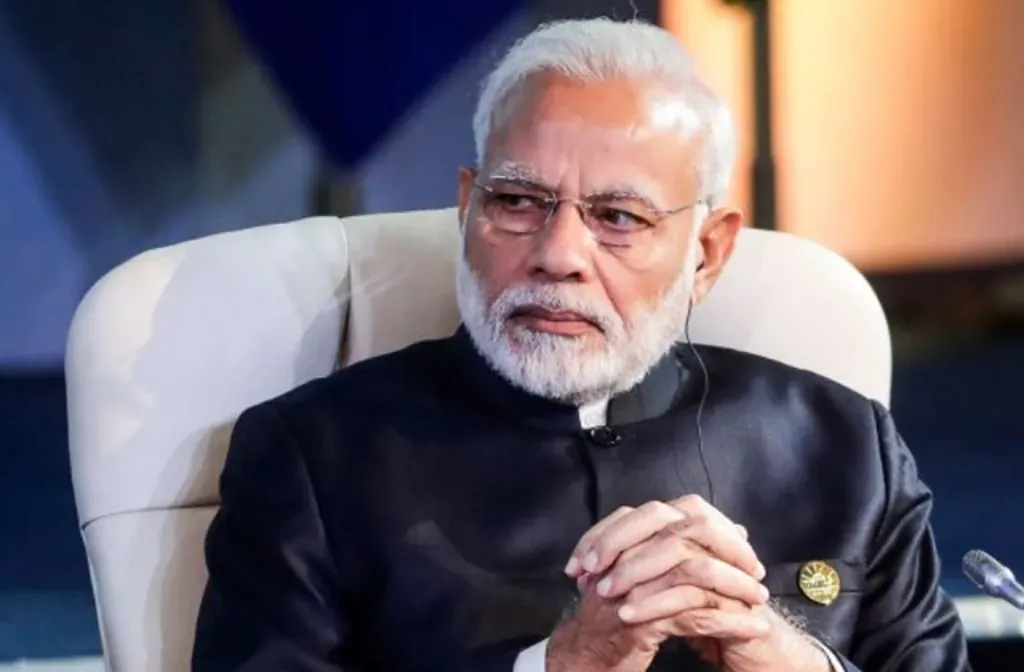
NEW DELHI, India – Indian Prime Minister Narendra Modi warned BRICS leaders Sunday that rising geopolitical tensions, supply-chain disruptions and the weaponization of technology and critical minerals are threatening global economic stability.
Speaking on the second day of the BRICS summit in New Delhi, Modi said the effects of conflicts, pandemics, climate disasters and disruptions to supply chains increasingly cross national borders.
“In today’s interconnected world, no crisis remains confined to a single region,” Modi said, according to the Indian prime minister’s office.

He called for greater resilience within BRICS and said the grouping should develop practical mechanisms to anticipate and respond to disruptions before they spread.
The warning came as the 11-member bloc seeks closer economic cooperation while its members face sharply different geopolitical pressures.
Critical minerals become a strategic concern
Modi specifically cautioned against using technology and critical minerals as geopolitical tools.
He said the “weaponisation of technology and critical minerals” could obstruct shared development and argued that access to technology should be more inclusive.
Critical minerals are important inputs for industries including advanced manufacturing, electronics, electric vehicles, clean-energy systems and defense technology. Concentrated production or processing in a small number of countries can therefore leave manufacturers vulnerable when exports are restricted or trade routes are disrupted.
■ Related News


The concern has become particularly relevant to BRICS as the group seeks to strengthen cooperation on trade and industrial development.
BRICS leaders endorsed the need for more resilient and diversified critical-mineral supply chains in the summit’s New Delhi Declaration.
BRICS moves toward more resilient supply chains
India used its year as BRICS chair to promote measures aimed at reducing vulnerabilities in cross-border trade.
Modi said the grouping had agreed on a BRICS Logistics Supply Chain Cooperation Framework intended to make supply chains more reliable and resilient. India also promoted cooperation in areas including technology, agriculture, energy storage and small-business development.
The summit also produced agreement on an integrated early-warning system for infectious diseases and guidelines for sharing early-warning data for disaster management, according to Modi’s office.
The initiatives reflect a broader effort by the bloc to respond to disruptions collectively rather than treating each crisis as an isolated event.
Geopolitical tensions complicate economic cooperation
The BRICS meeting took place against a backdrop of conflicts and trade tensions affecting energy, shipping and international commerce.
The bloc’s members include major economies with competing strategic interests, including India, China, Russia, Iran, Saudi Arabia and the United Arab Emirates. Their governments do not always share the same position on international conflicts or economic policy.
Nevertheless, leaders adopted a joint declaration calling for restraint over the conflict in the Middle East and reaffirming diplomacy as a means of resolving international disputes.
Modi argued that BRICS should use its diversity as a basis for practical cooperation rather than allow differences among members to prevent collective action.
He also said solutions developed within BRICS should be made accessible to the wider Global South.
China takes over BRICS chairmanship
The summit marked the end of India’s year as BRICS chair, with China taking over for 2027.
Chinese President Xi Jinping used the meeting to propose additional cooperation in manufacturing, trade and technology, including a BRICS artificial-intelligence open-source initiative and measures aimed at strengthening supply-chain integration.
Xi also called for BRICS countries to work more closely with emerging markets and the wider Global South.
For Modi, the immediate focus was on making the bloc better prepared for disruptions that can spread rapidly through an interconnected global economy.
His warning places supply-chain resilience alongside technology, critical minerals and disaster preparedness as areas where BRICS wants greater cooperation as geopolitical tensions continue to affect international trade.
Reporting Credit: Prime Minister’s Office of India — Modi’s BRICS summit address and initiatives under India’s BRICS chairmanship; BRICS — New Delhi Declaration and summit outcomes.