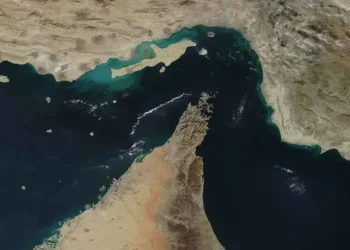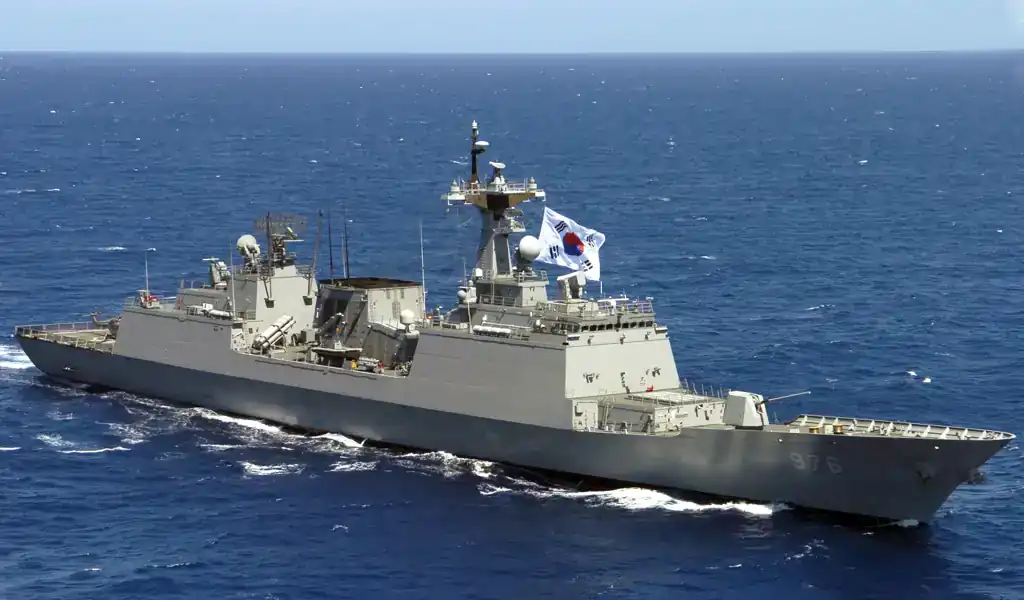
ABU DHABI, United Arab Emirates -South Korea has sent an inspection team to the United Arab Emirates to assess security conditions around the Strait of Hormuz as escalating U.S.-Iran hostilities disrupt shipping and threaten a vital route for South Korean energy imports.
The Defence Ministry said the team was sent to gather information on the regional security environment and that its mission does not mean Seoul has decided to deploy military forces. The team departed over the weekend and was expected to return as early as this week.
The move comes as South Korea examines how it could contribute to efforts to preserve freedom of navigation through the strait, a waterway that carries a large share of the country’s crude oil and naphtha imports. President Lee Jae Myung said after talks with French President Emmanuel Macron in Paris that the two countries would coordinate to restore freedom of navigation and stabilize global supply chains.

Seoul weighs maritime security options
South Korea has not committed to sending troops or military assets to the region.
National Security Adviser Wi Sung-lac said Seoul remains in the review stage and is considering ways to contribute to international maritime security. He said the discussions were about possible contributions rather than a decision to deploy forces.
Any military deployment would require approval from South Korea’s parliament. The presidential office has also rejected reports that the United States imposed a deadline for Seoul to send assets to Hormuz.
The inspection mission therefore represents an assessment of conditions rather than a confirmed military operation.
Hormuz disruption threatens South Korean energy supplies
The strategic importance of the strait is particularly high for South Korea, which depends heavily on Middle Eastern energy supplies.
■ Related News


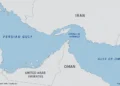
According to figures cited by Seoul during the Lee-Macron discussions, about 61% of South Korea’s crude oil imports and 54% of its naphtha imports passed through the Strait of Hormuz last year.
The disruption is occurring as commercial traffic through the waterway has fallen sharply. Preliminary ship-tracking data showed only six commodity vessels transited the strait on Tuesday, compared with a 10-day average of 12.
Reduced traffic raises the risk of delays and higher transportation and insurance costs, with consequences extending beyond the energy sector to wider supply chains.
Shipping risks rise as fighting escalates
The inspection mission comes amid a sharp deterioration in maritime security.
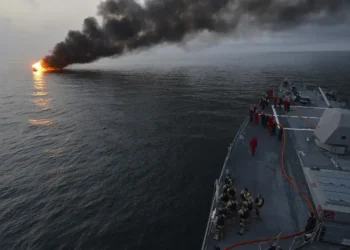
U.S. forces have targeted Iranian oil tankers after Iranian attacks involving U.S. military vessels, while Iran has retaliated against U.S. and regional targets. The escalation has increased uncertainty for commercial vessels operating near the Gulf and the Strait of Hormuz.
The threat is not limited to direct attacks. Ship operators also face uncertainty over whether vessels can safely transit the waterway, contributing to lower traffic and greater disruption to international trade.
The United Nations Conference on Trade and Development has warned that prolonged disruption around Hormuz could particularly hurt small and medium-sized businesses because they have less capacity to absorb higher shipping and supply-chain costs.
Seoul balances security and diplomatic risks
South Korea’s review also carries diplomatic implications.
Iran’s Foreign Ministry has warned that any South Korean military presence or participation in Gulf or Hormuz operations would be viewed as support for U.S. aggression and could bring serious consequences.
At the same time, Seoul has an economic interest in maintaining safe access to the waterway and has been discussing possible contributions with international partners.
Lee and Macron agreed to continue coordinating on maritime security and the restoration of freedom of navigation. Seoul has stressed that its review is being driven by its national interests rather than by a U.S. demand to participate militarily.
No deployment decision has been made
For now, South Korea’s position remains under review.
The inspection team will provide information on conditions in and around the region, but Seoul has not announced a decision to deploy troops, warships or other military assets. Reports that specific military operations had already been approved have been rejected by the South Korean government.
The immediate issue for Seoul is therefore both economic and strategic: how to protect access to a critical energy route without becoming directly involved in the widening U.S.-Iran conflict.
The inspection mission is the latest indication that the disruption of Hormuz is forcing major energy-importing countries to reassess the security of their supply routes, even as diplomatic and military efforts to stabilize the waterway remain unresolved.
Reporting Credit: South Korea’s Defence Ministry – deployment of an inspection team to the United Arab Emirates to assess the regional security environment; South Korean presidential office – review of possible contributions to freedom of navigation and confirmation that no military deployment has been decided; President Lee Jae Myung – commitment with French President Emmanuel Macron to coordinate on restoring navigation and stabilizing global supply chains; – additional reporting on the inspection mission, South Korea’s energy exposure and the diplomatic context.