TAIPEI, Taiwan – China’s disclosure of a monthlong seabed survey east of Taiwan has heightened scrutiny of Beijing’s maritime activity around the island, where competing jurisdictional claims are increasingly intersecting with coast guard, research and military operations.
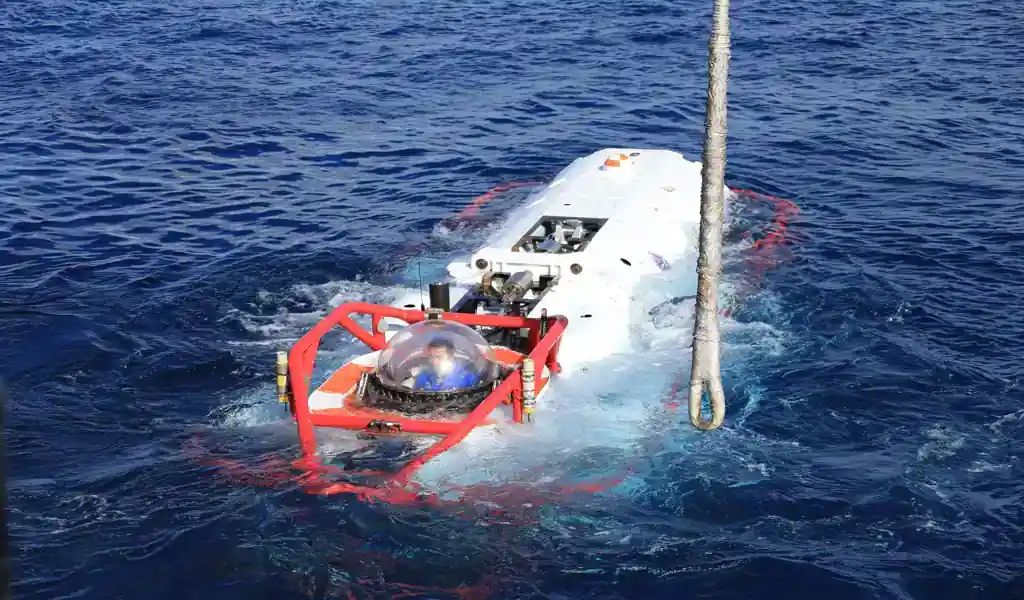
China’s Ministry of Natural Resources said the survey ran from Aug. 10 to 31 and was conducted by its Second Institute of Oceanography. The operation examined seabed topography, sedimentary layers, deep geological structures and geophysical fields, with the ministry saying the information would support geological research, territorial planning and natural-resource management.
The disclosure comes amid a broader pattern of Chinese government and research vessels operating around Taiwan, prompting concern in Taipei over maritime authority and the potential security implications of increasingly frequent encounters.

Beijing presents survey as scientific and administrative work
The Ministry of Natural Resources said the survey would improve knowledge of seabed conditions and provide a scientific basis for managing waters Beijing considers to fall under its jurisdiction.
Chinese state media said researchers used multibeam sonar, seismic exploration, ocean-bottom seismometers and gravity and magnetic measurements. The collected information is also intended to contribute to a unified spatial-planning database.
Beijing regards Taiwan as part of China and consequently frames its activities around the island through its own territorial and jurisdictional claims.
Taiwan rejects China’s jurisdictional position
Taiwan disputes China’s claims over waters east of the island and has previously objected to Chinese survey activity in the area.
Taiwan’s Coast Guard Administration has said Beijing has no sovereignty or jurisdiction over waters administered by Taiwan. In July, the agency reported monitoring the Chinese research vessel Lanhai 201 during a fisheries survey east of Taiwan.
■ Related News




Taiwanese authorities have increasingly characterized such operations as part of a wider challenge to the island’s control over surrounding maritime space.
The dispute therefore concerns more than the stated scientific purpose of individual research missions. It also reflects the unresolved question of which authority has the right to conduct and regulate activities in the waters around Taiwan.
Research and coast guard operations are increasing
The August survey follows other Chinese maritime operations around Taiwan this year.
Taiwan’s Coast Guard said in June that Chinese vessels conducted what Beijing described as maritime traffic enforcement operations east of Taiwan. Taipei rejected that characterization and said the activity was intended to create the appearance that China was exercising jurisdiction in the area.
Taiwan also reported monitoring Chinese research vessels during separate operations in July and August. The growing frequency of these encounters has increased attention on whether research and law-enforcement missions are becoming a more regular feature of the region’s security environment.
Seabed information has wider strategic relevance
Seabed surveys have legitimate scientific, commercial and administrative applications, including geological research, resource management and maritime planning.
Detailed information about underwater terrain can also have broader strategic relevance because seabed geography can affect submarine operations, undersea communications and maritime surveillance. That does not establish that China’s August survey had a military purpose.
The available material does not provide authoritative evidence that the operation was specifically conducted for military reasons. China’s stated purpose was geological research and territorial planning, making it important to distinguish the survey’s declared function from the wider strategic concerns surrounding Chinese activity near Taiwan.
Eastern waters connect Taiwan to wider Pacific security
The waters east of Taiwan have importance beyond the immediate jurisdictional dispute because they open toward the wider Pacific.
Taiwan sits between the East China Sea and the Philippine Sea, placing its surrounding waters within a broader regional security environment involving China, Japan, the Philippines and the United States.
Taiwan’s Ministry of National Defense has reported continued Chinese military and official-vessel activity around the island, including aircraft, naval vessels and government ships. The combination of those activities with research and coast guard operations has increased attention on the eastern approaches to Taiwan.
Taiwan expands monitoring of Chinese vessels
Taiwan has responded to Chinese research and government-vessel activity by closely monitoring vessels approaching waters it considers sensitive.
In August, the Coast Guard said it monitored the Chinese research vessel Xiang Yang Hong 3 after detecting it southwest of Kaohsiung. Taiwan said the vessel remained outside its restricted waters and did not deploy survey equipment during the monitored period.
In another August incident, Taiwan said it monitored and warned the Chinese research vessel Tong Ji after detecting it near waters around the island.
The encounters have so far remained below the threshold of a direct military confrontation, but they demonstrate the increasingly active maritime surveillance surrounding Taiwan.
Competing jurisdictional claims create friction
The conflicting descriptions of the waters remain at the center of the dispute.
China’s Ministry of Natural Resources treats the surveyed area as waters under Chinese jurisdiction, while Taiwan rejects Beijing’s assertion of sovereignty or jurisdiction over waters east of the island.
That disagreement means an activity China describes as routine government research can be viewed in Taiwan as an assertion of disputed maritime authority. Repeated encounters between research vessels, coast guards and other government ships could increase the risk of confrontation or miscalculation even when individual operations remain non-military.
Maritime activity adds to broader regional competition
The seabed survey is therefore part of a wider contest over maritime authority and strategic space around Taiwan.
China says its survey serves scientific research and territorial management, while Taiwan views the growing presence of Chinese government and research vessels as part of a broader challenge to the existing maritime status quo.
The August operation did not result in a reported military confrontation, but the accumulation of research missions, coast guard operations and military activity has made the waters around Taiwan an increasingly important arena in the wider strategic competition across the western Pacific.
Future Chinese surveys and government-vessel operations will remain closely watched by Taiwan as both sides continue to advance competing positions over maritime jurisdiction.
Reporting Credit: China’s Ministry of Natural Resources; Taiwan Coast Guard Administration; Taiwan Ministry of National Defense.