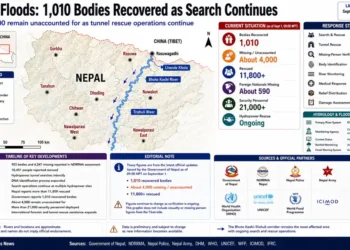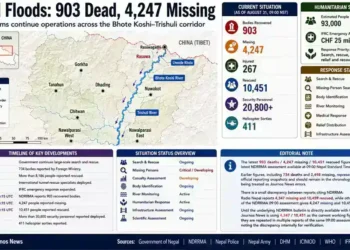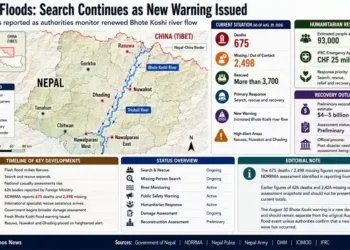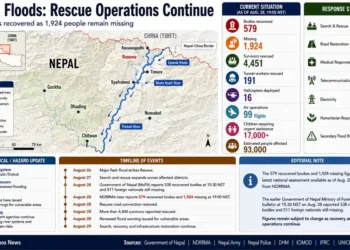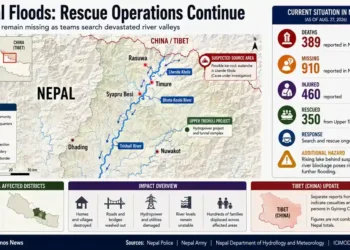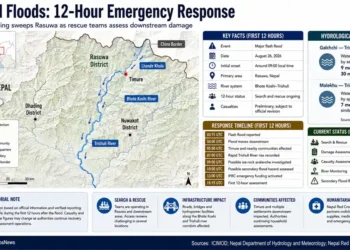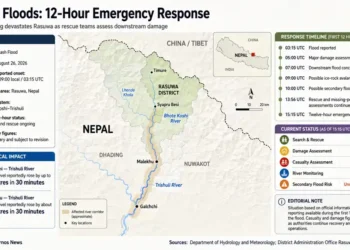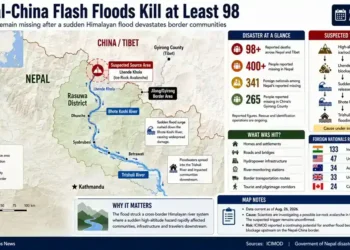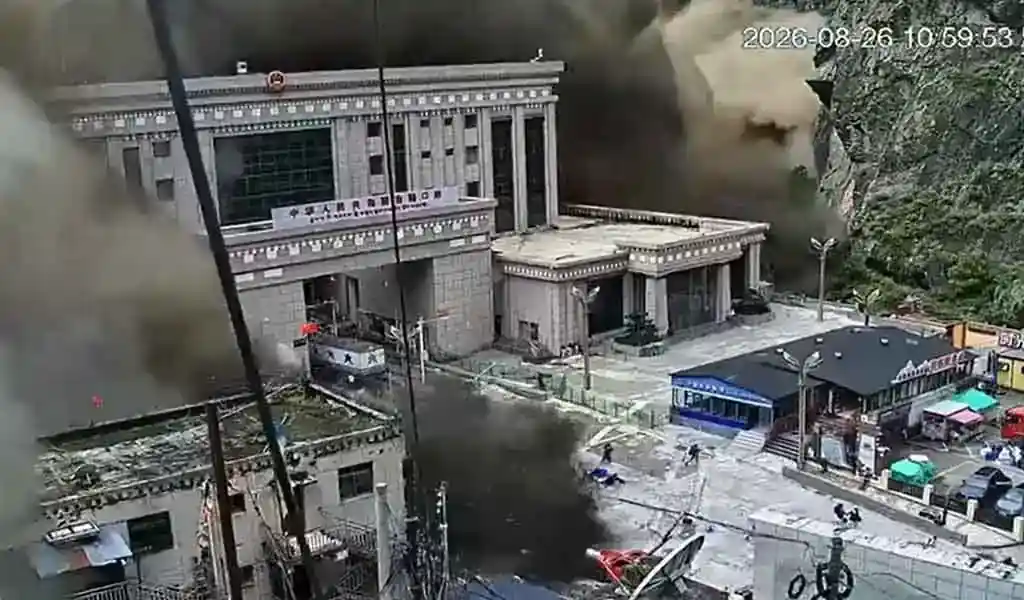
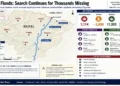
KATHMANDU, Nepal – Nepal has ended active search-and-rescue operations for people still missing after the devastating Aug. 26 floods, leaving 5,285 people officially unaccounted for as the government turns toward rehabilitation and reconstruction.
At least 1,455 people have died, while another 13,795 people were rescued during the response, according to officials. The disaster damaged or destroyed roads, bridges, settlements and 12 hydroelectric projects.
The government says the decision marks a shift from the search-and-rescue phase to a broader recovery effort.

But thousands of families are still waiting for answers.
Families Face Different Choices
The decision has produced sharply different reactions among families of the missing.
Some have protested and demanded that authorities continue searching for their relatives. Others have accepted that their loved ones are unlikely to have survived and want a legal process that would allow them to move forward.
Some families have held symbolic funerals even without recovering bodies.
The uncertainty has practical consequences as well. Families need official recognition of deaths to settle insurance claims, inheritance, banking matters and other legal issues.
Officials are considering procedures for legally declaring some missing people dead. That process is separate from the physical search and does not mean authorities have confirmed the deaths of all 5,285 people.
Search Ends, Recovery Continues
Ending the active search does not mean authorities will stop recovering human remains.
Dharam Raj Uprety, chief of Nepal’s National Disaster Risk Reduction and Management Authority, said teams would recover remains, personal property and other valuables discovered during rehabilitation work.
Emergency rescue operations can also continue if new situations require them.
Nepal’s official Rasuwa flood-rescue portal continues to provide government information on missing and recovered people and emergency assistance.
Reconstruction Becomes the Priority
The government is now directing resources toward restoring infrastructure damaged by the floods.
Roads and bridges in remote areas are a particular concern because damage has disrupted access and made it harder to deliver assistance.
Authorities estimate that reconstruction and recovery will require about $4.77 billion.
Nearly 33,000 people were affected by the disaster, while about 7,500 homes were damaged or destroyed.
Nepal’s government has also begun considering longer-term measures to reduce flood risks, including work to lower water levels in four high-altitude glacial lakes considered dangerous.
Missing Does Not Mean Declared Dead
The biggest unresolved issue is the status of the thousands who remain missing.
Authorities have recovered many bodies, but thousands of people have not been found.
The government is therefore facing two separate tasks: continuing to identify recovered remains and creating a legal process for families who need official recognition of a death.
Until those procedures are completed, the 5,285 people remain officially missing.
For their families, the end of the search brings no single form of closure. Some are still demanding more efforts to find their relatives. Others are preparing to rebuild their lives without them.
For Nepal, the response has entered a new phase: from searching for survivors and the missing to rebuilding communities and infrastructure damaged by the floods.
Reporting Credit: Office of the Prime Minister and Council of Ministers of Nepal; National Emergency Operation Centre; National Disaster Risk Reduction and Management Authority; Nepal Police; Ministry of Home Affairs; official flood-rescue records; official recovery and reconstruction assessments.