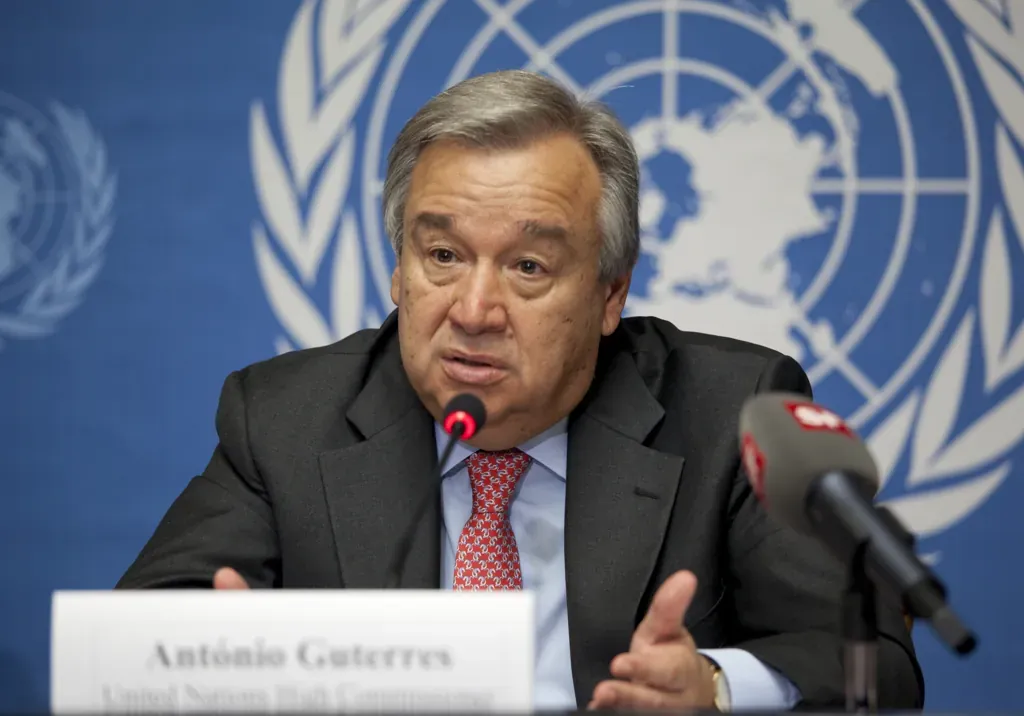
NEW YORK, United States — The race to choose the next United Nations secretary-general remains unresolved after a sixth informal Security Council poll on October 16 failed to identify a candidate without opposition from the Council’s five permanent members.
Costa Rica’s Rebeca Grynspan remained the leading contender, receiving nine “encourage” votes and five “discourage” votes, according to Reuters. Two of the five negative votes came from permanent members, which hold veto power in the formal selection process.
Guyana’s Carolyn Rodrigues Birkett and Argentina’s Rafael Grossi were also among the leading candidates. Both received two “discourage” votes from permanent members, according to the Associated Press, which cited diplomats familiar with the confidential poll.

The results indicate that no candidate has yet overcome the opposition needed to secure a formal Security Council recommendation. However, the straw poll did not formally reject any candidate, and the selection process remains open.
Grynspan leads, but opposition persists
Grynspan, a former vice president of Costa Rica who leads the UN Conference on Trade and Development, received nine “encourage” votes, five “discourage” votes and one “no opinion” vote in the sixth poll, Reuters reported. Two of the five opposing votes came from permanent members.
Rodrigues Birkett, Guyana’s ambassador to the United Nations, received eight “encourage” votes, six “discourage” votes and one “no opinion” vote. Two of her opposing votes came from permanent members, according to Reuters.
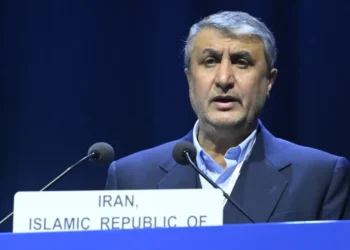
Grossi, director-general of the International Atomic Energy Agency, also faced opposition from two permanent members, according to AP. The reported results do not establish which governments cast the individual ballots.
The remaining candidates received less support in the latest reported poll. AP reported that former Ecuadorian foreign minister María Fernanda Espinosa and former Ecuadorian ambassador Ivonne A-Baki were at the bottom of the results. Former UN diplomat Olara Otunnu of Uganda and former Senegalese president Macky Sall each received 10 “discourage” votes.

These results measure members’ views during an informal process. They do not amount to formal decisions on the candidates’ eligibility or nominations.
Why the five permanent members matter
The Security Council has 15 members. Five hold permanent seats: the United States, Russia, China, the United Kingdom and France. The other 10 members are elected by the General Assembly for two-year terms.
The permanent members have a decisive role in recommending a secretary-general. Under the Council’s voting rules, a substantive decision requires at least nine affirmative votes and must not be blocked by a negative vote from any permanent member. A permanent member’s veto can therefore prevent the Council from recommending a candidate, even if that candidate has broad support among other members.
The October 16 poll used color-coded ballots to distinguish votes from permanent members from those cast by elected members. This made it easier to identify whether a candidate faced potential opposition from a government with veto power.
But a “discourage” vote in a straw poll is not a formal veto. The poll is informal and confidential. Members can change their positions in later consultations or votes, and the reported results do not identify which permanent member opposed a particular candidate.
The ballots therefore provide an indication of political obstacles, not a final decision.
Seven candidates remain in the field
The UN’s official selection page lists seven active candidates in the current race. They are:
- Ivonne A-Baki — Ecuador, nominated by Tonga.
- María Fernanda Espinosa Garcés — Ecuador, nominated by Antigua and Barbuda.
- Rafael Mariano Grossi — Argentina, nominated by Argentina.
- Rebeca Grynspan Mayufis — Costa Rica, nominated by Costa Rica.
- Olara Otunnu — Uganda, nominated by Uganda.
- Carolyn Rodrigues Birkett — Guyana, nominated by Guyana.
- Macky Sall — Senegal, nominated by Burundi.
The list reflects candidates’ nationalities and their nominating states, which are not always the same. The UN page also records the withdrawal of Michelle Bachelet’s nomination and the withdrawal of Virginia Gamba’s candidacy.
The seven candidates have presented their qualifications and views through the UN’s candidate dialogue process. The field could still change if a candidate withdraws or a member state submits a new nomination.
The sixth poll has not established a clear path to a recommendation. AP reported that US and Russian representatives left open the possibility of additional candidates joining the race.
UN Appointment Process
How the secretary-general is selected
The selection follows Article 97 of the UN Charter: the General Assembly appoints the secretary-general on the recommendation of the Security Council.
The informal straw polls help Council members assess candidates before a formal recommendation. They are not the appointment vote itself, and they do not replace the required Council decision.
For the formal recommendation, the Security Council must obtain at least nine affirmative votes and avoid a veto by any of its five permanent members. If the Council agrees on a candidate, it recommends that person to the General Assembly, which then makes the appointment.
The distinction matters because a candidate may lead the informal polls without securing the support required for the formal recommendation. Conversely, opposition shown in an informal poll does not permanently disqualify a candidate.
Regional representation and the question of gender
The current contest has renewed discussion about regional representation and the possibility of appointing the first woman to lead the United Nations.
The secretary-general position has traditionally followed an informal regional-rotation practice. Latin America and the Caribbean are widely considered to be next in line, although this is a convention rather than a binding rule. The Community of Latin American and Caribbean States called on the Council and General Assembly to give due consideration to a candidate from the region.
There is also public and diplomatic interest in selecting a woman. No woman has held the secretary-general position in the UN’s more than 80-year history. However, neither regional rotation nor gender determines the formal outcome. Member states must still reach agreement through the established process.
The current results also show why those considerations do not settle the contest. The leading candidates have encountered opposition from permanent members, while the poll results do not reveal a single candidate with an unchallenged path forward.
What happens next
As of October 20, the October 16 straw poll remained the latest publicly reported vote identified in the sources reviewed for this article. The Associated Press reported that another poll using color-coded ballots was expected the following week. That was a reported expectation, not confirmation that a seventh poll had already taken place.
Further informal polls or diplomatic consultations could change the candidates’ positions. Governments could also nominate new candidates, while existing contenders could withdraw. The next decisive step will be a formal Security Council recommendation.
The timetable is under pressure because Guterres’ term ends on December 31, 2026. The UN’s official selection process is intended to identify a successor, but the Council’s ability to reach agreement will determine when it can submit a recommendation to the General Assembly.
The immediate challenge is therefore not simply choosing the candidate with the most encouragement votes. Council members must find someone who can secure the required support without a permanent member blocking the formal recommendation. Until that happens, the race remains open.
Journos News reporting based on the United Nations’ official selection and appointment documentation, Security Council Report’s coverage of the straw-poll process, and reporting by Reuters and the Associated Press on the October 16 results. Individual ballots were confidential, and no independent access to the Council’s internal voting records was available.