NEW YORK, United States – U.S. and Iranian officials held a three-hour meeting in New York on Tuesday, President Donald Trump said, opening an unexpected channel for diplomacy hours after he warned at the United Nations that he could “annihilate” Iran if no agreement is reached to end the war.
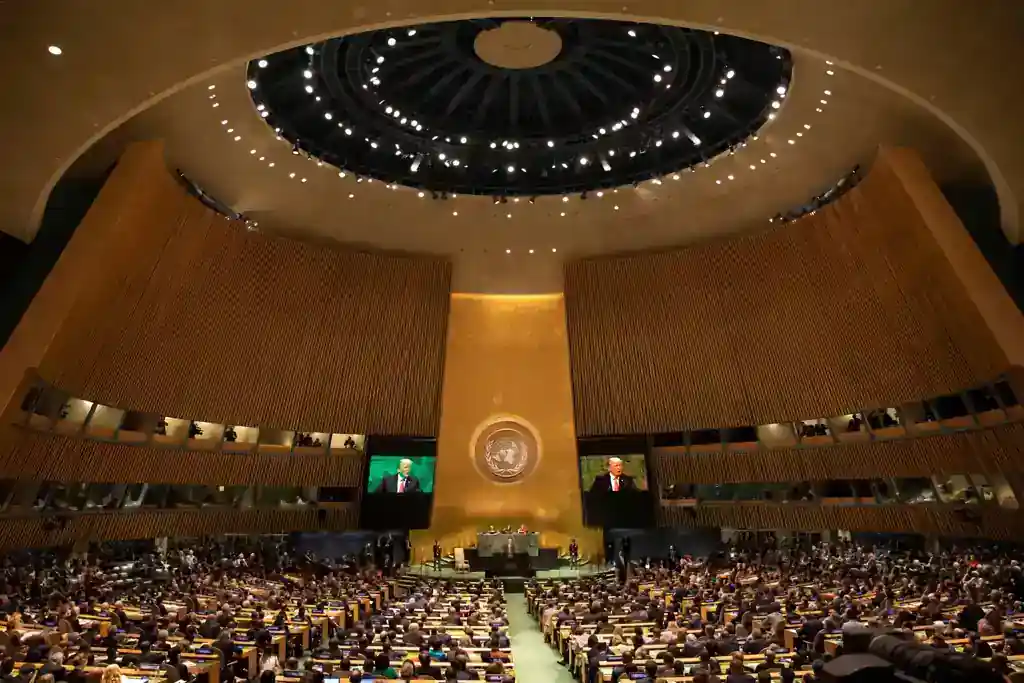
Trump disclosed the meeting after addressing the U.N. General Assembly on Sept. 22. He described it as a “very good meeting” but offered few details about what was discussed or the terms under consideration.
The meeting involved U.S. special envoy Steve Witkoff and Jared Kushner on the American side. Iranian Foreign Minister Abbas Araghchi participated for Tehran, according to subsequent reporting, with Qatari officials involved as mediators.

It was the first known direct U.S.-Iranian meeting since talks surrounding a short-lived June ceasefire, according to current reporting.
The contact came as the nearly seven-month war continued to disrupt the region and the global energy market, with the Strait of Hormuz remaining one of the central issues in efforts to reach a settlement.
Trump couples diplomatic opening with new threat
Trump’s announcement followed an unusually forceful speech to the General Assembly.
He said he faced a decision between reaching an agreement that would allow Iran to rebuild and “annihilate” the Islamic Republic. He also demanded that Iran reopen the Strait of Hormuz and return to negotiations.
The White House presented Trump’s address as a defense of his administration’s military campaign and its stated objective of preventing Iran from obtaining a nuclear weapon.
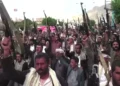

The meeting therefore did not represent a public end to the confrontation.
Instead, it placed direct diplomatic contact alongside continued military pressure and threats of further escalation.
Trump later said the Iranian officials involved were “not the highest level, but it’s something,” according to the Associated Press.
Iran links diplomacy to the Strait of Hormuz
Iranian officials confirmed that discussions took place.
A senior Iranian official told Reuters that Tehran was prepared to reopen the Strait of Hormuz within seven days if Washington eased military pressure and lifted its blockade of Iranian ports. The official said Iran’s proposal for ending hostilities had previously been delivered through mediators on Sept. 16.
The Strait is a critical route for global energy shipments, making its status central to the economic consequences of the conflict.
Iran’s position, as described by the senior official, was that Washington would first need to make clear that it wanted a diplomatic solution and agree on a process for negotiations.
The Iranian delegation was in New York for the U.N. General Assembly, creating an opportunity for officials and mediators to hold discussions without requiring a separate diplomatic venue.
Iranian President Masoud Pezeshkian was also in New York for the General Assembly, although he was not expected to meet Trump directly.
Talks follow months of stalled diplomacy
The New York meeting followed a period in which direct U.S.-Iran negotiations had largely stalled.
The Associated Press reported that communications had languished after the collapse of a short-lived ceasefire in June. U.S. and Iranian negotiators subsequently held separate contacts with Qatari and Pakistani mediators in Doha in early July.
That history helps explain the significance of the New York meeting without establishing that a new agreement is imminent.
The latest contact is a diplomatic development, not a settlement.
Neither side has announced a comprehensive agreement ending the war.
Hormuz remains central to the dispute
The Strait of Hormuz has become one of the most consequential pressure points in the conflict.
Iran has threatened restrictions on the waterway, while U.S. military action and the blockade of Iranian ports have contributed to the confrontation over shipping and energy supplies.
The senior Iranian official’s statement that Tehran could reopen the strait within seven days was conditional on Washington taking steps to reduce military and economic pressure.
That creates a difficult negotiating structure.
Washington has demanded changes in Iran’s nuclear and security posture, while Tehran is seeking an end to military pressure and restrictions affecting its economy and ports.
The two sides have not publicly agreed on how those demands would be reconciled.
Another meeting is expected
Trump said another round of discussions was being planned.
He described the first meeting as productive and indicated that he believed momentum toward an agreement was developing. Axios reported that Trump said Witkoff and Kushner met the Iranian delegation for about three hours and that another meeting was expected.
The Iranian side has also kept the diplomatic channel open, although its public conditions remain substantially different from Washington’s stated demands.
The competing positions leave several major questions unresolved, including the future of Iran’s nuclear program, the status of the Strait of Hormuz, sanctions and the broader military conflict.
Diplomatic contact does not end the conflict
The timing of the meeting is notable because it occurred immediately after Trump’s warning at the U.N.
The sequence illustrates the two-track nature of the current confrontation: military pressure remains in place while diplomats explore whether an agreement is possible.
Trump’s administration has not announced a ceasefire resulting from the meeting, and there has been no public confirmation that the talks produced a binding commitment from either side.
For now, the significance of the New York meeting lies in the reopening of direct contact after months of limited progress.
Whether that contact can produce an agreement will depend on whether Washington and Tehran can bridge their differences over the war, Iran’s nuclear program, sanctions and the strategically important Strait of Hormuz.
Reporting Credit: White House — President Trump’s Sept. 22 U.N. address and administration position on Iran; United Nations — 81st General Assembly schedule and proceedings; Iranian Foreign Ministry / Iranian officials — confirmation and conditions surrounding diplomatic contact; U.S. State Department — U.S. diplomatic position on Iran and negotiations.