UNITED NATIONS, United States – The wars and diplomatic crises reshaping the Middle East have moved to the center of the United Nations General Assembly, with Iran’s president arriving in New York as governments seek a way back to negotiations while fighting continues across the region.
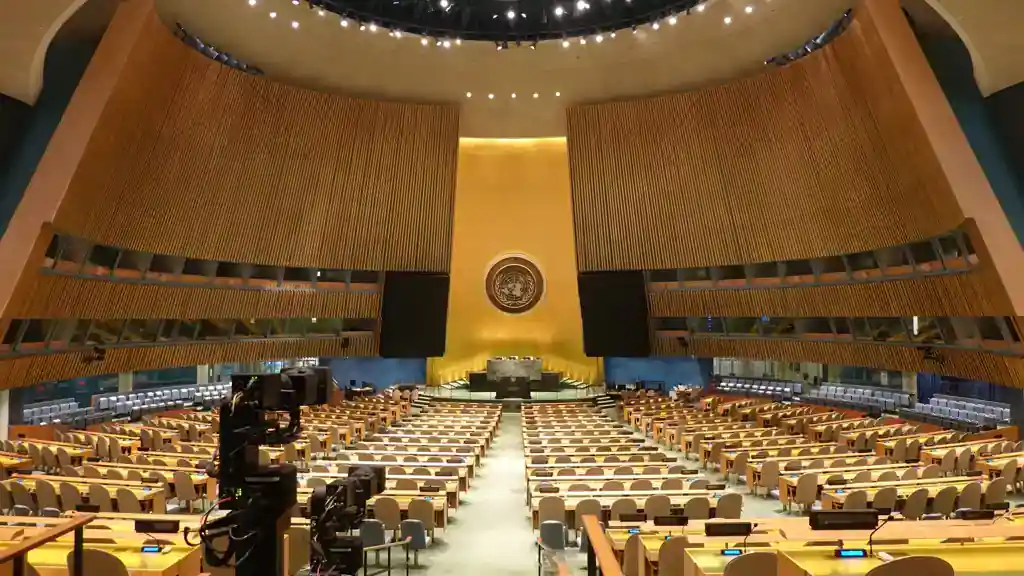
The 81st General Assembly opened its high-level debate Tuesday amid the ongoing U.S.-Iran war, renewed fighting in Yemen and continuing conflict involving Israel, Hamas and Hezbollah. The conflicts are also disrupting major shipping routes and contributing to pressure on global energy markets.
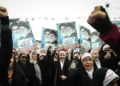
Iranian President Masoud Pezeshkian arrived in New York with Foreign Minister Abbas Araghchi and other senior officials. Pezeshkian is scheduled to address the 193-member General Assembly on Wednesday, giving Tehran a prominent international platform to present its position on the war and its conditions for diplomacy.

The visit comes as Washington and Tehran remain publicly divided over how negotiations could resume.
Iran arrives with diplomacy and distrust
Pezeshkian said before leaving Tehran that Iran would use the General Assembly to present what he described as the grievances of the Iranian people and the distrust created by the conflict.
He also expressed skepticism about returning to negotiations after what he said were attacks by the United States and Israel during previous periods of talks.
Iranian Foreign Minister Abbas Araghchi has separately criticized the United Nations’ effectiveness in resolving international conflicts while continuing diplomatic contacts around the Assembly.
Iran’s participation itself reflects the unusual circumstances surrounding this year’s meeting. The United States approved visas for Iran’s core delegation despite the countries remaining at war, allowing Pezeshkian and other senior officials to attend the UN gathering.

The diplomatic opening remains narrow.
Iran has indicated that it is prepared to discuss arrangements that could restore shipping through the Strait of Hormuz, while linking such a step to demands concerning military pressure and the U.S. blockade of Iranian ports.
Hormuz is at the center of the diplomatic pressure
The Strait of Hormuz has become one of the most important points in the negotiations because of its role in global oil transportation.
Iran has signaled that it could reopen the waterway to Gulf shipping under conditions that include an easing of military pressure and restrictions on Iranian ports. Reuters reported that Tehran conveyed a proposal through mediators and indicated that reopening could occur within days if its conditions were met.
The proposal has created a potential link between diplomacy and the global economic consequences of the war.
The Gulf Cooperation Council has separately called on Iran and allied armed groups to halt attacks and allow freedom of navigation through the Strait of Hormuz and the Bab el-Mandeb Strait.
GCC Secretary-General Jasem Mohamed AlBudaiwi said disruption at the two maritime chokepoints was affecting oil markets and international supply chains.
For Gulf governments, the issue is therefore not limited to the fighting inside Iran or around its territory. Shipping security has become a direct regional concern.
Washington keeps pressure on Tehran
President Donald Trump used his UN appearance Tuesday to maintain pressure on Iran while also leaving open the possibility of a diplomatic agreement.
Trump called for complete economic isolation of Iran and warned that the United States could take further action if Tehran did not reach a deal. At the same time, he said he expected an agreement could eventually be reached.
The mixed signals reflect the central diplomatic problem facing the two sides.
Washington is demanding an outcome that addresses the issues driving its campaign against Iran, while Tehran is seeking an end to military attacks and economic pressure.
Neither side has publicly accepted the other’s terms.
Secretary of State Marco Rubio has said the United States remains open to discussions if they can produce a positive outcome, creating a diplomatic channel even as military pressure continues.
That leaves mediators with a narrow space in which to operate.
Gulf states push for a regional diplomatic route
Qatar has been particularly active in promoting diplomacy.
Qatari Emir Sheikh Tamim bin Hamad Al Thani told the General Assembly that the Gulf was experiencing one of its most dangerous periods and argued that the crisis could be addressed through diplomatic means.
He called for reopening the Strait of Hormuz and advocated a regional system of collective security.
Qatar has also been involved in efforts to establish a temporary agreement between Iran and the United States that could restore negotiations.
Other regional mediators, including Oman and Turkey, have also been involved in diplomatic efforts surrounding the conflict.
The objective is not necessarily a comprehensive settlement at the Assembly itself.
The immediate diplomatic goal is narrower: create enough space for communication to resume and prevent another escalation while the parties remain far apart.
Yemen adds another front
The Iran crisis is unfolding alongside renewed fighting in Yemen.
Houthi forces have expanded their control along parts of the western Yemen coast, while Saudi-backed forces have intensified their campaign against them. The renewed fighting has also produced attacks affecting Saudi Arabia and the Red Sea region.
At least six people were reported killed Tuesday in airstrikes in the Houthi-controlled port city of Mokha, according to the Houthi-run Health Ministry. The strikes followed fighting and accusations involving the Houthis and internationally recognized Yemeni authorities.
The United States and several European and Asian governments have called on Iran to stop supporting the Houthis, arguing that their attacks threaten regional stability and international trade.
The Yemen conflict therefore adds another obstacle to diplomacy with Tehran.
Even if Washington and Iran were able to reopen direct negotiations, fighting involving Iranian-aligned groups elsewhere in the region would remain a separate security problem.
Gaza and Lebanon remain part of the wider crisis
The General Assembly is also confronting the continuing conflict in Gaza and Lebanon.
UN Secretary-General António Guterres said in his opening address that conflicts across the Middle East were cascading and called on governments to use the high-level week to pursue de-escalation and dialogue.
He called for fighting to stop, humanitarian aid to flow and navigational rights to be restored in accordance with international law.
The UN secretary-general also said the situation in Gaza remained a central international concern, pointing to the continuing humanitarian crisis and calling for compliance with international law and relevant court orders.
The different conflicts are not one war.
They involve separate actors, territorial disputes and political objectives.
But their interaction has made diplomacy more difficult because developments on one front can alter calculations on another.
The UN faces its own test
The Assembly is taking place against growing questions about whether the United Nations can influence conflicts when major powers disagree.
The opening of the session was framed around restoring trust and making the organization more effective.
UN General Assembly President Annalena Baerbock said the Security Council’s inability to act on major issues can undermine confidence in the UN as a whole, while emphasizing that the General Assembly can assume a greater role when the Council is blocked.
Guterres similarly warned that the international system is under increasing strain.
He described the world’s conflicts as a test of whether governments can restore cooperation and uphold international law while power becomes more fragmented.
The Iran war provides one of the clearest examples of that problem.
The United States and its allies are using military and economic pressure against Tehran. Iran rejects Washington’s approach and is seeking diplomatic concessions of its own. Other governments are attempting to mediate while protecting their territories and commercial routes.
The UN provides a venue where all of those positions can be presented.
Whether it can help convert them into negotiations is less certain.
Iran diplomacy enters a narrow window
Pezeshkian’s appearance gives Iran an opportunity to present its position directly to a global audience and meet foreign leaders and mediators.
The United States also has an opportunity to test whether regional governments can help establish conditions for negotiations.
The clearest immediate issue is the Strait of Hormuz.
A reopening would reduce pressure on global shipping and energy markets, but the conditions Iran has attached to such a move remain unacceptable to Washington in their current form.
That leaves diplomacy facing a basic sequencing problem.
Iran wants pressure reduced before making concessions.
Washington wants concessions before reducing pressure.
Regional mediators are attempting to find an intermediate arrangement that can allow talks to restart without requiring either side to abandon its principal position immediately.
The UN General Assembly cannot impose such an agreement.
It can, however, provide the setting in which the governments involved meet, communicate and test possible compromises.
A diplomatic opening without a settlement
The Middle East wars have made this year’s General Assembly unusually focused on immediate security questions.
Iran’s presence in New York creates a direct diplomatic opportunity, but the positions of Tehran and Washington remain sharply divided.
The Gulf states want attacks to stop and shipping routes restored. Yemen’s renewed fighting adds another layer of regional instability. Gaza and Lebanon remain major humanitarian and security issues.
For the United Nations, the immediate test is whether the gathering can produce more than speeches.
For Iran and the United States, the test is whether the diplomatic contacts surrounding the Assembly can reopen a channel that has repeatedly broken down.
No comprehensive agreement has emerged from the current meetings.
But with the war continuing and the economic consequences spreading beyond the region, the diplomatic activity in New York has become one of the few avenues available for testing whether the conflict can move back toward negotiation.
Reporting Credit: United Nations — General Assembly opening, Secretary-General’s statements and UN diplomatic framework; United Nations General Assembly — statements from the Assembly president and official 81st-session proceedings; U.S. Department of State — U.S. diplomatic position and Iranian delegation visa decisions; Government of Iran — statements by President Masoud Pezeshkian and Foreign Minister Abbas Araghchi; Gulf Cooperation Council — regional position on attacks and freedom of navigation; Government of Qatar — diplomatic statements concerning Iran, the Strait of Hormuz and regional security.