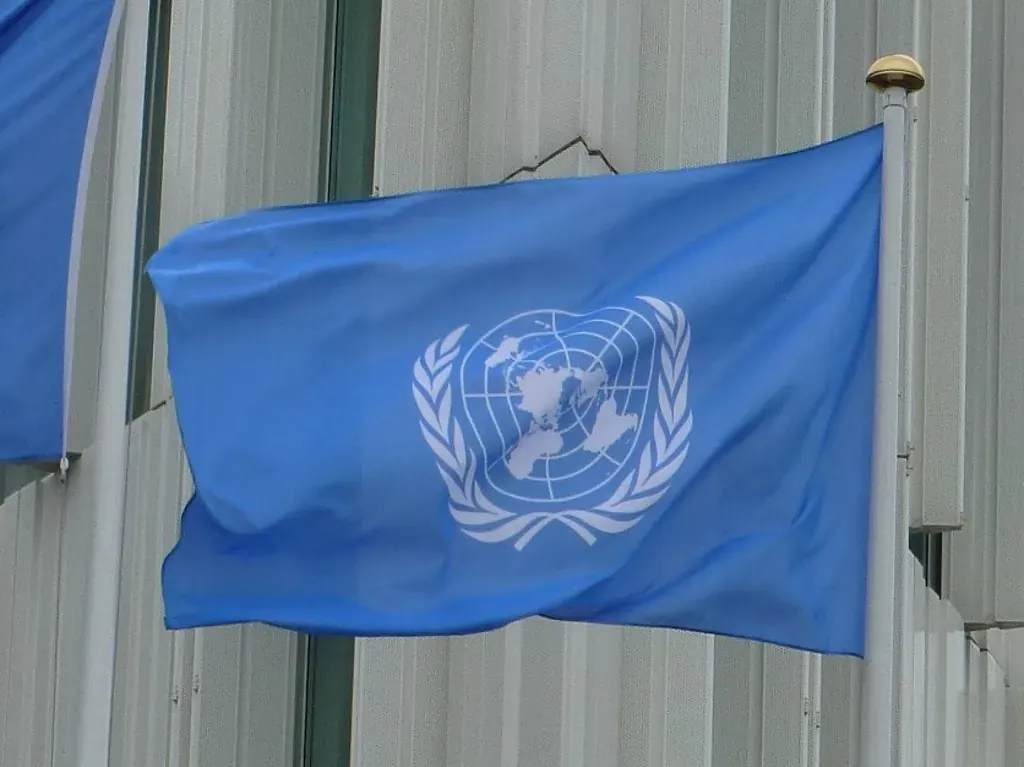
UNITED NATIONS – Russia and China vetoed a United States-backed resolution at the U.N. Security Council on Sept. 17 that would have extended the mandate of independent experts monitoring sanctions against Iran, exposing a sharp divide over the status and enforcement of the measures.
The resolution received 11 votes in favor, while Russia and China voted against it and Pakistan and Somalia abstained. Because both Russia and China are permanent Security Council members, either veto was enough to block the measure.
The vote did not itself remove the sanctions. The dispute concerned the continuation of the independent monitoring mechanism established after sanctions were reimposed in 2025.

The sanctions dispute dates back to the nuclear deal
The disagreement centers on the 2015 Joint Comprehensive Plan of Action, the international agreement designed to limit Iran’s nuclear activities in exchange for sanctions relief.
In 2018, the United States withdrew from the agreement. In 2025, France, Germany and the United Kingdom invoked the agreement’s so-called snapback mechanism, arguing that Iran had violated its nuclear commitments and that U.N. sanctions should be restored.
The move remains disputed.
Russia and China argue that the sanctions could not legally be restored through the mechanism after the United States had withdrawn from the nuclear agreement and that the relevant Security Council framework subsequently expired. Western governments maintain that the snapback process was valid and that the sanctions and associated monitoring arrangements remain in force.
That disagreement has affected the Security Council’s ability to operate the sanctions-monitoring system.
■ Related News


The expert panel had already been unable to operate fully
The U.N. panel of experts was intended to monitor implementation of the sanctions, investigate suspected violations and provide evidence-based reporting to the Security Council.
In practice, the panel had not been operating during the previous year because the council could not agree on its members. Russia and China also objected to proposed candidates, according to the Security Council Report.
The Sept. 17 vote therefore formalized a monitoring problem that had already existed.
The United States argued that ending the mechanism would deprive the council of an independent source of information about potential sanctions violations.
U.S. Deputy Ambassador Jennifer Locetta said the panel would have provided reporting on prohibited cooperation involving Iran and its partners. Washington also argued that the absence of independent experts would create a gap in documentation and enforcement.
Those are U.S. assessments, rather than findings independently established by the council.
Moscow and Beijing reject the legal basis
Russia’s U.N. ambassador, Vassily Nebenzia, reiterated Moscow’s position that the snapback of sanctions was unlawful.
He argued that the resolution seeking to extend the expert panel’s mandate therefore lacked a valid legal basis. Russia also said that putting the proposal to a vote risked increasing tensions rather than resolving the dispute through diplomacy.
China has similarly challenged the restoration of the sanctions framework and has criticized U.S. policy toward Iran.
Beijing has argued that the United States’ withdrawal from the nuclear agreement and subsequent use of force contributed to the current dispute and that the Iranian nuclear issue should be addressed through political and diplomatic negotiations.
Sanctions remain contested, while monitoring is weaker
The immediate consequence of the veto is therefore not the removal of the sanctions themselves.
The measures that Western governments say were restored through the snapback mechanism remain at the center of the dispute. They include restrictions affecting Iranian assets, arms transactions and ballistic-missile-related activity.
What has been weakened is the U.N. system for independently documenting compliance and suspected violations.
That distinction matters because enforcement depends not only on the existence of restrictions but also on mechanisms capable of gathering information, assessing alleged violations and reporting findings to the Security Council.
The Security Council Report has described the dispute as a broader institutional problem: disagreement over the sanctions’ legal status has prevented the sanctions committee from functioning normally and has contributed to repeated procedural disputes inside the council.
Other monitoring options may emerge
The end of the panel does not necessarily mean that all international monitoring of Iran’s nuclear activities has ended.
The International Atomic Energy Agency remains the principal international body responsible for nuclear safeguards verification, although its ability to maintain continuity of knowledge about Iran’s nuclear activities has been severely affected by restrictions on access and verification.
France has also raised the possibility of establishing another monitoring arrangement involving countries including France, Germany, Britain and the United States, similar to an arrangement created after Russia previously vetoed renewal of a U.N. expert panel monitoring sanctions on North Korea.
Such an arrangement would not automatically reproduce the authority or institutional position of a Security Council-mandated expert panel.
For now, the vote leaves the council with a continuing dispute over both the legal status of the Iran sanctions regime and how violations should be independently documented.
The division also illustrates a broader limitation of the Security Council’s sanctions system: when permanent members disagree over the underlying legal framework, the same veto power that can protect their positions can also prevent the council from maintaining common monitoring mechanisms.
Reporting Credit: United Nations Security Council — voting record, sanctions-monitoring framework and member-state positions; International Atomic Energy Agency — nuclear safeguards and verification information concerning Iran; Security Council Report — analysis of the sanctions committee, expert panel and continuing legal dispute over the snapback mechanism.