PARIS, France – Protests over living costs, education, housing and political accountability have spread across several European countries, bringing students, workers and housing campaigners into the streets. Demonstrations in France, Spain, Portugal, Italy and Albania have put pressure on governments, but each movement has its own demands and political context.
France has seen the largest demonstrations and some of the most serious violence. Housing campaigners have mobilized in Spain and Portugal, where many people struggle to afford rents and homes. In Italy, protesters have challenged rising prices and the state of public services. In Albania, student-led demonstrations have expanded into a broader campaign against alleged corruption and Prime Minister Edi Rama’s government.
The protests have occurred at roughly the same time, but available reporting does not establish that the five movements share a central organization or common leadership. Nor do all participants support the same political goals.

France: Student protests widen into broader unrest
France’s demonstrations began in September with high school students protesting overcrowded classrooms, staff shortages and poor school conditions. The movement grew as students, trade unionists and other groups added concerns about living costs, public services and economic insecurity.
Student groups called for better conditions in schools and universities. Broader demonstrations also drew people angry about rising household expenses and pressure on public services.
On October 17, France experienced a major day of nationwide demonstrations. The Interior Ministry put attendance at more than 550,000 people, according to reporting by Al Jazeera. Protest organizers gave a higher estimate of 800,000. The figures reflect different estimates rather than a single agreed total.
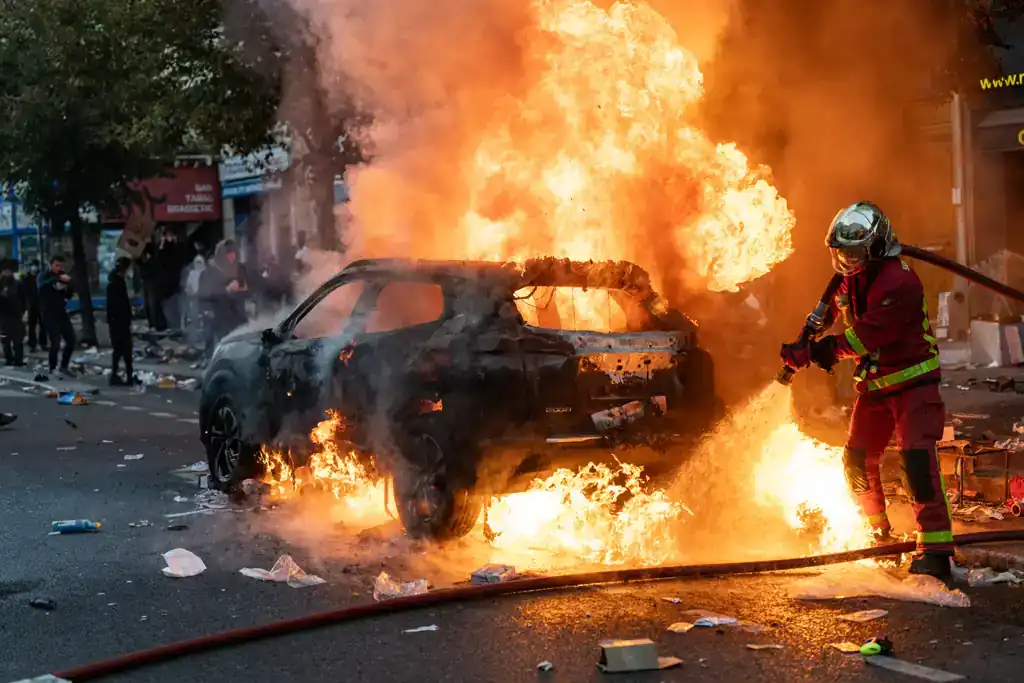
Many demonstrations began peacefully, but some later involved clashes with police, looting, fires and damage to public and private property. Reports described serious incidents in Paris and other cities, including a fire at a public building in Limoges.
Reuters reported that authorities arrested about 2,400 people following the unrest. The figure describes arrests, not convictions, and the available reporting does not establish how many people were later charged or released.
■ Related News

The government has responded to the student movement with a combination of dialogue and proposed improvements. France’s Education Ministry announced initial measures on October 9 to address students’ concerns. Officials have also discussed increasing the availability of qualified teachers. However, the announcements do not establish that all staffing or funding problems have been resolved.
The unrest has also created practical problems for businesses and local authorities. Reuters reported damage to more than 3,000 shops and said the government was considering financial assistance for affected businesses. The details and implementation of that assistance were not fully established in the reporting reviewed.
The violence has complicated the public debate over the demonstrations. Authorities have blamed violent groups for attacks and property damage, while many participants have continued to press for changes to education and living conditions. Those responsible for specific offences must be distinguished from the wider body of demonstrators.
Spain: Housing anger fuels political pressure
In Spain, the housing crisis has driven a separate wave of protests. Demonstrations intensified after the eviction of Maricarmen Abascal, an 87-year-old woman who lost her Madrid home following a rent increase she could not afford, according to published reports.
Housing campaigners have called for stronger tenant protections, more affordable homes and action against evictions. Demonstrators also objected to Parliament’s rejection of two housing measures proposed by Prime Minister Pedro Sánchez’s government. Tens of thousands took to the streets in Madrid and other cities on October 3, according to news reports.
The dispute has moved beyond demonstrations and into national politics. On October 2, Parliament rejected two housing decrees. The government then approved revised measures on October 6, including proposals to improve access to affordable rentals and home ownership, increase housing supply and provide greater stability for some tenants.
The government said the new package contained 21 measures. These included tax relief for tenants, incentives for landlords offering affordable rents and a financing scheme intended to help people buy their first homes. Some measures still required parliamentary approval, so they should not all be treated as fully implemented.
Sánchez also called a general election for November 29, 2026, after Parliament rejected the earlier housing package. The official government announcement confirms the election date. Housing policy has become a significant political issue, although the election will involve a broader range of national questions.
The demonstrations reflect concerns about the cost and availability of housing, but they do not represent every tenant, landlord or political party. The government’s revised proposals also show that the policy response remains contested, with their ultimate effect dependent on implementation and parliamentary decisions.
Portugal: Housing and low wages drive demonstrations
Portugal has also seen protests over housing costs and household finances. On October 11, thousands of people gathered in Lisbon and Porto to protest rising prices, expensive rents and wages that they said were insufficient to cover basic needs.
The demonstrations were organized under the slogan “You can’t live like this anymore.” Participants called for better pay and more affordable housing. Further protests were planned in other Portuguese cities.
The housing concerns reflect a longer-running affordability problem. Al Jazeera reported on October 17 that Portuguese house prices had more than doubled since 2017 and that rents for new leases had risen sharply over the same period. Such increases can put pressure on younger people, lower-income households and workers who need to live near major employment centers.
Housing activists also set up camps to draw attention to the shortage of affordable accommodation. In Porto, a police operation to remove tents from a protest camp on October 15 led to a dispute over the use of force.
The Housing Movement said 37 people were injured during the operation, including two who suffered fractures. That figure is the organizers’ account; the materials reviewed did not independently establish the final number of injuries or provide a complete official account of the operation.
The dispute illustrates a difference between the Portuguese and French protests. In Portugal, housing access and the response to encampments have been prominent issues, alongside wages and the broader cost of living. Reports of injuries during the Porto operation should not be taken as evidence that all the housing demonstrations were violent.
The government has previously announced measures intended to increase housing supply and encourage more affordable rentals. However, the existence of policy measures does not show that they have already reduced prices or made housing accessible to people struggling with rent.
Italy: Inflation adds to frustration over living costs
In Italy, demonstrations on October 17 included marches against wars and rising living costs. In Milan, a march began peacefully before some participants clashed with police, threw objects and set fire to barricades. Police used water cannon and tear gas to disperse the crowd. Reports also described looting and damage to businesses.
LaPresse, as cited by Al Jazeera, reported that at least two police officers were injured and about 50 demonstrators were detained. Those figures were not presented as a final count of all arrests or injuries across Italy. In Bologna, reports also described clashes alongside peaceful rallies.
Prime Minister Giorgia Meloni condemned the violence. Milan Mayor Giuseppe Sala said the grievances behind the demonstrations were understandable but rejected attacks on police and damage to the city. Their responses reflected a distinction between the right to protest and unlawful conduct by some participants.
Official inflation data provides context for the economic concerns. Italy’s national statistics agency, Istat, reported that consumer prices rose 4.2% in September 2026 compared with the same month a year earlier. Prices also increased 0.7% from August to September.
Istat said higher energy costs and prices for unprocessed food contributed to the annual increase. Its harmonized consumer-price measure, which allows comparisons across European Union countries, also rose 4.2% year on year in September.
Inflation measures how quickly prices rise; it does not show how much every household spends or whether wages have kept pace. The figures help explain the pressure on household budgets but cannot, by themselves, establish why any individual joined a protest.
The available reporting also does not show that all Italian demonstrations shared one organizer or a single political programmed. The October 17 events combined economic grievances with other political demands, while violence occurred in specific locations rather than across every gathering.
Albania: Student protests expand into an anti-corruption campaign
In Albania, student-led demonstrations have become a major challenge to Rama’s government. Protesters have called for his resignation and raised concerns about corruption, university conditions, education costs, unemployment and limited prospects for young people.
The movement has also drawn on opposition to a controversial coastal development linked to Jared Kushner’s investment interests. Protesters have questioned the project and the decisions surrounding it. The existence of a proposed investment, however, does not by itself establish wrongdoing by the investor or prove allegations against government officials.
Demonstrations intensified in Tirana from October 13. Some gatherings later involved attacks on government buildings, damage to property and clashes with police. Officers used tear gas and water cannon. Reports also described unrest in other Albanian cities.
Reuters reported on October 18 that police had charged 388 people in connection with the protests. The figure concerns people charged, not necessarily those convicted, and should not be treated as the number of people who attended or participated in every demonstration.
Rama has rejected calls to resign. He has argued that the unrest threatens Albania’s progress towards European Union membership and has accused political opponents of exploiting the protests. The opposition Democratic Party has supported calls for political change, including a caretaker government and early elections. These are competing political positions, not settled findings about responsibility for the unrest.
The European Commission condemned arson, attacks on state institutions and destruction of public and private property. At the same time, it said that freedom of assembly and expression must be respected and that the response to violence must remain lawful and proportionate. It called for grievances to be addressed through constructive dialogue.
Albania’s protests differ from the housing-focused demonstrations in Spain and Portugal. Their demands are more directly tied to political accountability, corruption allegations and education. The unrest has also included documented violence, but those incidents should not be used to characterize every student or every protester.
Shared pressures, different political demands
Across the five countries, the protests point to several recurring concerns. These include the cost of housing, rising household expenses, dissatisfaction with public services and anxiety about the opportunities available to younger people.
The prominence of each issue varies. Education and broader economic frustration helped drive the French demonstrations. Housing has been central in Spain and Portugal. In Italy, cost-of-living concerns featured alongside other political demands. In Albania, student grievances have intersected with allegations of corruption and demands for political change.
The timing of the protests does not prove that the movements are coordinated. The reporting reviewed identifies separate local organizers and different immediate triggers. Shared economic pressures may help explain why similar concerns appear across borders, but the available evidence does not establish a common leadership structure or unified political programmed.
The incidents of violence also differ by place. France and parts of Italy and Albania experienced clashes, fires or looting. In Portugal, housing activists alleged injuries during a police operation to remove a camp. Those events require separate examination, including evidence about the actions of individual demonstrators and police. Peaceful participants should not be held responsible for offences committed by others simply because they attended the same protest.
Governments have responded through different channels, including dialogue with students, housing proposals, policing and public statements. Some measures have been announced, while others remain subject to approval or implementation. Their effectiveness cannot yet be judged solely from the announcements.
The central question is whether governments can turn public pressure into changes that address the grievances driving each movement. That will require more than temporary responses to demonstrations. It will also depend on whether policies improve access to housing, strengthen education and public services, protect household purchasing power and build trust in public institutions.
For now, the protests show widespread dissatisfaction across parts of Europe, but not a single European uprising. Their longer-term significance will depend on the demands that endure, the responses governments deliver and whether those responses produce measurable results.
Europe’s Protest Pressures is a suitable internal-link marker for a related JournosNews article, if one exists.
Reporting Credit: Official statements from France’s Education Ministry, Spain’s government and Parliament, Italy’s national statistics agency, and the European Commission, alongside reporting by Reuters, Associated Press, Al Jazeera, Euronews and other cited outlets on demonstrations, government responses and reported incidents.