BISHKEK, Kyrgyzstan — Leaders from across the Global South are renewing calls for a more representative international system as wars, trade disputes and growing competition among major powers deepen divisions over the future of global governance.
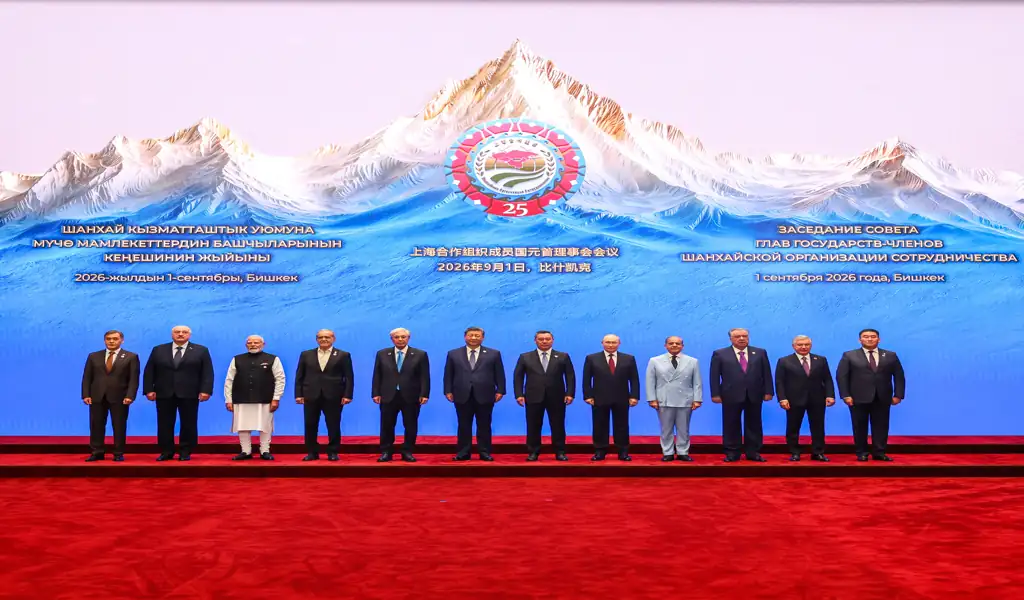
The push is particularly visible at the Shanghai Cooperation Organization summit in Bishkek, where Chinese President Xi Jinping, Russian President Vladimir Putin, Indian Prime Minister Narendra Modi and Iranian President Masoud Pezeshkian are among the leaders meeting this week.
Their gathering comes as governments across Asia, Africa, the Middle East and Latin America seek greater influence in international institutions while avoiding dependence on any single major power.

A changing international order
The leaders’ meetings reflect a broader effort to strengthen cooperation among countries that increasingly describe themselves as part of the Global South.
China and Russia have promoted a more multipolar international system, while India has emphasized strategic autonomy and a greater role for developing countries in global decision-making.
The growing importance of these countries is also reflected in the expansion of BRICS, which now includes major economies and energy producers from multiple regions. India holds the group’s 2026 chairmanship and is scheduled to host the BRICS summit in New Delhi later this year.
The United Nations remains central
The push for multilateralism does not necessarily mean replacing existing international institutions.
Instead, many Global South governments are demanding reforms that would give developing countries greater representation in institutions such as the United Nations, International Monetary Fund and World Bank.
■ Related News


UN Secretary-General António Guterres has also argued that global institutions must better reflect the changing distribution of economic and political power.
For developing countries, the issue is not simply diplomatic status. Decisions made by major international institutions directly affect debt, trade, development financing, climate policy and access to technology.
Ukraine and Iran expose divisions
The renewed push for multilateralism comes as major conflicts continue to divide the international community.
Russia’s war in Ukraine remains a major point of disagreement between Western governments and countries that have maintained diplomatic or economic ties with Moscow.
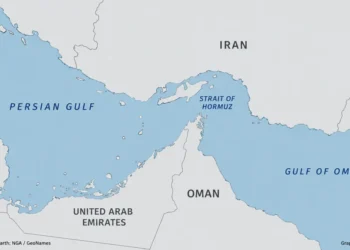
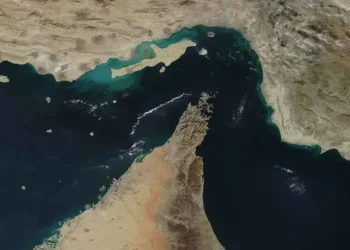
The continuing U.S.-Iran conflict has created another major test, particularly for countries dependent on Middle Eastern energy supplies and shipping routes through the Strait of Hormuz.
India, China and other large developing economies have generally sought to preserve relationships with multiple sides rather than fully align with either Washington or Moscow.
India seeks strategic autonomy
India occupies an unusual position within the emerging Global South landscape.
New Delhi maintains close defense and economic relations with the United States while also maintaining long-standing ties with Russia and expanding engagement with China and other developing economies.
Prime Minister Modi has repeatedly promoted India’s role as a bridge between major powers and developing countries.
That approach allows India to participate in organizations including the BRICS, Shanghai Cooperation Organization, G20 and Quad without formally aligning itself with a single geopolitical bloc.
China seeks a larger leadership role
For Beijing, multilateralism is also closely connected to its broader effort to reshape global governance.
China has promoted initiatives focused on development, security and international cooperation while criticizing what it describes as an international system dominated disproportionately by Western powers.
Xi’s diplomatic activity this week — including the SCO summit and a state visit to Egypt — reflects China’s expanding engagement with Asia, Africa and the Middle East.
Beijing is seeking to present itself as a major partner for developing countries at a time when some governments are increasingly concerned about the reliability of traditional Western alliances.
But the Global South is not a single bloc
Despite the rhetoric of greater unity, the countries involved have substantial differences.
India and China remain strategic competitors. Russia’s invasion of Ukraine divides governments within the broader developing world. Iran’s confrontation with the United States creates different economic and security pressures for countries that rely on Gulf energy supplies.
The Pacific Islands provide another example of these competing interests. At the Pacific Islands Forum in Palau, regional leaders have emphasized their own priorities even as China, the United States, Australia and other powers compete for influence.
These divisions make it difficult for the Global South to operate as a unified political bloc.
Economic power is becoming part of the debate
The push for a larger Global South role also has an important economic dimension.
Developing countries are seeking greater access to financing, technology and markets while attempting to reduce vulnerability to sanctions, trade restrictions and external financial shocks.
BRICS has increasingly become one vehicle for that effort, although its members have different economic models and strategic priorities.
Recent disputes at the G20 finance ministers’ meeting also demonstrated the difficulty of reaching consensus on global economic rules, with China objecting to language concerning large trade surpluses and export-driven growth.
A more fragmented world
The renewed emphasis on multilateralism comes at a time when international cooperation is under significant pressure.
Trade conflicts, military confrontations, sanctions and competing security alliances are making consensus harder to achieve.
At the same time, countries outside the traditional Western power centers have more economic and diplomatic weight than they did several decades ago.
The result is an increasingly multipolar international system in which major developing countries want greater influence but do not necessarily want to form a single opposing bloc.
What Happens Next
The upcoming BRICS summit in India will provide another major test of whether the Global South can translate calls for reform into concrete cooperation on trade, development, finance, technology and international institutions.
The challenge will be maintaining cooperation among countries whose interests frequently diverge.
For now, the message from major Global South powers is increasingly consistent: the institutions governing the international system should reflect today’s distribution of global economic and political power, not the balance of power of the past.
Key Facts
- Major forums: SCO, BRICS, G20 and United Nations
- Key leaders: Xi Jinping, Narendra Modi, Vladimir Putin and Masoud Pezeshkian
- Core issue: Reform of global governance
- Major themes: Multilateralism, strategic autonomy, development and economic cooperation
- 2026 BRICS host: India
- Major challenge: Different interests among Global South countries
- Regional backdrop: Ukraine war, U.S.-Iran conflict and intensifying great-power competition
- Status: DEVELOPING — GLOBAL GOVERNANCE
Reporting Credit: United Nations — global governance and multilateralism; Shanghai Cooperation Organization — regional cooperation and summit diplomacy; Indian Ministry of External Affairs — BRICS and Global South policy; Chinese Ministry of Foreign Affairs — multilateral cooperation and international governance; Russian government — SCO and multipolarity policy.