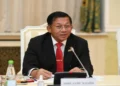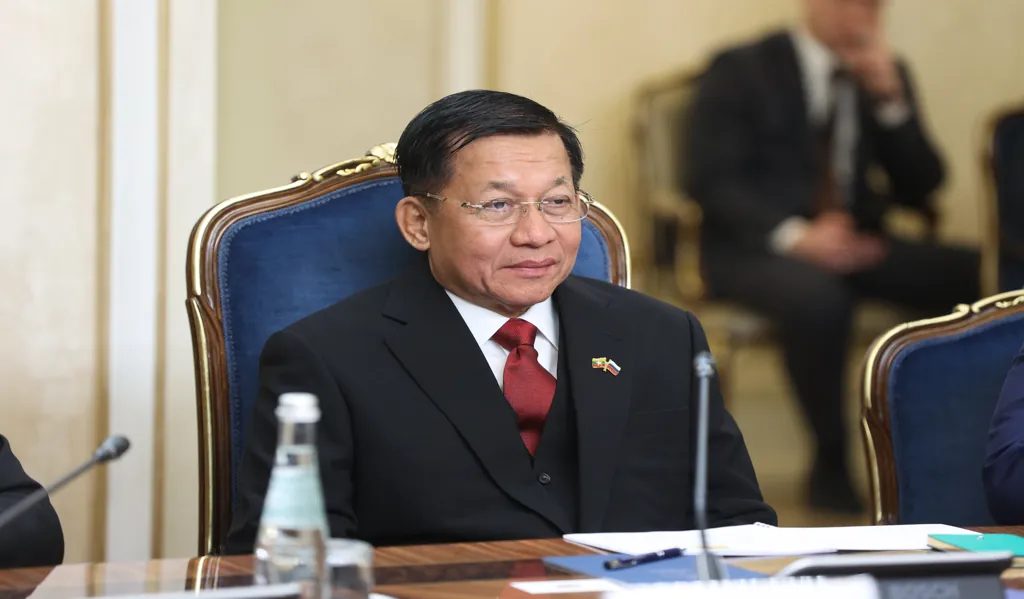
BANGKOK, Thailand – Myanmar’s military-backed government has rejected ASEAN’s renewed call for the unconditional release of detained former leader Aung San Suu Kyi and questioned whether the bloc’s special envoy mechanism should continue after the Philippines gives up the ASEAN chairmanship.
Myanmar’s Foreign Affairs Ministry said Saturday that Suu Kyi’s release would be handled according to domestic law, despite ASEAN’s demand for her “complete and unconditional release.” The ministry also said the government would continue cooperating with the current special envoy, Philippine Foreign Minister Maria Theresa Lazaro, but questioned the need for the arrangement after Singapore assumes the ASEAN chair on Jan. 1, 2027.
The response highlights the widening divide between Myanmar’s military-backed authorities and ASEAN over efforts to resolve the political crisis and armed conflict that followed the 2021 military takeover.

Suu Kyi remains central to ASEAN diplomacy
Suu Kyi has remained detained since the military removed her elected government from power in 2021.
She is serving a sentence under house arrest at an undisclosed location in Naypyitaw on charges that her supporters and rights groups have described as politically motivated. Myanmar’s government has said some of her sentences were commuted on humanitarian grounds but maintains that any full release must follow domestic law.
The government recently allowed a representative of the International Committee of the Red Cross to meet with the 81-year-old Suu Kyi. It was the first known contact between her and an independent international humanitarian organization since her detention five years ago.
The Philippines welcomed the meeting as a possible opening for dialogue and reconciliation but called for broader access to political detainees and renewed its demand for Suu Kyi’s unconditional release.
ASEAN peace plan remains unresolved
ASEAN adopted a five-point peace plan in April 2021 to seek an end to violence in Myanmar and encourage dialogue among the country’s competing political forces. The bloc’s special envoy was tasked with helping facilitate that process.
■ Related News

Myanmar’s military-backed leadership has not fully implemented the plan, and Min Aung Hlaing has been excluded from ASEAN’s highest-level meetings.
The government is now questioning whether the special envoy mechanism should continue. It said it would work with Lazaro during the Philippines’ chairmanship but did not see a need to maintain the arrangement after Singapore takes over.
Min Aung Hlaing, the former army chief who seized power from Suu Kyi’s civilian government, has sought to rebuild Myanmar’s relationship with ASEAN while pursuing greater political legitimacy for his administration.
In a speech more than three months after becoming president following elections held in December and January, he rejected ASEAN’s peace plan and accused some member states of discriminating against Myanmar.
Disputed elections complicate Myanmar’s regional diplomacy
Myanmar’s military-backed government has also linked its position to the country’s recent elections, arguing that the resulting political transition provides a new basis for state authority.
The Foreign Affairs Ministry said the government that emerged from the multiparty elections had assumed responsibility for the state and represented what it described as the genuine will of the people.
Critics, however, have rejected the elections as an attempt to consolidate military influence while presenting a return to civilian government.
The competing claims leave ASEAN facing a difficult diplomatic task. The regional bloc has sought to maintain engagement with Myanmar while pressing its authorities to implement the five-point peace plan and address the political crisis that followed the military takeover.
Future of ASEAN mediation remains uncertain
Myanmar’s rejection of an unconditional release for Suu Kyi and its questioning of the special envoy mechanism could further complicate ASEAN’s efforts to maintain a common approach to the crisis.
The Philippines’ remaining months as ASEAN chair will therefore be important for determining whether the bloc can preserve access to Myanmar’s authorities and political stakeholders.
With Singapore preparing to assume the chairmanship in 2027, ASEAN will also face the challenge of determining whether its existing mediation framework can continue to generate meaningful engagement while Myanmar’s military-backed government resists key demands from the regional organization.
This report is based on reporting by The Associated Press.