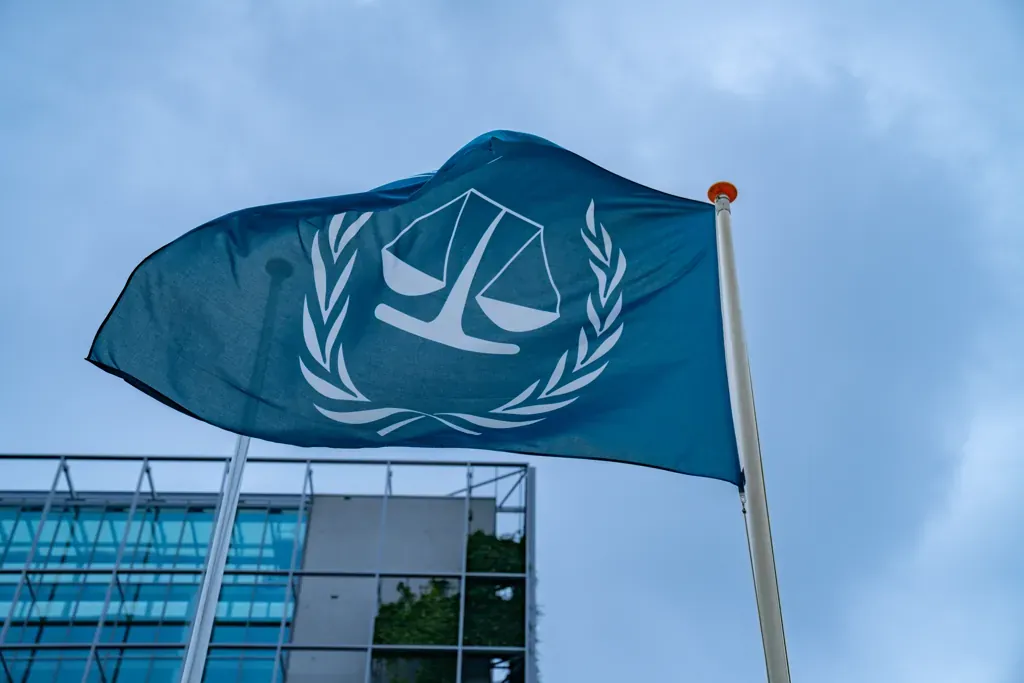
THE HAGUE, Netherlands – The Netherlands is preparing for possible new U.S. sanctions against the International Criminal Court as Washington considers expanding its campaign from individual court officials to the Hague-based institution itself.
Dutch government and diplomatic officials have been informed that additional U.S. measures are being prepared, according to people familiar with the briefings cited by The Associated Press and Reuters. The precise scope and timing have not been publicly finalized.
The potential measures could create practical problems for the court, including access to financial services, information technology, insurance and other suppliers with connections to the United States.

The Netherlands, which hosts the ICC, is consequently examining ways to help the institution continue paying staff and protected witnesses and maintain security at its detention facility, according to officials familiar with the preparations.
Washington considers expanding sanctions
The United States has already imposed sanctions on numerous ICC officials.
On Aug. 18, Secretary of State Marco Rubio announced sanctions against ICC President Tomoko Akane and senior trial lawyer Abdoulaye Seye. The measures freeze any assets belonging to the designated officials that are within U.S. jurisdiction or the U.S. financial system and restrict their access to the United States.
Washington has justified its campaign by arguing that the ICC has exceeded its authority by investigating or pursuing cases involving nationals of countries that are not parties to the Rome Statute, including the United States and Israel.
The United States is not an ICC member.
■ Related News


The court has 125 member states and was established in 2002 to prosecute individuals for genocide, crimes against humanity, war crimes and aggression when national legal systems are unable or unwilling to do so.
The next potential step would be broader measures against the court itself.
Reuters reported that the Trump administration has prepared sanctions targeting the entire organization. Such measures could prohibit U.S. citizens and companies from providing funds, goods or services to the ICC without authorization. The report said the timing of any announcement remained uncertain.
Why the Netherlands is preparing
The ICC is headquartered in The Hague, making the Netherlands its host country and placing Dutch authorities close to the operational consequences of any sanctions.
The immediate concern is not simply the court’s ability to conduct hearings.
Modern international institutions depend on extensive networks of banks, technology providers, insurers, contractors and professional services. Restrictions involving U.S. financial infrastructure could therefore affect routine operations even when the service provider itself is European.
The experience of former ICC Chief Prosecutor Karim Khan illustrates the potential reach of individual sanctions. After he was sanctioned by Washington in 2025, he lost access to his Microsoft email account and bank accounts and was barred from entering the United States.
If comparable restrictions were applied to the ICC as an institution, the potential impact would be broader.
Dutch and court officials are reportedly seeking a six-month grace period to allow the tribunal to replace services provided by companies exposed to U.S. sanctions.
The court has already begun reducing U.S. dependencies
The ICC has spent months preparing for the possibility of wider sanctions.
According to people familiar with its preparations, the court has moved away from Microsoft products toward a German software provider and has changed some insurance and financial arrangements to companies without a U.S. presence.
Those measures could reduce some direct exposure.
They cannot necessarily eliminate the court’s vulnerability to the wider international financial system.
Banks and other companies can face compliance risks when dealing with sanctioned entities, particularly where transactions involve U.S. dollars, U.S. financial institutions or American technology.
That can produce what is sometimes called over-compliance, in which companies avoid transactions they believe could create sanctions exposure even when the legal position is uncertain.
The Netherlands has backed the court
The Dutch government has previously expressed support for the ICC after Washington imposed sanctions on individual officials.
Foreign Minister Tom Berendsen said in August that the Netherlands disapproved of the U.S. sanctions against ICC personnel and that international courts and tribunals should be able to carry out their mandates. He also invited Akane for discussions about continued Dutch support.
Germany has also publicly supported the court.
The dispute therefore places European governments in a difficult position. They are trying to preserve support for an international judicial institution while managing economic and diplomatic relations with the United States.
Washington and the ICC have a long-running dispute
The current confrontation did not begin with the latest sanctions.
The Trump administration’s opposition to the ICC dates back to his first term, when Washington sanctioned officials involved in the court’s investigation into alleged crimes by U.S. personnel in Afghanistan.
The dispute intensified after the ICC issued arrest warrants for Israeli Prime Minister Benjamin Netanyahu and former Israeli Defense Minister Yoav Gallant over alleged crimes connected to the Gaza conflict. Israel and Netanyahu reject the allegations.
Washington has argued that the court should not exercise authority over officials from countries that have not joined the Rome Statute.
The ICC and its supporters reject that interpretation and maintain that the court is operating under the jurisdiction granted to it by the Rome Statute and relevant territorial and state-party provisions.
The disagreement is therefore not only about sanctions.
It concerns the scope of international criminal jurisdiction and the extent to which a court created by member states can investigate alleged crimes involving nationals of countries that have not joined it.
The EU has limited options
European governments are examining whether existing European legal mechanisms could help protect organizations and individuals from the effects of U.S. sanctions.
One possibility is the European Union’s so-called blocking statute, which can prohibit European operators from complying with certain extraterritorial U.S. sanctions.
But its applicability to the ICC is uncertain because the court is an independent international organization rather than an EU institution.
That leaves the Netherlands and other European governments with a relatively narrow set of options if Washington proceeds with institution-wide sanctions.
Replacing American suppliers with European alternatives can reduce exposure, but it takes time.
That is why Dutch and ICC officials are reportedly seeking a transition period before any new restrictions take effect.
The court faces pressure beyond Washington
The U.S. campaign is also occurring as some ICC member states reconsider their relationship with the institution.
Venezuela and Chad have announced plans to withdraw, while other countries have faced pressure over their cooperation with the court. Chad’s foreign minister said U.S. officials had raised concerns about the ICC and asked the country to reconsider its membership.
Withdrawal from the Rome Statute does not take effect immediately.
The broader significance is that pressure on the ICC is no longer confined to individual judges or prosecutors. The court is facing questions about its financing, technology, international support and the willingness of member states to continue defending its role.
For the Netherlands, the immediate task is more practical: ensuring that the institution located on its territory can continue operating if Washington imposes measures that affect its access to global services.
The final form of any new U.S. sanctions remains uncertain.
But preparations in The Hague show that the potential consequences are already being treated as an operational issue rather than simply a diplomatic dispute.
Reporting Credit: Government of the Netherlands — statements concerning Dutch support for the ICC; International Criminal Court — institutional information and responses to U.S. sanctions; U.S. Department of State — sanctions and official U.S. position concerning ICC jurisdiction; U.S. Treasury/Office of Foreign Assets Control — sanctions framework and designated-person measures.