TEHRAN, Iran – Iran says the United States has failed to address key parts of its proposal to reopen the Strait of Hormuz, leaving negotiations over the strategic waterway at an impasse.
Mohsen Rezaei, secretary of Iran’s Supreme National Security Council, said on October 11 that Washington had accepted some of Tehran’s seven conditions but left others unclear. He called the US response insufficient and said Iran wanted clarification before moving forward.
Rezaei also said Iran would not reopen the strait to US access or resume negotiations until its conditions were met. His remarks indicate that Tehran is not ready to accept Washington’s response, although they do not establish that every diplomatic channel has closed.

The United States delivered its response through Qatari intermediaries, according to reporting on the negotiations. The White House had not immediately commented when asked about Rezaei’s remarks.
Iran Says Key Conditions Remain Unresolved
Iran presented its proposal during the United Nations General Assembly in September. It offered to restore normal maritime passage through the Strait of Hormuz within seven days if Washington met its seven conditions.
However, the complete text of the seven conditions was not available in the primary-source material reviewed for this report. JournosNews therefore cannot independently list or verify each condition.
Rezaei said Washington had accepted some of the demands but had not clearly addressed others. He called on the US government to explain the unresolved points.
His comments followed an earlier exchange over a proposed memorandum of understanding intended to revive a ceasefire that collapsed in June. President Donald Trump had previously said he rejected Iran’s revised proposal, although subsequent communications continued through intermediaries.




The latest exchange shows that the two sides remain divided over the terms needed to restore maritime traffic and advance a broader settlement.
Iran’s assessment reflects Tehran’s position. Without the full US response or an official American account of the outstanding issues, it is not possible to determine independently which conditions Washington accepted or rejected.
Qatar Continues to Serve as an Intermediary
Qatar and other intermediaries have transmitted messages between Washington and Tehran in an effort to end the conflict and reopen the strait.
This indirect channel allows the two governments to exchange proposals without holding direct negotiations. However, mediation does not mean either side has accepted the other’s terms.
Rezaei said Iran was no longer in the process of responding to the Americans because Washington had already delivered its reply. He maintained that the United States must clarify the remaining issues.
That statement does not necessarily mean Qatar has stopped relaying messages or that all diplomatic efforts have ended. It describes Iran’s position on the latest response, rather than providing a complete account of every communication between the governments.
No new agreement or confirmed resumption of formal negotiations was established in the public information reviewed for this report.
Why the Strait of Hormuz Matters
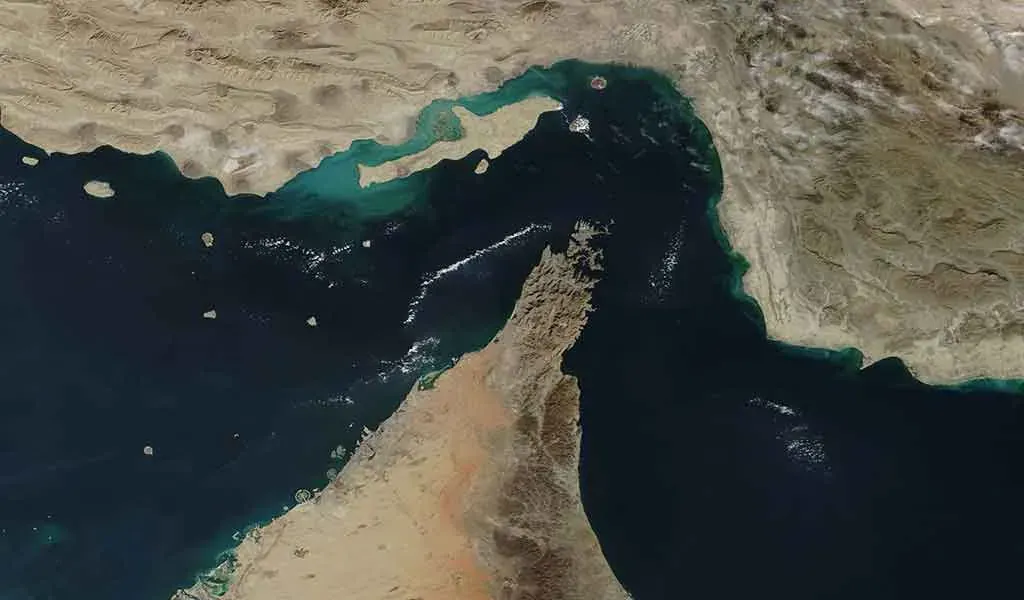
The Strait of Hormuz connects the Persian Gulf with the Gulf of Oman and the wider Arabian Sea. Before the conflict, roughly one-fifth of global oil and liquefied natural gas flows passed through the waterway.
The strait is therefore vital to energy exporters in the Gulf and to countries that depend on their supplies. Disruption can force shipping companies to reassess routes, insurance costs and security risks.
However, the waterway’s strategic importance does not mean all commercial traffic has stopped. Vessel movements can continue at reduced levels even when security risks and restrictions make passage more difficult.
Iran’s proposal links the restoration of normal maritime passage to its broader demands of Washington. The United States, meanwhile, has maintained pressure on Iran and has previously described its objective as securing navigation through the strait.
The disagreement leaves shipping operators facing uncertainty over the conditions under which vessels can transit safely and whether any proposed arrangement would last.
Maritime Warnings Add to the Risk
Iran’s Islamic Revolutionary Guard Corps navy has warned that vessels disabling navigation and identification systems could be treated as hostile, according to Iranian media reports.
Such warnings matter because ships rely on navigation equipment and identification systems to communicate their position and help other vessels avoid collisions. Disabling those systems can complicate monitoring and raise safety concerns in an already tense waterway.
The warning does not establish that a particular vessel has been attacked or that Iran has ordered a new operation against commercial shipping. Any reported incident requires separate verification through maritime authorities and other reliable sources.
Rezaei has also warned that regional infrastructure, including communications cables, data centers and artificial-intelligence facilities, could face attacks if intense fighting resumes. Those remarks are a threat attributed to the Iranian official, not evidence that an attack has been ordered or carried out.
The warnings underscore the risk that the diplomatic dispute could widen if the conflict escalates. However, the available evidence does not establish when or whether further attacks might occur.
What the Diplomatic Deadlock Means
Iran’s latest statement leaves the proposed reopening of the Strait of Hormuz conditional on resolving issues that Tehran says remain unclear. The United States has not publicly confirmed the specific terms it accepted or rejected in the latest exchange.
Qatar and other intermediaries have continued to play a role in communications between the governments. However, no confirmed agreement has emerged from the latest exchange, and Rezaei’s remarks provide no assurance that negotiations will resume soon.
For commercial shipping, the immediate concern is continued uncertainty over security and access. For the two governments, the dispute centers on the conditions for restoring maritime passage and moving toward a broader settlement.
The next significant development would be an official clarification of the outstanding conditions, a new response from Washington, or confirmation from mediators that the parties have agreed to resume substantive negotiations.
Until then, Iran’s proposal remains a proposal, not an agreement. The seven-day timeline it offered would depend on the conditions being met, and there is no confirmed basis to conclude that normal maritime passage will be restored on that schedule.
Reporting Credit: Iran’s Supreme National Security Council; White House; Qatari Ministry of Foreign Affairs; International Maritime Organization.