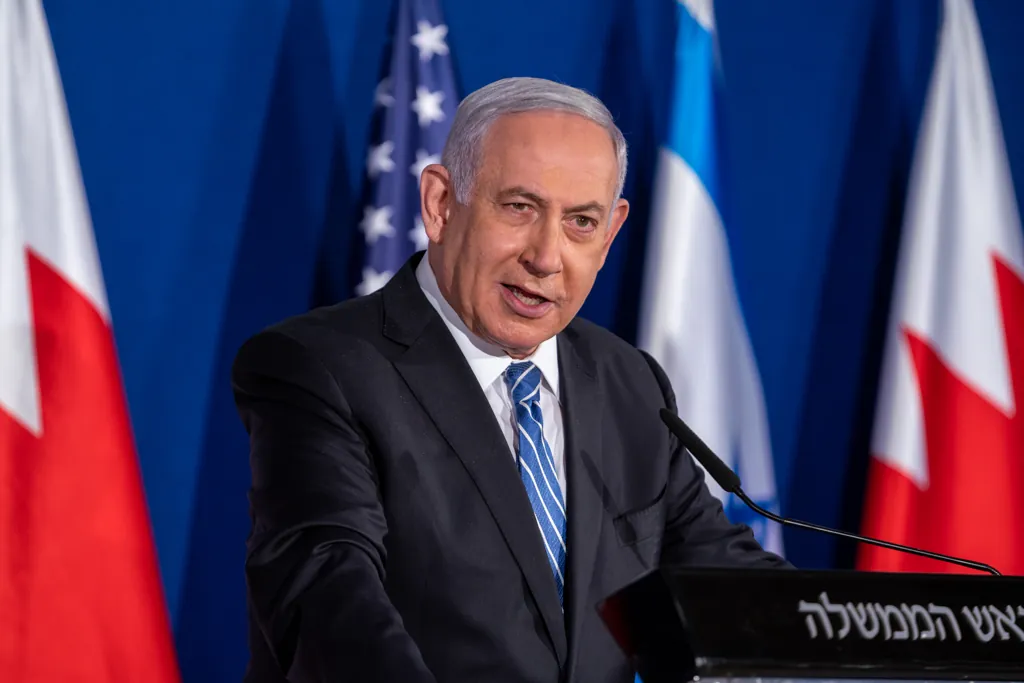
NEW YORK, United States – Israeli Prime Minister Benjamin Netanyahu rejected accusations that Israel has committed genocide in Gaza during a contentious address to the United Nations General Assembly on Thursday, calling the allegation “the biggest lie of the century” as scores of delegates left the chamber.
Netanyahu said Israel had acted to prevent genocide rather than commit it and defended the conduct of the Israeli military during the war in Gaza. He also pointed to humanitarian assistance and polio vaccination efforts as evidence for his argument.
The speech came as Israel faces continuing international scrutiny over its military operations in Gaza and while the genocide case brought by South Africa against Israel remains before the International Court of Justice.

The ICJ has issued provisional measures in the case, but it has not issued a final judgment determining whether Israel committed genocide. The proceedings remain active, with the court setting further deadlines for written submissions in 2026 and beyond.
Netanyahu rejects genocide allegations
Netanyahu directly addressed the genocide accusation during his speech, arguing that Israel was fighting Hamas and seeking to protect its population.
He said Israel had facilitated large quantities of food and medical assistance into Gaza and highlighted a polio vaccination campaign as evidence that its actions were inconsistent with an intent to destroy the Palestinian population.
Israel has consistently rejected the genocide allegation, saying its military campaign is directed against Hamas following the group’s October 7, 2023 attack on Israel.
Netanyahu’s government has also disputed international assessments of Israel’s conduct and has argued that Hamas operates within civilian areas, making the protection of civilians during military operations more difficult.
The genocide allegation, however, is not simply a political accusation made by Israel’s opponents.
A United Nations Independent International Commission of Inquiry concluded in September 2025 that Israeli authorities and security forces had committed acts constituting genocide against Palestinians in Gaza. The commission said it had found evidence supporting all four categories of genocidal acts under the Genocide Convention and concluded that Israel bore responsibility. Israel rejected the finding.
The ICJ case remains unresolved
The legal question before the International Court of Justice is separate from the UN Commission of Inquiry’s conclusion.
South Africa filed the genocide case against Israel under the 1948 Genocide Convention. The ICJ issued provisional measures during the proceedings, ordering measures intended to prevent acts within the convention’s scope and to address humanitarian conditions.
The court has not yet issued a final judgment on whether Israel committed genocide.
As of September 2026, the case remains in the written-pleadings stage. The court’s May 2026 order set November 2027 as the deadline for South Africa’s reply to Israel’s written pleading, with Israel given until May 2029 for its rejoinder.
That means the legal dispute remains unresolved despite the increasingly strong language used by governments, international organizations and advocacy groups on both sides.
Delegates walk out as Netanyahu takes the podium
The speech itself became a diplomatic confrontation.
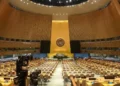
As Netanyahu approached the General Assembly podium, scores of delegates walked out of the chamber. The departure followed a call circulated by the Palestinian mission urging UN member states to leave when the Israeli prime minister began speaking.
Netanyahu responded by criticizing those who left and challenged remaining delegates who disagreed with Israel’s position.
The largely empty chamber became one of the most visible images of the address.
UN officials repeatedly called for order as the session continued.
The walkout did not represent a formal UN decision on the genocide allegations. It was a political and diplomatic protest by individual delegations.
UN leadership has described Gaza in stark terms
Netanyahu’s rejection of the genocide allegation came only days after UN Secretary-General António Guterres addressed the General Assembly’s opening debate.
In his September 22 remarks, Guterres described the destruction and killing in Gaza as unprecedented in his experience as secretary-general and reminded member states that the ICJ had issued legally binding provisional measures in the genocide case.
He called on all parties to comply with international law and the court’s orders and urged an end to the fighting and continued humanitarian access.
The secretary-general’s statement did not constitute a judicial finding that Israel had committed genocide.
That distinction is significant because the UN system contains several different mechanisms for addressing alleged international crimes. A commission of inquiry can conduct investigations and make findings, while the ICJ determines disputes between states under international law.
Netanyahu also defended Israel’s wider military campaign
Gaza was only one part of Netanyahu’s address.
He used much of the speech to defend Israel’s military actions against Iran and its broader regional security policy, arguing that Israel had acted against threats that endangered both itself and other countries.
He described the decision to attack Iran as one of the easiest decisions he had made as prime minister and presented Israel’s military operations as part of a wider struggle against Iran and armed groups allied with Tehran.
Netanyahu also criticized a number of foreign leaders and political figures, including New York Mayor Zohran Mamdani and Turkish President Recep Tayyip Erdoğan.
The speech therefore served simultaneously as a defense of Israel’s conduct in Gaza, an argument for its military campaign against Iran and a broader response to international criticism.
The legal and political disputes remain separate
The continuing disagreement over Gaza reflects different kinds of claims that should not be treated as interchangeable.
Netanyahu’s statement is a political defense of Israel and a rejection of genocide allegations.
The UN Commission of Inquiry’s 2025 report is an investigative finding that Israel committed genocide.
The ICJ genocide case is a judicial proceeding that remains unresolved.
The International Criminal Court has separately issued an arrest warrant for Netanyahu over alleged war crimes and crimes against humanity, including starvation as a method of warfare and intentionally directing attacks against civilians. The ICC warrant does not charge Netanyahu with genocide. Israel rejects the allegations and disputes the court’s jurisdiction.
Keeping those proceedings separate is essential to accurately describing the legal situation.
A speech delivered amid continuing international pressure
Netanyahu’s appearance came at a moment of intensified diplomatic pressure over Israel’s conduct in Gaza and the broader regional conflict.
Several governments and international bodies have condemned Israel’s military actions, while Israel maintains that its operations are necessary to defend the country and defeat Hamas.
The dispute over the word “genocide” has consequently become both a legal question and a major diplomatic dividing line.
Netanyahu used the UN’s most prominent international forum to reject the allegation outright.
But his declaration did not resolve the underlying legal dispute.
That question remains before the International Court of Justice, while the findings of the UN Commission of Inquiry continue to be contested by Israel.
For now, the competing positions remain sharply defined: Israel rejects the genocide allegation; the UN Commission of Inquiry has concluded that genocide occurred; and the world’s principal court dealing with disputes between states has yet to issue a final judgment on South Africa’s case.
Reporting Credit: United Nations — General Assembly proceedings and Secretary-General’s statements on Gaza; International Court of Justice — status and procedural developments in South Africa v. Israel; UN Independent International Commission of Inquiry — findings concerning alleged genocide in Gaza; International Criminal Court — arrest warrant and stated allegations against Benjamin Netanyahu.