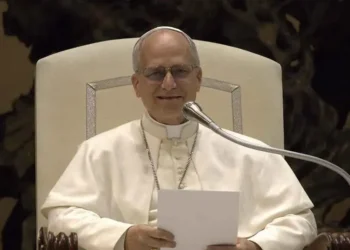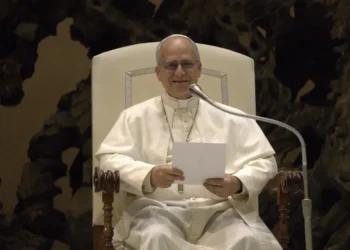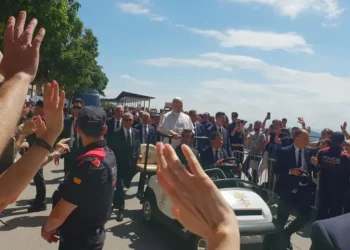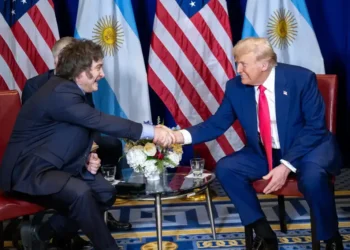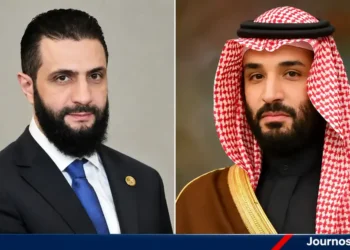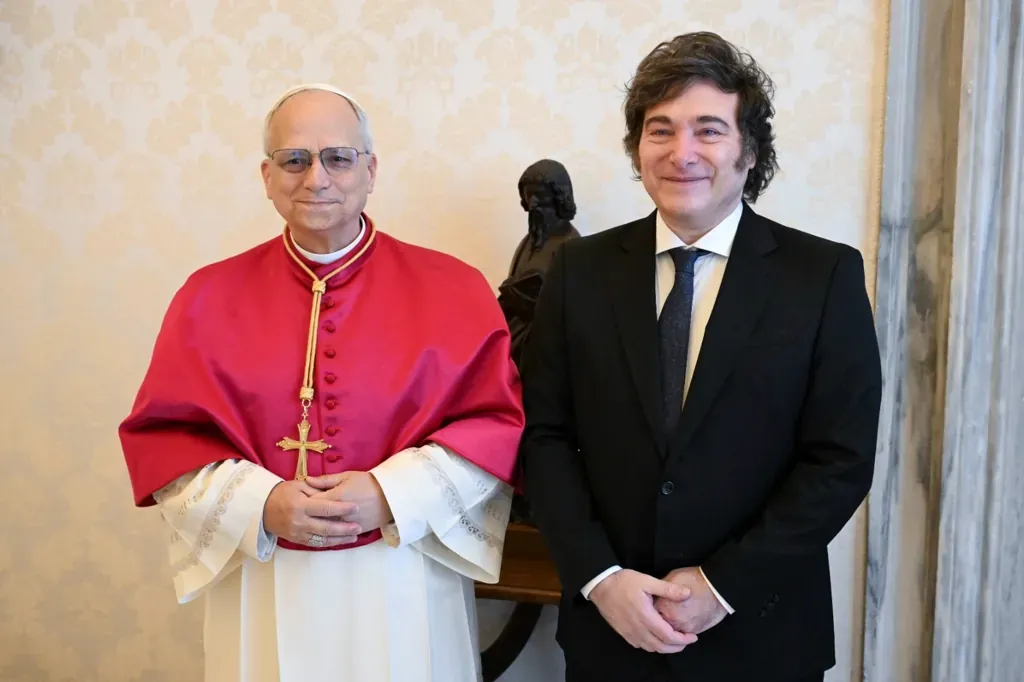
BUENOS AIRES, Argentina – Pope Leo XIV urged Argentine President Javier Milei to place the welfare of ordinary people at the centre of government decisions during a historic visit to Argentina on Sunday, November 8, delivering a message about economic responsibility, social protection and democratic cooperation.
Addressing political leaders, diplomats and civil society representatives at the Palacio Libertad in Buenos Aires, Leo said public authority should be exercised as a service to the entire population rather than for immediate political or economic interests.
He called on the government to encourage private enterprise and economic opportunities while ensuring that growth also benefits disadvantaged people, including unemployed workers, struggling families and older citizens.

The address formed part of the pope’s first official visit to Argentina since becoming head of the Roman Catholic Church. It was the first papal visit to the predominantly Catholic country since Pope John Paul II travelled there in 1987.
Pope highlights social costs of economic policies
Leo’s remarks addressed economic concerns in Argentina, where Milei has pursued an extensive austerity programmed aimed at reducing government spending, controlling inflation and restructuring the economy.
Without directly naming specific government measures, the pope emphasised that economic growth should improve living conditions across society rather than leave vulnerable groups behind.
He specifically referred to families facing uncertain futures, unemployed people, retirees who had contributed to society and workers who continued to struggle to meet household expenses despite their employment.
The pope also highlighted the importance of education, vocational training, universities and scientific research, arguing that young Argentines should have opportunities to build their futures at home rather than feel compelled to leave the country.
■ Related News

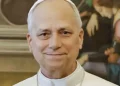
He questioned why a nation should reach a point where young people must leave their homeland to realize their ambitions.
Milei defends his economic and political principles
Milei welcomed the pontiff at the presidential palace, Casa Rosada, before the two held a private meeting.
In his welcoming address, the Argentine president defended his libertarian principles, highlighting individual rights, including life, liberty and property, as foundations of the country’s constitutional system.
He also praised Pope Francis, the Argentine-born predecessor of Leo, describing him as an exceptional figure whose religious teachings continued to influence the country.
The exchange reflected differences in emphasis between the two leaders. While Milei has prioritized reducing public expenditure and expanding private-sector activity, Leo stressed that economic development must also protect social welfare and human dignity.
The pope’s address did not present a direct rejection of private enterprise. Instead, he called for policies that encourage investment and opportunity while distributing the benefits of economic growth more broadly.
Pope calls for stronger democracy and political dialogue
Beyond economic issues, Leo urged Argentina’s political leaders to protect democratic institutions and reduce divisions in the country’s political environment.
He said democracy depended on citizens being able to express their views freely, participate in public life and trust institutions to serve the interests of society.
The pontiff also encouraged political figures to listen to opposing viewpoints, use measured language and pursue agreements rather than allow disagreements to undermine national unity.
He warned that corruption weakens public confidence in government institutions and called for stronger cooperation against organized crime, human trafficking, drug trafficking and arms smuggling.
Leo further emphasized the importance of regional cooperation across South America, particularly in addressing security threats and challenges that extend beyond national borders.
First papal visit since 1987
The visit carries particular significance for Argentina because of its connection to Pope Francis, the country’s first pontiff, who served as head of the Catholic Church from 2013 until his death in 2025.
Francis never returned to Argentina during his papacy, despite maintaining close connections with the country where he was born and served as archbishop of Buenos Aires.
Leo acknowledged that history during his address, saying his visit also brought him closer to the places, people and religious traditions that shaped his predecessor.
His South American journey includes stops in Uruguay, Argentina and Peru from November 6 to 17, 2026.
The Argentine leg is among the most closely watched parts of the trip because of the country’s economic difficulties, political divisions and the Catholic Church’s longstanding involvement in social issues.
Economic development and social welfare remain central issues
Leo’s message also extended to Argentina’s natural resources, environmental responsibilities and technological development.
He said the country’s agricultural land, water reserves, energy resources and minerals offered substantial economic opportunities, but their exploitation should benefit local communities and protect the conditions necessary for future generations.
He also called for ethical oversight of artificial intelligence, warning that rapid technological development requires careful consideration of its consequences and the responsibilities of those deploying it.
The remarks added to the broader discussion surrounding Milei’s economic programmed, particularly its approach to public spending, natural-resource development, education and emerging technologies.
The pope’s visit has therefore placed questions about economic growth, social protection and political responsibility at the centre of his engagement with Argentina’s leadership.
Primary Sources: Holy See Press Office — Apostolic Journey of Pope Leo XIV to Uruguay, Argentina and Peru Official address to Argentine authorities, civil society and diplomatic representatives November 8, 2026. Full official transcript of the pope’s address, including his remarks on economic development, disadvantaged communities, democracy, education, corruption, natural resources and artificial intelligence. Vatican News Pope Leo urges Argentina’s leaders to put common good before political interests November 8, 2026. Vatican’s account of the pope’s message and his meeting with Argentina’s political and civil society representatives.