KIRYAT SHMONA, Israel – In Kiryat Shmona, a city near Israel’s border with Lebanon, the question facing Prime Minister Benjamin Netanyahu is not simply whether residents still support his Likud party. It is whether years of evacuation, insecurity and an incomplete recovery have changed what voters expect from their government.
For decades, the northern city has been a stronghold for Israel’s political right. But the war with Hezbollah has left homes and businesses struggling to recover, while renewed attacks have weakened confidence among some residents who expected the government to make the border safer.
The coming election offers a test of that frustration. Yet dissatisfaction with Netanyahu does not necessarily mean support for a different political direction. Some voters want a change in leadership; others want a more forceful military response against Hezbollah.

A traditional Likud stronghold
Kiryat Shmona has long given strong support to Likud. In the November 2022 election, the party won about 49.5% of valid votes in the city, according to election results. That was roughly twice the party’s national vote share.
The city’s political identity reflects its social and economic history. Many residents belong to families who settled there in the decades after Israel’s founding. Likud’s appeal has extended beyond policy, becoming part of how some families identify politically and socially.
That history helps explain why disappointment with a government can be difficult to translate into a vote for another party. Some residents may be angry with Netanyahu while remaining committed to right-wing policies. Others may prefer a rival who promises stronger security or more effective leadership without moving away from the political right.
The result is not necessarily a broad shift toward the center or left. It may instead produce changes within the right-wing electorate, including support for parties that argue Netanyahu has failed to protect the north.
Evacuation and return remain incomplete
Kiryat Shmona’s political debate cannot be separated from the disruption caused by the war.
■ Related News


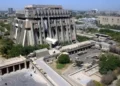
After Hezbollah began firing into northern Israel following Hamas’ October 7, 2023, attack, the Israeli government evacuated Kiryat Shmona and other communities close to the Lebanese border. Many residents spent more than a year away from home before a ceasefire took effect in late 2024.
Returning has not meant an immediate return to normal life. Businesses have struggled to regain customers, schools have faced lower enrollment and some residents have continued to stay elsewhere. The city’s recovery also depends on whether people believe that renewed fighting will not force them to leave again.
Official estimates of the return differ. In November 2025, Mayor Avichai Stern told a Knesset committee that 18,000 of the city’s 26,000 prewar residents had returned. In January 2026, the State Comptroller’s office cited a figure of about 15,000 residents back in the city.
Those figures refer to different reporting dates and population baselines, so they should not be treated as directly comparable measurements of a single trend. They nevertheless show that the city’s return and recovery have remained incomplete well after the main evacuation period.
More recent accounts have also highlighted a gap between official estimates and residents’ impressions of how full the city feels. A count of people who have returned does not necessarily show how many are present every day, how many businesses are operating normally or whether families feel secure enough to settle permanently.
Security remains the central concern
The ceasefire reached in late 2024 did not end the wider security dispute. Renewed Hezbollah attacks in March, following the outbreak of a wider regional war involving Iran, again raised fears in northern Israel. Subsequent Israeli operations in Lebanon reduced some attacks but did not eliminate the threat.
For residents close to the border, security is not an abstract campaign issue. It affects decisions about returning home, reopening businesses, sending children to school and investing in property.
But voters differ over what security should look like. Some argue that Netanyahu promised to dismantle Hezbollah’s threat and failed to deliver. Others say the government has protected residents as well as circumstances allowed and that the responsibility for the continuing danger lies with Hezbollah.
That divide complicates any prediction about how the city will vote. A resident who believes Netanyahu has failed may support an opposition candidate. Another may respond to the same insecurity by backing a more hard-liner party that promises a stronger military campaign.
Frustration does not always mean a move to the opposition
The local debate includes residents who have reconsidered their long-standing support for Likud. Some point to what they see as broken promises about security and the government’s limited engagement with the difficulties facing northern communities.
Others remain loyal. They argue that the government had to balance military objectives with the safety of residents and that no leader could guarantee the complete removal of the threat from Lebanon.
Those differences are important because the political consequences of dissatisfaction are not straightforward. A voter may disapprove of Netanyahu personally but still support the coalition’s broader security agenda. Another may move to a rival right-wing party rather than an opposition bloc led by a centrist candidate.
For Netanyahu, losing even part of his support in traditional strongholds could matter in a close national contest. But the local experience cannot, by itself, establish how voters across Israel will behave.
What the polling can—and cannot—show
A poll conducted earlier in October for Agam Labs at Hebrew University found that support for Netanyahu in northern Israel had fallen compared with the period before the 2022 election. Nimrod Nir, the lab’s director, said some frustrated Likud voters might choose hard-line parties rather than the opposition.
The available report does not provide enough methodological detail to independently assess the survey’s sample size, precise fieldwork dates, geographic coverage or margin of error. The finding should therefore be treated as evidence of a reported regional trend, not a definitive measure of opinion in Kiryat Shmona itself.
That distinction matters. Northern Israel includes communities with different experiences of the war, different voting histories and different levels of exposure to attacks. A regionwide survey cannot establish how every city—or every Likud voter—will vote.
The city’s official election results provide a clear baseline for past support. But determining how much that support has changed requires comparable local polling or the final election results.
The election offers a test, not a verdict
Israel’s general election is scheduled for October 27, 2026. The contest pits Netanyahu’s governing coalition against an opposition led by former military chief Gadi Eisenkot and other parties seeking a change of government.
For Kiryat Shmona, the election comes as residents continue to weigh security, reconstruction and economic recovery. Candidates’ promises will be judged against practical questions: whether residents can return safely, whether businesses can recover, whether schools and public services can operate normally, and whether the government can prevent another prolonged evacuation.
The city’s political future remains uncertain. Its history suggests that right-wing parties will retain a substantial base, but that does not guarantee the same level of support for Likud or Netanyahu.
The most important change may not be a simple shift from right to left. It may be a growing demand among voters across the right for a government that can deliver the security and recovery they believe they were promised.
Kiryat Shmona’s vote will offer one measure of that demand. It will not, on its own, decide the national election or prove that Netanyahu has lost the support of Israel’s broader electorate.
Reporting Credit: Israel Central Elections Committee — official results for the November 2022 election, including Likud’s vote share in Kiryat Shmona. Knesset National Security Committee — November 6, 2025, account of the mayor’s briefing on resident returns and city recovery. Office of the State Comptroller and Ombudsman of Israel — January 2026 account of population return and continuing challenges. Israel Democracy Institute — 2026 election timeline and scheduled election date.