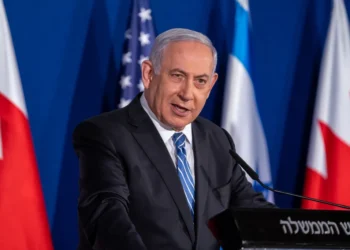
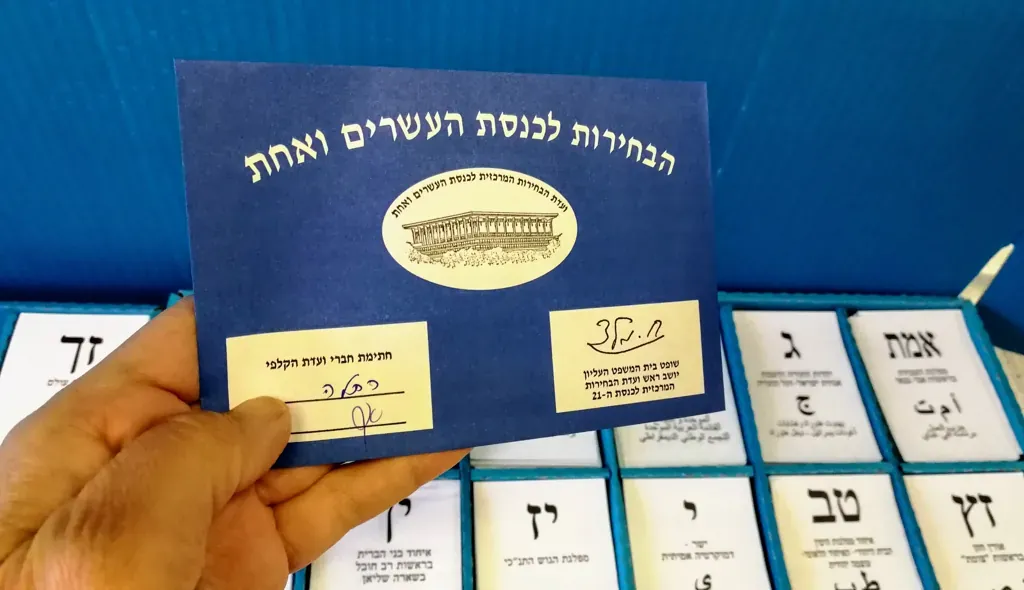
JERUSALEM, Israel – Israelis vote on October 27 in a parliamentary election that could change Prime Minister Benjamin Netanyahu’s political future.
The vote will also test public trust in the government. Voters must weigh security, military service, judicial reform and the cost of living.
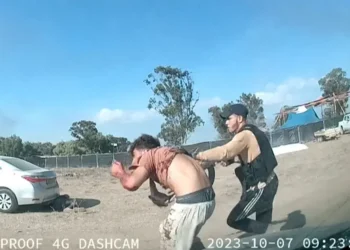
The election comes three years after the Hamas-led attack on October 7, 2023. That attack exposed serious failures in Israel’s security system. Since then, wars involving Gaza, Lebanon and Iran have added to the country’s challenges.

Netanyahu’s Likud party is seeking another term with support from nationalist, far-right and ultra-Orthodox parties. His challengers include former military chief Gadi Eisenkot, former prime minister Naftali Bennett and opposition leader Yair Lapid.
Polls show a divided electorate. No single party is expected to win a majority in the 120-seat Knesset. Neither broad political camp has consistently shown that it can secure the 61 seats needed to govern.
As a result, the election may not settle who becomes prime minister. The answer could depend on which parties agree to form a coalition.
Israelis vote for parliament, not directly for prime minister
Israel’s Central Elections Committee has set October 27 as election day for the 26th Knesset. Voters will choose all 120 members of parliament.
Israel uses a nationwide proportional representation system. Voters choose a party list, not a prime minister. Parties receive seats based on their share of the vote.
■ Related News




A party must win at least 3.25% of valid votes to enter the Knesset. If it falls below that threshold, it receives no seats.
The threshold can make small parties important in a close election. Votes for a party that fails to qualify do not help it gain representation in parliament.
A government needs support from at least 61 lawmakers. Winning the most seats does not guarantee that a party can form a government.
After the election, President Isaac Herzog will consult political representatives. He will then ask a member of the Knesset to try to form a government.
That candidate must secure enough support to win parliamentary approval. If the first attempt fails, the law allows further attempts within set deadlines.
This process gives smaller parties potential influence. Their support may determine whether a candidate reaches the 61-seat majority.
What the polls say—and what they cannot tell us
Pre-election surveys show Likud and Yashar, led by Eisenkot, among the leading parties. Bennett and Lapid are running together under the Beyachad alliance. Yair Golan leads The Democrats, while Avigdor Liberman’s Yisrael Beiteinu is also seeking support from voters who oppose Netanyahu.
Netanyahu’s partners include Otzma Yehudit, Shas, United Torah Judaism and the Religious Zionism–Zehut list. Arab-led parties, including the Joint List and Ra’am, are also competing for seats.
A Channel 12 poll published on October 23, conducted by Midgam R&C, surveyed 1,018 people. It projected 23 seats for Yashar, 21 for Likud and 15 for Beyachad.
These figures estimate possible parliamentary representation. They are not election results. The public summary also does not provide enough detail to confirm the full survey method or margin of error.
Other polls produced different estimates. An Israel Votes poll-of-polls published on October 23 combined nine recent surveys. It placed Netanyahu’s bloc between 48 and 62 seats and the main Zionist opposition bloc between 44 and 56 seats.
These ranges show differences between surveys. They are not statistical confidence intervals.
Polls measure voter intentions at a particular time. They cannot establish the final result or show whether parties will agree to form a government after election day.
October 7 and the demand for accountability
The Hamas-led attack on October 7, 2023, remains a central issue in the campaign. The attack killed people in southern Israel and led to the capture of hostages.
It also exposed failures in intelligence, military readiness and security planning. The question of who should answer for those failures has become a major political dispute.
Opposition leaders have called for an independent state commission of inquiry. They argue that the public needs a full account of the decisions made before the attack and the warnings officials received.
Netanyahu has said an inquiry should be balanced and enjoy broad public confidence. He has also argued that wartime conditions and the security situation must be considered.
The government has not established the conventional state commission demanded by its critics. Instead, coalition lawmakers have advanced a proposal for a state-national commission with a different appointment process.
In July 2026, the Knesset approved that proposal in its first reading. The bill then returned to committee for further work. It would require a mechanism for broad parliamentary agreement on the commission’s members.
First-reading approval does not mean the commission has been established. Lawmakers must complete the legislative process before it can begin work.
Under the existing framework, the government establishes a state commission of inquiry, and the president of the Supreme Court appoints its chair and members.
The proposed alternative would change how members are selected. Supporters argue that wider political agreement could strengthen public confidence. Critics warn that political involvement could weaken the commission’s independence.
The next government will decide how to proceed. It could establish a commission, continue with the proposed alternative or pursue another approach.
The central questions remain: What did officials know before the attack? How did they respond to warnings? And did government or military decisions contribute to the failure to protect communities?
Ultra-Orthodox military exemptions divide the parties
Military service is another major issue. Israel generally requires eligible Jewish citizens to serve, but ultra-Orthodox men studying in religious seminaries have long received deferments.
Those arrangements have become more controversial as the military has faced repeated deployments and growing demands on reservists.
The Supreme Court challenged the legal basis for broad exemptions. In 2024, it ruled that the state could no longer lawfully fund yeshiva students who were eligible for service but lacked a valid exemption.
Later government efforts to manage enlistment and create new arrangements have faced legal and political challenges.
In July 2026, the Knesset passed a law intended to freeze arrests of eligible ultra-Orthodox men who had not reported for military service. The Supreme Court issued a temporary order preventing the law from taking effect while it reviewed the matter.
The dispute divides Netanyahu’s coalition. Ultra-Orthodox parties want to protect religious study and existing arrangements. Other politicians argue that military obligations should be shared more fairly.
Eisenkot has pledged to end exemptions for ultra-Orthodox men. Other opposition parties have proposed different timelines and enforcement measures.
Netanyahu must balance demands for wider enlistment against the demands of religious parties whose support has helped keep his coalition in power.
A new government would face difficult choices. It would need to decide who must serve, which exemptions should remain and what penalties should apply to those who refuse.
Any new law would also need to withstand legal review. The military would need the capacity to train and integrate additional recruits, while the government would have to consider how communities respond.
Judicial reform remains a major political divide
Netanyahu’s government launched its judicial overhaul in 2023. Supporters said the changes would reduce what they saw as excessive judicial power and give elected officials more control over policy and appointments.
Opponents argued that the proposals would weaken judicial independence. They warned that the changes could leave minorities and individual rights more exposed to decisions by the government.
The dispute sparked some of Israel’s largest demonstrations in years. It also raised wider questions about the balance of power between parliament, the government and the courts.
The government passed part of the overhaul in 2023. One law limited the Supreme Court’s ability to review government decisions under the reasonableness standard.
In January 2024, the Supreme Court struck down that amendment. It ruled that it could review Basic Laws in exceptional circumstances and found that the amendment caused severe harm to the separation of powers.
The wider reform agenda remains contested. Some coalition figures still support changes to judicial appointments and the relationship between the courts and elected officials. Opposition parties want stronger safeguards for judicial independence.
The election will not automatically reverse or complete the overhaul. The next government will decide which proposals to pursue, while the courts will retain their role in reviewing legislation and resolving constitutional disputes.
At the heart of the debate is a basic question: How much power should elected officials hold, and what checks should apply when a parliamentary majority changes the rules?
Household costs and military spending
Economic pressures are also shaping the campaign. Families face costs for housing, food, services and borrowing. Meanwhile, the wars have increased pressure on the state budget.
The debate includes how much Israel should spend on defence, how it should fund public services and whether the economy can sustain long-term military commitments.
The Bank of Israel’s October 21 forecast projected economic growth of 5.6% in 2026 and 7.5% in 2027. However, the bank said much of that increase reflected production abroad.
Excluding that component, the bank projected growth of 3.4% in 2026 and 5.1% in 2027.
The bank also forecast average inflation of 1.5% in 2026. It projected a government budget deficit of 4.4% of gross domestic product and public debt of about 68% of GDP by year-end.
The bank warned that geopolitical uncertainty and defence spending could affect inflation and the deficit.
These figures are forecasts, not final annual results. They also do not show how costs affect individual households.
National growth can rise while some families still struggle financially. Likewise, slower inflation does not mean prices have returned to earlier levels.
The next government must decide how to fund defence, support communities affected by the fighting, manage debt and sustain growth. Parties may agree on the need for security but disagree over taxes, welfare, public spending and military obligations.
Gaza, Lebanon, Iran and relations with the United States
Security policy remains central to the election. Israelis are debating the government’s approach to Gaza, Lebanon and Iran, as well as the future of hostage agreements and regional security.
Netanyahu has defended his military policies as necessary to protect Israel and prevent further attacks. Opposition figures have questioned aspects of his leadership, including his handling of the October 7 failures and the timing and terms of hostage agreements.
The parties also differ over what should follow military operations in Gaza. They disagree on the security arrangements needed there and how Israel should respond to Iran and armed groups in the region.
The divide is not always simple. Parties that disagree on judicial reform or domestic policy may share similar security positions. Even coalition partners can disagree over the terms of a ceasefire or hostage deal.
Relations with the United States are another important issue. Washington remains a major partner in Israel’s defence and diplomacy.
However, disagreements can arise over military operations, regional negotiations, humanitarian access and future arrangements for Palestinians.
The election will shape Israel’s negotiating position, but campaign promises are not the same as government decisions. Any new coalition will need to balance domestic demands, security assessments, military capacity and diplomatic pressure.
Arab parties could influence the coalition
Arab citizens make up roughly one-fifth of Israel’s population. Arab-led parties represent them in the Knesset and may become important if neither main political bloc can reach 61 seats alone.
The Joint List and Ra’am have different political histories and priorities. Their agendas include public safety, municipal funding, housing, discrimination and economic development in Arab communities. They also address Palestinian rights and relations between Arab citizens and the state.
Mainstream Zionist opposition parties have often ruled out formal coalition partnerships with Arab parties. However, some have relied on Arab-party support in earlier parliamentary arrangements.
This reluctance can make it harder for Netanyahu’s opponents to form a government.
Arab parties may still influence legislation without joining the cabinet. They could support certain bills, abstain in key votes or seek commitments on public services and community needs.
Any cooperation would depend on the terms and the positions of the other parties. The election result alone cannot determine what arrangements will be possible.
Coalition talks will decide who becomes prime minister
No party is expected to win an outright majority. After the votes are counted, the main question will be which candidate can assemble a coalition with at least 61 seats.
Netanyahu’s partners want different things. Some seek stronger religious influence over public policy, tougher security measures or changes to the courts. Others may demand guarantees on military-service exemptions and religious funding.
The opposition faces its own challenges. Its parties include centrists, secular right-wing voters, liberals and left-wing groups. They may agree that Israel needs a different government but disagree over the economy, religion, judicial reform and cooperation with Arab parties.
Eisenkot, Bennett, Lapid and Liberman appeal to different groups of voters. Their ability to work together will depend on the final seat count and the compromises they can accept.
If no candidate secures a majority, Israel could face prolonged negotiations or another political deadlock.
The constitutional process allows further attempts to form a government. However, it cannot force parties to resolve their differences.
A test of leadership, not a direct vote on Netanyahu
Many people view the October 27 election as a referendum on Netanyahu because it follows the October 7 security failures and years of political conflict.
But voters are choosing party lists, not casting a direct personal vote on the prime minister.
Some may prioritise security and continuity. Others may focus on accountability, equal military service, judicial independence or household costs. Some will weigh religious identity, ties with the United States or the future of the conflict with the Palestinians.
The result will show how those concerns translate into parliamentary seats. It will not prove that voters share one view on every issue.
The next government must turn its campaign promises into laws, budgets and practical decisions. It will also face legal limits, coalition bargaining and a public divided over the country’s direction.
For Netanyahu, the vote will test whether his political camp can continue governing. For his challengers, it will test whether they can work together long enough to form an alternative.
For Israel, the key question is whether the next government can address security, public trust and economic pressures while maintaining a stable parliamentary majority.
Reporting Credit: Israel’s Central Elections Committee — official October 27, 2026, election date, candidate-list information and electoral procedures. Knesset — July 7, 2026, first-reading approval of the proposed State-National Commission of Inquiry into the October 7, 2023, attack. Israel Democracy Institute — October 14, 2026, public-opinion survey on Haredi conscription and a state commission of inquiry. Bank of Israel — October 21, 2026, macroeconomic forecast and monetary-policy statement.