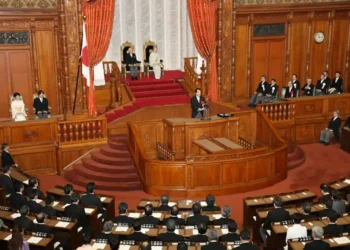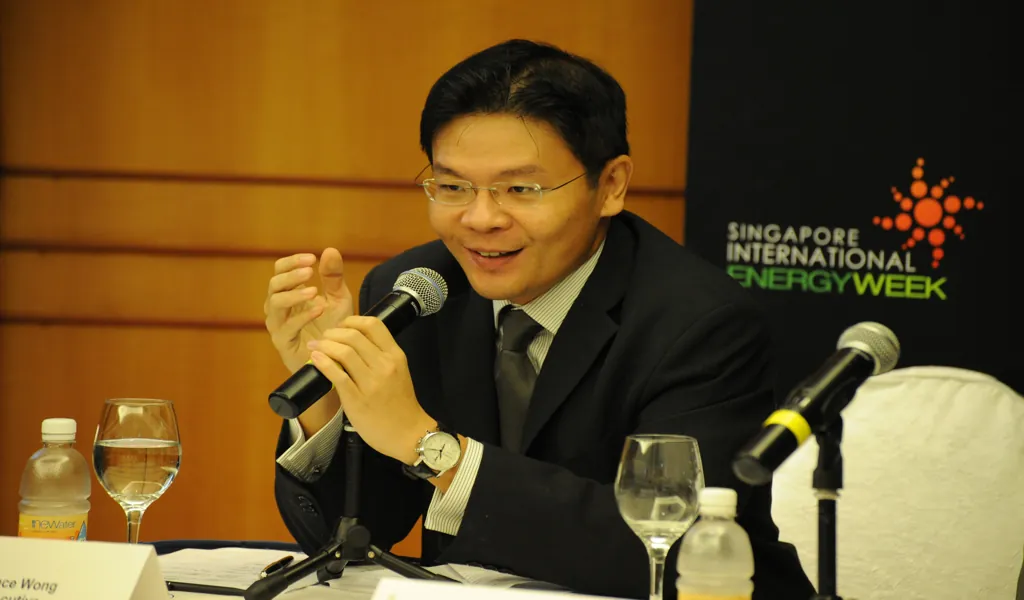
Singapore’s Parliament is reopening debate over the country’s political-salary framework, with Prime Minister Lawrence Wong and Coordinating Minister for Public Services Chan Chun Sing scheduled to present the Government’s response to the 2026 Review of Salaries for Political Appointment Holders and Members of Parliament.
The two ministers are scheduled to make statements on September 8, followed by a parliamentary debate on September 10.
The review marks the latest examination of a compensation system that has remained largely unchanged since the framework established after the 2011 review, following earlier decisions to defer or maintain the existing arrangements.

Review Reopens Long-Deferred Question
Singapore has not comprehensively revised its political-salary framework since the 2011 review.
The Government deferred a scheduled review in 2023, citing geopolitical and economic uncertainty. The Public Service Division said at the time that the existing framework remained relevant and that the Government would review it when appropriate.
In January 2026, the Government convened an independent committee to examine political salaries and the framework used to determine compensation.
The Government said the review was timely because the framework and salary levels had not been updated since the changes arising from the 2011 process.
The current parliamentary proceedings therefore represent the first major reconsideration of the system in several years.
■ Related News

Political Pay Is Linked to Private-Sector Benchmarks
Singapore’s existing system links political compensation to income levels among high earners in the private sector.
Under the framework, ministerial salaries are benchmarked against the incomes of the top 1,000 Singaporean earners, with a 40% discount applied to reflect the public-service nature of political office. The benchmark includes senior corporate executives and high-income professionals.
The Government has defended the approach as a way to keep compensation competitive and help attract and retain people for senior public responsibilities. It has also linked competitive remuneration to reducing incentives for corruption.
The compensation model has nevertheless remained politically sensitive because it places senior political salaries against benchmarks derived from some of Singapore’s highest private-sector incomes.
Framework Was Established After the 2011 Review
The current system followed a major review of political salaries in 2011.
That process resulted in substantial reductions in political compensation. The changes were accepted by Parliament and became the basis of the existing framework.
A subsequent review in 2018 did not result in the recommended changes being implemented, with the Government maintaining that the existing structure remained appropriate amid economic uncertainty.
The framework has consequently remained in place for more than a decade while Singapore’s economic conditions and broader environment have evolved.
Independent Committee Examines Compensation
The 2026 review was conducted by an independent committee established by the Government.
Its mandate included assessing appropriate salary levels under the existing framework and considering whether refinements were needed to keep the system relevant. The review covers political appointment holders and Members of Parliament.
The Government’s response now goes before Parliament, providing lawmakers with an opportunity to consider both the committee’s recommendations and the administration’s position on the compensation framework.
Economic Conditions Delayed Government Response
The latest parliamentary debate follows an earlier postponement of the Government’s response.
In May, the Government said it wanted greater clarity over the economic consequences of the conflict in the Middle East before responding to the review.
The delay reflected wider concerns about economic conditions and uncertainty facing Singapore.
The scheduled September statements indicate that the Government has now decided to proceed with formal consideration of the review.
Framework Covers More Than Cabinet Ministers
The review extends beyond the salaries of cabinet ministers.
Singapore’s political-remuneration framework also covers political appointment holders and Members of Parliament, including Non-Constituency Members of Parliament and Nominated Members of Parliament.
The parliamentary discussion will therefore address the broader compensation structure governing political office rather than ministerial salaries alone.
The central institutional question is whether the existing framework remains appropriate across the different political positions covered by the system.
Parliament to Examine the Pay Framework
The parliamentary debate will bring renewed scrutiny to the principles underpinning political compensation.
The established framework seeks to maintain competitive remuneration while applying a discount to recognize that political office constitutes public service rather than private-sector employment.
Any changes would therefore affect not only individual salary levels but also the mechanism Singapore uses to determine compensation for political office.
The debate could consequently address the continued suitability of the existing benchmarks and the broader structure governing remuneration for political officeholders and lawmakers.
A System Designed More Than a Decade Ago
The return of the issue to Parliament follows years in which major changes to the framework did not occur.
The 2011 review established the current model after a significant public debate. The 2018 review did not produce implemented changes, while the 2023 review was deferred.
The 2026 process provides Parliament with another opportunity to examine whether the framework remains suitable under current conditions.
Government Response Moves to Parliament
The immediate issue before Parliament is the Government’s response to the 2026 review.
Wong and Chan are scheduled to present the Government’s position on September 8, with lawmakers due to debate the response on September 10.
The proceedings will determine the next stage for Singapore’s political-compensation framework, including whether the existing model is retained or changes are proposed to its benchmarks and salary arrangements.
Reporting Credit: Parliament of Singapore — official parliamentary Order Paper and sitting schedule confirming the September 8 ministerial statements by Prime Minister Lawrence Wong and Coordinating Minister for Public Services Chan Chun Sing and the scheduled parliamentary debate on September 10; Public Service Division, Prime Minister’s Office — official government information on the political-salary framework, previous reviews and the Government’s decisions to defer earlier reviews; Government of Singapore / AskGov — official explanation of the 2026 independent political-salary review, its purpose and the Government’s rationale for conducting the review; 2026 Review of Salaries for Political Appointment Holders and Members of Parliament — independent review process concerning the salary framework and compensation levels for political officeholders and Members of Parliament.