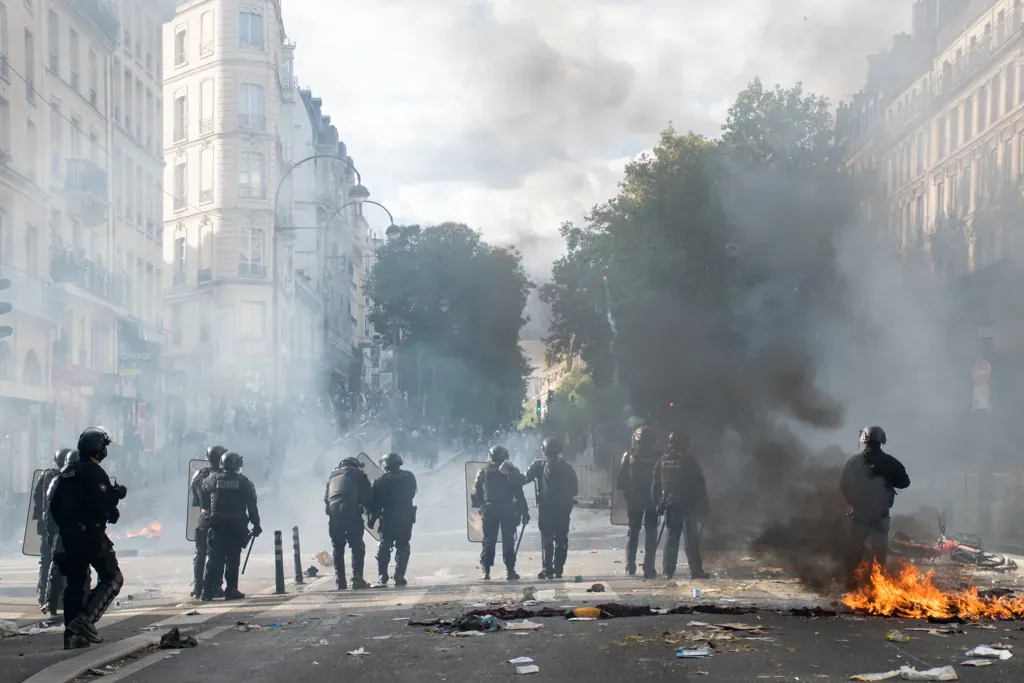
PARIS, France – French police face renewed scrutiny over their use of crowd-control weapons after several teenagers suffered serious injuries during demonstrations over school conditions. The cases have intensified calls for tighter controls, independent investigations and changes to the way officers manage protests.
The injuries include a 15-year-old student who lost a hand after a grenade exploded during a police operation in Lens, a teenager who lost sight in one eye, and a 14-year-old who suffered severe facial injuries after being struck by a projectile fired from a grenade launcher, according to accounts from prosecutors, families and officials.
The incidents occurred at different locations and on different dates. Investigators have not reached final conclusions in every case, and the circumstances surrounding each injury remain important to establishing whether officers followed the law.

The dispute centers on weapons that authorities classify as less-lethal. These include stun grenades, tear-gas grenades and projectile launchers. Although designed as alternatives to firearms, they can cause permanent injury or death if used improperly or in circumstances where the risks are too high.
Teenagers suffer serious injuries
One of the most serious cases occurred on October 5 outside a high school in Lens, northern France. A 15-year-old student lost a hand when a grenade exploded during a police intervention.
Interior Minister Laurent Nuñez said there was a strong possibility that a stun grenade caused the injury. The government temporarily suspended the use of stun grenades during the student protests while authorities examined what happened. The precise circumstances of the explosion and the responsibility of individual officers remain matters for investigation.
Another teenager, aged 16, lost sight in one eye after an incident in Tours on October 7. Prosecutor Catherine Sorita-Minard said the injury was consistent with a shot from a rubber-ball launcher. The family filed a complaint, and the case was referred for investigation.
In Saint-Ouen-l’Aumône, 14-year-old Eden suffered a double jaw fracture and extensive dental injuries after a tear-gas canister struck him at close range during a police intervention. His family and lawyer disputed the circumstances and raised questions about the officer’s use of the weapon. The local prosecutor described an altercation before the projectile was fired.
■ Related News



These cases do not establish that every injury resulted from unlawful force. They do, however, raise questions about how officers selected and deployed the weapons, the threats they faced at the time, and whether safer alternatives were available.
A temporary suspension, then a change in policy
The government’s response to the Lens injury illustrates the debate over whether suspending one weapon is enough.
On October 7, Nuñez announced a temporary suspension of stun grenades during the student protests while investigators examined the incident. The measure followed concern about the EF-SON grenade, a model introduced into police use in 2025.
But the suspension did not amount to a permanent ban on every stun grenade or crowd-control weapon. Another model, the GL-304, remained available for use, and authorities continued to have access to other devices. On October 17, the government allowed the EF-SON to be used again in certain circumstances, according to reports on the ministry’s policy change.
The distinction is important. A temporary restriction can reduce immediate exposure while authorities review an incident, but it does not resolve wider questions about a weapon’s design, testing, training requirements or suitability for use around young people.
The EF-SON’s suspension also followed earlier concerns about other devices. France had already banned the hand-thrown GM2L grenade in 2021, following serious injuries. The later introduction of different models has renewed debate over whether changing a weapon’s design sufficiently reduces the risk of permanent harm.
Different weapons carry different risks
French police use several types of crowd-control equipment, each with different effects and rules.
Tear-gas grenades release chemical irritants intended to disperse or move crowds. Their use can affect people beyond the intended target, particularly in dense gatherings or confined spaces. The canister itself can also cause severe trauma if it strikes someone directly.
Stun or sound grenades produce a loud blast and a disorienting effect. Depending on their design, they may also create risks from explosive force, fragments or direct impact. Their use in crowded settings can cause serious injuries even when officers intend to disperse people rather than target individuals.
Projectile launchers, including France’s LBD weapons, fire impact rounds. These can cause fractures, eye injuries and other lasting damage, particularly when they strike the head or face.
The legal rules governing each weapon are not identical. Officers must follow the relevant French regulations and operational instructions, which address when force may be used and the circumstances in which particular devices are permitted. Establishing whether an officer complied with those rules requires evidence about the weapon, distance, angle, target, warning given and the threat present at the time.
What international standards require
The United Nations’ guidance on less-lethal weapons says police may use force only when it is lawful, necessary and proportionate to a legitimate objective. Officers must take precautions to minimize harm, and authorities must ensure proper training, independent testing and accountability.
The term “less-lethal” describes a category of weapons, not a guarantee that they cannot kill or cause permanent disability. The UN guidance warns that improper use can cause serious injury or death. It also emphasizes that weapons should not be used indiscriminately or in ways likely to cause unnecessary suffering.
These principles are particularly relevant when police confront student demonstrations. Authorities must protect officers and others from violence, but the presence of some violent protesters does not automatically justify indiscriminate force against everyone at a gathering.
The circumstances matter. Police may need to respond to projectiles, assaults or attempts to breach a line. But they must still assess whether a particular weapon is necessary, whether a less harmful option could work, and whether the intended use creates an unreasonable risk to bystanders or peaceful demonstrators.
Investigations and competing accounts
French authorities have opened investigations into alleged police misconduct during the protests. By October 7, the government said 18 cases had been referred to the National Police Inspectorate, known as the IGPN. Later reporting described additional cases under examination as serious injuries continued to be reported.
The investigations cover incidents involving grenades, projectile launchers, batons and other police tactics. Their purpose is to establish what happened, whether officers acted lawfully and whether criminal or disciplinary action is warranted.
The accounts differ from case to case. Families and lawyers have questioned whether some teenagers posed a threat that justified the force used against them. Police and local officials have described confrontations in which officers faced thrown objects or other forms of resistance.
Those accounts must be assessed against video footage, medical evidence, weapon records, officer reports and witness statements. A complaint is not proof of misconduct, but an official account is not a substitute for an independent examination of the evidence.
The identity of injured minors also requires care. Names and other identifying details should be published only where there is a clear public-interest justification and where legal requirements and privacy considerations permit it.
Arrests and injuries on both sides
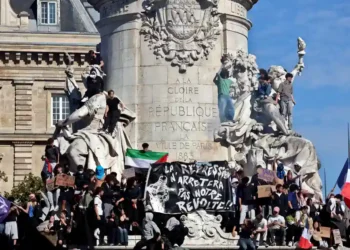
The protests began in late September, with students demanding improvements in education, including more teachers, smaller classes and better school buildings.
The government reported more than 6,000 arrests between September 28 and October 5, with a large share involving minors. Those figures cover a defined period and should not be treated as a final total for the entire protest movement.
Authorities also reported injuries among both demonstrators and police officers. Nuñez said about 200 students had been injured, while officials cited roughly 700 injured officers in the wider unrest. The figures cover different groups and reporting periods, and do not establish how many injuries resulted from police weapons or from other incidents.
Police unions have argued that officers need effective tools to protect themselves and restore order when demonstrations become violent. Critics counter that some weapons can escalate confrontations and cause injuries disproportionate to the threat posed.
A fair assessment requires examining both the threats officers faced and the risks their tactics created. The number of arrests or injuries alone cannot determine whether a particular use of force was justified.
Calls for tighter controls
Amnesty International has urged France to permanently ban stun grenades in protest policing and to review the use of other weapons, including projectile launchers. The organization says the recent injuries show the need to prioritize de-escalation and protect young people exercising their right to peaceful assembly.
Other proposals include clearer rules for weapon deployment, improved training, reliable identification of the ammunition used in each incident and stronger independent oversight. Such measures could help investigators determine which weapon caused an injury and whether officers followed the required procedures.
Independent testing is also important when authorities introduce a new model or replace a weapon that has been suspended. A change in design should be assessed using evidence about injury risks, not only the manufacturer’s description or the intended effect of the device.
Police must also have clear reporting requirements after serious incidents. Records should identify the weapon used, the circumstances of deployment, warnings given, injuries reported and the steps taken to provide medical assistance.
A debate that extends beyond individual cases
The cases involving injured teenagers have put a wider question before French authorities: how to maintain public order without exposing demonstrators, bystanders and officers to unnecessary harm.
The answer will depend on more than whether a single grenade model remains in service. It requires clear rules, reliable evidence about the risks of each weapon, training that prioritizes de-escalation and investigations that can establish responsibility when injuries occur.
The current investigations may clarify the circumstances of individual incidents. They may also inform decisions about weapon restrictions, police training and oversight. Until those findings are available, it would be premature to declare every case unlawful or to dismiss the concerns raised by the injuries.
What is already clear is that the label “less-lethal” cannot settle the debate. When weapons used to control crowds leave teenagers with permanent injuries, authorities must demonstrate that their use was lawful, necessary and proportionate—and that lessons from each case lead to meaningful safeguards.
Reporting Credit: French Interior Ministry — October 7, 2026, announcement of a temporary suspension of stun grenades during student protests and subsequent policy developments. French prosecutors and the National Police Inspectorate — public statements and investigation referrals concerning injuries during the demonstrations. United Nations Office of the High Commissioner for Human Rights — 2020 Guidance on Less-Lethal Weapons in Law Enforcement. Amnesty International — October 2026 recommendations on crowd-control weapons and the protection of student demonstrators.