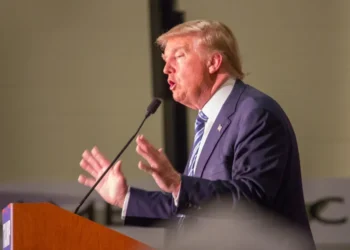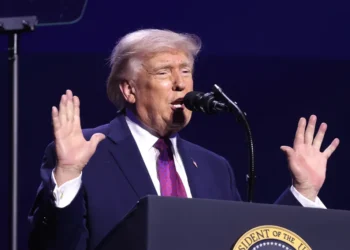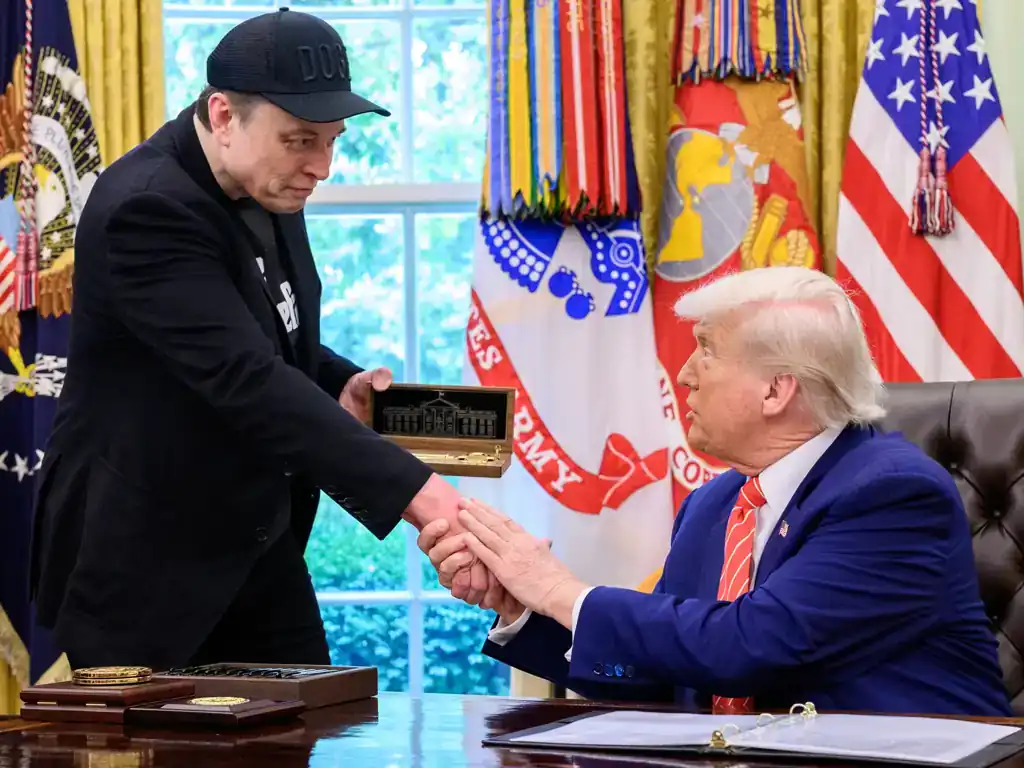
WASHINGTON, United States – U.S. President Donald Trump said Elon Musk had restored Ukraine’s Starlink access after restrictions disrupted the satellite service used by Ukrainian forces. But Ukrainian officials said full performance had not yet returned, leaving the extent of the recovery unclear.
Asked on October 22 whether he had called Musk to restore the service, Trump declined to confirm the conversation. “I don’t want to comment on it, whether I called or whether somebody else called,” he told reporters. “The bottom line, he put it back.”
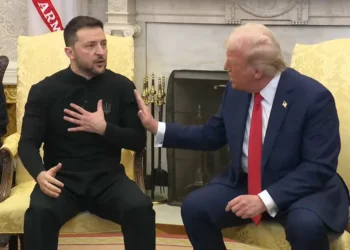
Ukraine’s President Volodymyr Zelenskyy had offered a more cautious assessment earlier that day. He said Starlink speeds had not returned to the expected level of 400 kilometers per hour and that he was waiting for an update from U.S. Secretary of State Marco Rubio.

The conflicting statements leave a key question unanswered: did the service return to full operation, or did SpaceX ease some restrictions while other limits remained?
Ukrainian officials report lingering restrictions
The disruption became a concern for Kyiv after Ukrainian forces reported restrictions on Starlink and Starshield systems used near the front line.
On October 19, Zelenskyy said the speed limits were affecting frontline logistics, medium-range strike operations and Ukraine’s ability to defend against Russian attack drones. He said the government had not received a clear explanation for the restrictions.
The limits were especially concerning for drones that need reliable connectivity while moving at high speed. If a terminal loses its connection during flight, operators may lose the ability to control or coordinate the system as intended.
Ukrainian officials said some drones and interceptors were impaired by the restrictions. The full operational impact, however, has not been independently quantified, and public information does not establish how many units or missions were affected.
■ Related News



Reports on October 22 indicated that connectivity had improved after Trump and Musk were reported to have spoken. Some U.S. and Ukrainian officials said the system was operating more normally, while Ukrainian sources cautioned that performance had not returned fully to previous levels.
Those reports suggest that at least some restrictions may have eased. They do not establish that every affected terminal, location or military unit regained full service.
Starlink and Starshield are not the same system
The debate has often used the names Starlink and Starshield together, but the distinction is important.
Starlink is SpaceX’s satellite-broadband network, widely used by civilians, businesses and Ukrainian organizations. Starshield is a separate, security-focused system designed for government and defense applications.
Both rely on satellite connectivity, but their customers, equipment and service arrangements can differ. Public accounts of the restrictions have focused heavily on military-grade connectivity and the use of terminals by Ukrainian forces.
The available evidence does not provide a complete inventory of affected devices or identify every service setting that changed. It is therefore not possible to conclude that all commercial Starlink users in Ukraine experienced the same restrictions as military users.
Nor has a public technical report established the current speed, coverage and reliability of every affected Starshield terminal. Ukrainian operational reports remain important, but a comprehensive assessment would require more detailed information from the operators and the government.
Who ordered the restrictions?
The decision-making process remains disputed.
Reports citing U.S. officials and people familiar with the matter said Musk ordered a slowdown affecting a military-grade version of the service. Those accounts described confusion within the U.S. administration over the decision and its implications for Ukraine.
Trump has previously denied ordering the restrictions or knowing who imposed them. On October 22, he declined to confirm whether he had spoken directly with Musk about lifting them.
The reported conversation between the two men has not been confirmed directly by Trump. He said that whether he or someone else called Musk did not change the outcome.
U.S. officials have also offered different explanations of the authority behind the restrictions. Rubio said decisions about Ukraine’s access rested with SpaceX and Musk, rather than the White House. Defense Secretary Pete Hegseth similarly pointed to the company’s authority to enforce its terms of service.
Those statements do not fully explain whether government officials discussed the restrictions with SpaceX before they took effect, whether the company acted independently or what authority governed the change. No public directive reviewed for this article establishes who authorized the original restrictions.
The difference between the company’s authority over its service and the government’s role in military support remains central to the dispute.
Why satellite connectivity matters to Ukraine
Starlink has become an important communications tool for Ukraine during Russia’s full-scale invasion. Satellite links help maintain communications where ground networks have been damaged or where conventional connections are unreliable.
Military units also use satellite connectivity to support coordination and the operation of certain drones. A sudden reduction in speed or reliability can disrupt communications and complicate the use of equipment that depends on a stable link.
That does not mean every drone or military system relies on Starlink, or that all Ukrainian communications stopped during the restrictions. The impact depends on the equipment involved, the location and the availability of alternative connections.
The disruption nevertheless highlighted the risks of depending on a privately operated communications network for important military functions. A change made by a company can have consequences far beyond ordinary internet access when armed forces rely on the same system for operational communications.
Restoration still needs independent confirmation
Trump’s statement that Musk had restored access was not accompanied by technical data showing that all restrictions had ended. Zelenskyy’s remarks earlier that day indicated that at least some performance limits remained.
The public evidence reviewed for this article does not establish a complete restoration time, a comprehensive list of affected locations or verified performance measurements across Ukraine. Nor does it establish whether any restrictions remain for particular terminals, geographic areas or military applications.
A definitive assessment would require updated confirmation from Ukrainian authorities, detailed statements from SpaceX and Starlink, and clarification from the U.S. government about the decision-making process.
Until those details are available, the most supportable conclusion is that service performance reportedly improved after the restrictions became a public issue, but full restoration has not been independently established.
The dispute has exposed a broader challenge for Ukraine and its partners: how to maintain reliable communications for critical operations when a privately owned satellite network plays such an important role. The immediate question is whether the service is fully restored. The longer-term question is how governments and military users can reduce the risks created by reliance on a single commercial provider.
Reporting Credit: Office of the President of Ukraine — October 19, 2026, statement describing the effects of Starlink and Starshield speed restrictions, and October 20 statement on Zelenskyy’s conversation with Marco Rubio. Public remarks by Donald Trump on October 22, 2026, as recorded in contemporaneous reporting. U.S. government statements by Secretary of State Marco Rubio and Defense Secretary Pete Hegseth on the authority behind service restrictions. The reported Trump-Musk conversation and accounts of partial service improvement remain attributed to officials cited in secondary reporting.