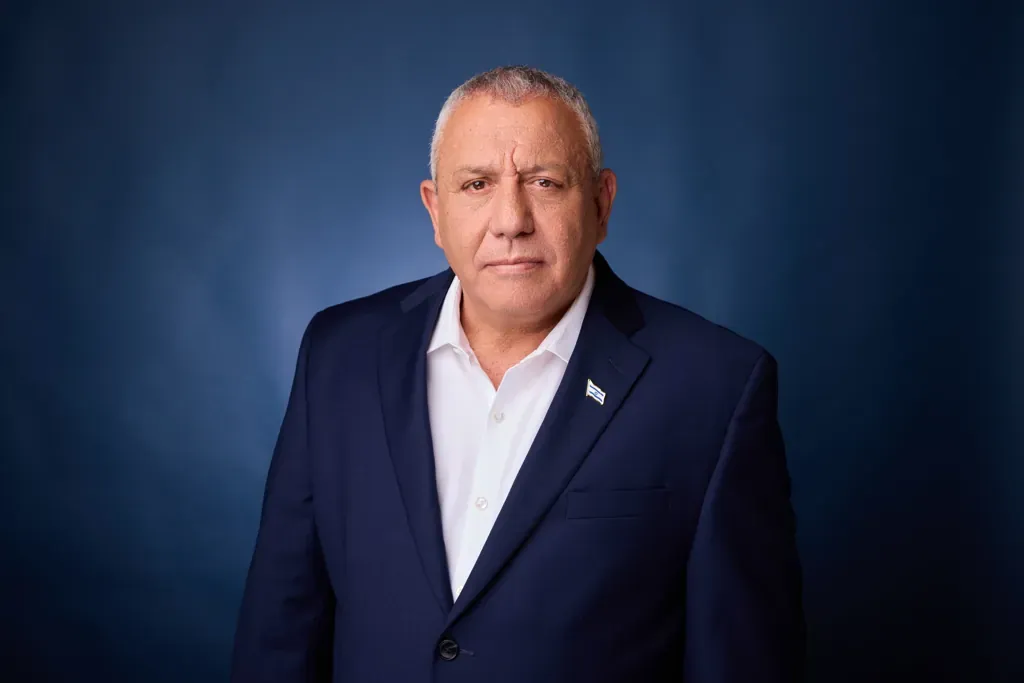
JERUSALEM, Israel – Gadi Eisenkot pledged to reverse major policies introduced under Prime Minister Benjamin Netanyahu as Israel’s newly elected parliament convened on Tuesday, November 10, opening a period of legislative activity and negotiations over the formation of a new government.
Eisenkot, a former chief of the Israel Defense Forces who was tasked by President Isaac Herzog with forming the next government, has up to six weeks to assemble a coalition capable of securing parliamentary confidence. His political bloc has already introduced legislation aimed at reversing parts of Netanyahu’s judicial overhaul, imposing term limits on the prime minister and establishing a state commission of inquiry into the Hamas-led attacks of October 7, 2023.
The 120 members of the 26th Knesset took their oaths during the opening session in Jerusalem. Netanyahu remains caretaker prime minister while coalition negotiations continue, leaving his government in office even as the new parliament begins considering legislation.

Eisenkot’s Bloc Introduces Legislative Proposals
Eisenkot’s Yashar party and its allies submitted several bills on the opening day of the new parliament.
The proposals include establishing a state commission of inquiry into the October 7 attacks, introducing term limits for the prime minister and repealing legislation passed under Netanyahu’s previous government as part of its judicial overhaul.
Other proposals seek to reverse changes affecting the attorney general’s authority, judicial appointments and the regulation of Israel’s media sector. The opposition parties have argued that the previous government’s measures weakened institutional checks and balances. Supporters of the judicial overhaul, however, have maintained that the changes were necessary to address what they consider excessive judicial influence.
The proposals have been submitted for parliamentary consideration, but their introduction does not mean they have been approved. Their progress will depend on support among lawmakers and the parliamentary process.
Opposition Seeks to Replace Knesset Speaker
Eisenkot’s allies also began efforts to replace Knesset Speaker Amir Ohana, a member of Netanyahu’s Likud party.
■ Related News

The opposition submitted signatures from a majority of lawmakers seeking Ohana’s removal, initiating the process for a vote on a replacement. The speaker’s position carries significant influence over parliamentary proceedings, including the scheduling of debates and legislative business.
The opposition nominated Matan Kahana, a senior member of Eisenkot’s Yashar party, for the position.
Coalition Negotiations Remain Uncertain
Despite the opposition’s legislative activity, Eisenkot does not yet have a confirmed parliamentary majority for forming a government.
The final election results gave Likud 27 seats, while Eisenkot’s Yashar party secured 21. His broader political partners hold additional seats, but the groups aligned against Netanyahu have not yet established a formal governing coalition.
The Knesset has 120 seats, requiring at least 61 lawmakers to support a government. Netanyahu’s Likud-led alliance holds 53 seats, while Eisenkot’s centre-right bloc and its partners have 48. Arab-led parties hold the remaining 19 seats and oppose Netanyahu, making their potential support important to Eisenkot’s efforts.
Eisenkot has not ruled out cooperation with Arab-led parties, although he has indicated that any arrangement would require them to accept conditions concerning Israel’s identity as a Jewish state and their position on Hamas.
Ultra-Orthodox parties have so far rejected joining an Eisenkot-led government, while a unity arrangement with Netanyahu would require political compromises that remain uncertain.
Netanyahu Challenges Opposition’s Political Direction
Speaking after the parliamentary swearing-in ceremony, Netanyahu called for a national unity government, arguing that Israel faces security threats requiring broad political cooperation.
He also criticised the possibility of a government relying on Arab-led parties, repeating claims that their political representatives could not be trusted. Netanyahu has previously questioned the election outcome after his bloc failed to secure a majority, although election officials have reported no evidence of fraud that could have changed the result.
Eisenkot described Netanyahu’s speech as divisive and said it strengthened his determination to replace the caretaker prime minister. He subsequently cancelled a planned meeting with Likud representatives.
Netanyahu Remains Caretaker Prime Minister
The new parliament’s opening does not immediately transfer executive power to Eisenkot. Netanyahu and his Cabinet remain in office until a new government is formed and receives the Knesset’s confidence.
Eisenkot initially has until December 6 to assemble a coalition, with the possibility of a two-week extension until December 20. If he fails, President Herzog may give Netanyahu another opportunity to form a government. Failure by both could eventually lead to another election.
The transition leaves Israel in an unusual political situation: lawmakers can advance legislative proposals while the outgoing administration continues to exercise executive authority, including responsibility for national security and the military.
The coming weeks will determine whether Eisenkot can translate his opposition bloc’s legislative agenda into a governing coalition capable of ending Netanyahu’s tenure.
Primary Sources: Office of the President of Israel — President Herzog Tasks Gadi Eisenkot with Forming a Government, November 8, 2026. Confirms Eisenkot’s appointment and the president’s constitutional consultations following the election. The Knesset — Official Final Results of the Elections for the 26th Knesset. Provides the official party vote totals and distribution of the 120 parliamentary seats. The Knesset — Opening Session of the 26th Knesset, November 10, 2026. Official parliamentary information confirming the opening session and swearing-in of lawmakers.