The Houthis’ advance toward one of the world’s most important maritime chokepoints is changing the geography of Yemen’s war—and linking it more closely to the wider conflict involving Iran.
SANAA, YEMEN — Yemen’s Houthis have turned a renewed offensive along the country’s western coast into a regional security problem.
Since early September, the Iran-aligned movement has pushed down Yemen’s Red Sea coastline, seized the strategic port of Mokha and advanced toward the Bab el-Mandeb Strait, the narrow passage linking the Red Sea with the Gulf of Aden. The United Nations says fighting has intensified across several Yemeni front lines, although commercial shipping through the Red Sea had not yet been substantially disrupted as of September 15.

The offensive has unfolded alongside renewed Houthi attacks on Saudi Arabia and a much wider regional war involving Iran. That combination has given Yemen’s conflict a new strategic dimension.
For years, the Houthis were primarily a Yemeni military and political force fighting for control and influence inside Yemen. Their attacks on Red Sea shipping beginning in late 2023 demonstrated that they could also affect international commerce.
The latest offensive potentially goes further.
By moving toward Bab el-Mandeb while threatening Saudi territory and infrastructure, the Houthis are positioning themselves near another critical maritime gateway at a time when the Strait of Hormuz is already under severe pressure.
The result is a new strategic connection between two geographically separate conflicts.
■ Related News




Yemen’s fragile calm has broken down
The latest fighting did not emerge from a lasting peace.
Yemen’s war has continued for more than a decade, but fighting declined substantially after the 2022 truce between the Houthis and the Saudi-backed Yemeni government. That relative calm created space for negotiations over political, economic and security arrangements.
By July 2026, the United Nations was still describing the period since 2022 as one of relative calm.
UN Special Envoy Hans Grundberg warned that wider regional tensions could pull Yemen back into another cycle of violence.
By September, that risk had become reality.
On September 10, Grundberg told the UN Security Council that the possibility of a return to large-scale conflict had become a “harsh reality.” Fighting had intensified along several fronts, particularly on the west coast, where the Houthis launched their offensive against Mokha.
The location of the offensive immediately raised its regional significance.
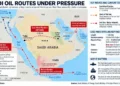
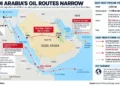
Mokha lies roughly 75 kilometers from Bab el-Mandeb. Its capture gave the Houthis a direct presence near the approaches to a waterway through which major international trade and energy shipments move.
The battlefield had moved closer to the sea—and closer to the world economy.
Why Bab el-Mandeb matters
Bab el-Mandeb is one of the world’s critical maritime chokepoints.
At its narrowest points, the strait separates Yemen from Djibouti and Eritrea. Ships traveling between the Indian Ocean and the Mediterranean through the Suez Canal normally pass through the Gulf of Aden, Bab el-Mandeb and the Red Sea.
That makes the waterway an important connection between Asian manufacturing centers, European markets and global energy routes.
The Houthis already demonstrated during their earlier Red Sea campaign that they could threaten commercial vessels.
But territorial control near the strait introduces a different strategic factor: proximity.
A group operating from territory much closer to Bab el-Mandeb has a different geographic position from one launching attacks farther inland.
The United Nations said on September 15 that the Houthis were continuing their advance toward Bab el-Mandeb and had reportedly captured several islands in the southern Red Sea. The development was increasing market concerns even though commercial shipping had not yet been significantly affected.
That distinction is important.
The Houthis have not closed Bab el-Mandeb.
But control of territory near a maritime chokepoint changes the potential military geography of the area.
Saudi Arabia is back under direct pressure
The offensive has also reopened a dangerous dimension of the Saudi-Yemeni conflict.
The Houthis began launching attacks against Saudi territory in July, with the intensity increasing after the September offensive. Saudi Arabia has responded with airstrikes inside Yemen, while the Yemeni government has launched a counteroffensive against Houthi positions.
Saudi authorities say their military actions are responses to attacks against Saudi territory and infrastructure.
On September 16, Saudi authorities said an incoming Houthi drone aimed toward Mecca had been intercepted before entering the city’s restricted airspace. Riyadh also accused the Houthis of threatening civilian and economic infrastructure and international maritime traffic.
Other attacks have reached or threatened areas farther inside Saudi Arabia.
The UN Security Council was told that attacks on September 8 and 17 affected or threatened areas including Abha, Khamis Mushait and Taif, with reported civilian injuries and property damage.
For Riyadh, this creates a familiar problem at an especially difficult time.
Saudi Arabia spent years attempting to move away from its costly direct involvement in Yemen.
The new offensive is forcing the kingdom to confront the Houthi threat again while Saudi attention is also being consumed by the wider conflict involving Iran.
The Iran connection is real—but complicated
The Houthis are closely aligned with Iran and have received Iranian military support and technology.
But the relationship should not be reduced to a simple chain of command.
The Houthis have their own political interests, military leadership and calculations inside Yemen. Their decision to resume large-scale fighting does not, by itself, establish that Tehran directly controls every battlefield decision.
The distinction matters because Yemen has its own conflict dynamics.
At the same time, the current offensive creates strategic advantages for Iran.
Pressure on Saudi Arabia forces Riyadh to devote military resources to its southern border. Threats near Bab el-Mandeb create uncertainty around Red Sea shipping. And a renewed Yemen war complicates the ability of Saudi Arabia and other Gulf states to focus entirely on the conflict with Iran.
The result is leverage without necessarily requiring direct Iranian command.
Two maritime chokepoints are now connected
The Strait of Hormuz and Bab el-Mandeb are separate waterways with different strategic functions.
But together, they sit on opposite sides of the Arabian Peninsula and connect the Middle East’s energy infrastructure to the global economy.
That makes their simultaneous disruption particularly significant.
The United Nations has linked the two developments directly. Its September 15 Security Council briefing said the Houthi advance around Bab el-Mandeb had added to market concerns amid continuing disruption in Hormuz. The UN warned that prolonged disruption to international maritime corridors could affect energy markets, food security and economies outside the immediate conflict zone.
Yet the current situation should not be overstated.
Commercial vessels were still moving through the Red Sea in the UN’s September 15 assessment.
The significance lies partly in risk.
A waterway does not have to be physically closed to become more expensive or dangerous. Higher insurance costs, security requirements, crew concerns and the possibility of repeated attacks can influence commercial decisions.
That was already demonstrated during the earlier Houthi attacks, when some vessels diverted around the Cape of Good Hope to avoid the Red Sea.
The battlefield is also becoming a humanitarian crisis
The military advance is producing a rapidly expanding humanitarian emergency.
The International Organization for Migration reported on September 13 that 85,818 people had been displaced inside Yemen, including 82,164 displaced since the beginning of September. More than 2,000 people had also crossed the Red Sea into northern Djibouti.
The number continued to rise.
By September 18, the UN said more than 112,000 people had been displaced, with most of the new displacement occurring during the preceding two weeks. Another UN update put the number displaced since the beginning of September at at least 125,000.
The figures are changing quickly because fighting is continuing and humanitarian organizations face serious access restrictions.
That matters because Yemen was already experiencing one of the world’s major humanitarian crises.
The United Nations says more than 22 million people across the country already require humanitarian assistance.
The latest fighting is therefore not occurring in an otherwise stable country.
It is adding a new displacement emergency to an already fragile humanitarian system.
The crisis is spilling across the Red Sea
The movement of civilians into Djibouti shows how quickly the consequences can cross an international border without Djibouti itself becoming a party to the war.
People are crossing the Gulf of Aden in small boats, often after being displaced more than once.
The UN reported approximately 2,300 arrivals in Djibouti’s Obock region by September 14. By September 18, humanitarian officials said nearly 3,000 people had arrived.
For many, the crossing is another stage in a displacement journey rather than a first escape from conflict.
The geography makes the movement especially dangerous.
Fuel shortages, damaged roads and insecurity can make movement inside Yemen difficult. At the same time, large numbers of people attempting to cross the Gulf of Aden create risks of their own.
If the fighting continues, the humanitarian consequences could increasingly become a regional migration problem.
Why the shipping threat is different now
The Houthis have already demonstrated that they can threaten commercial shipping.
What has changed is where they are operating.
During the earlier Red Sea campaign, Houthi forces used missiles, drones and other weapons from territory under their control against vessels operating in the region.
The latest territorial gains potentially put Houthi forces closer to the southern entrance of the Red Sea.
That does not give the movement automatic control over Bab el-Mandeb.
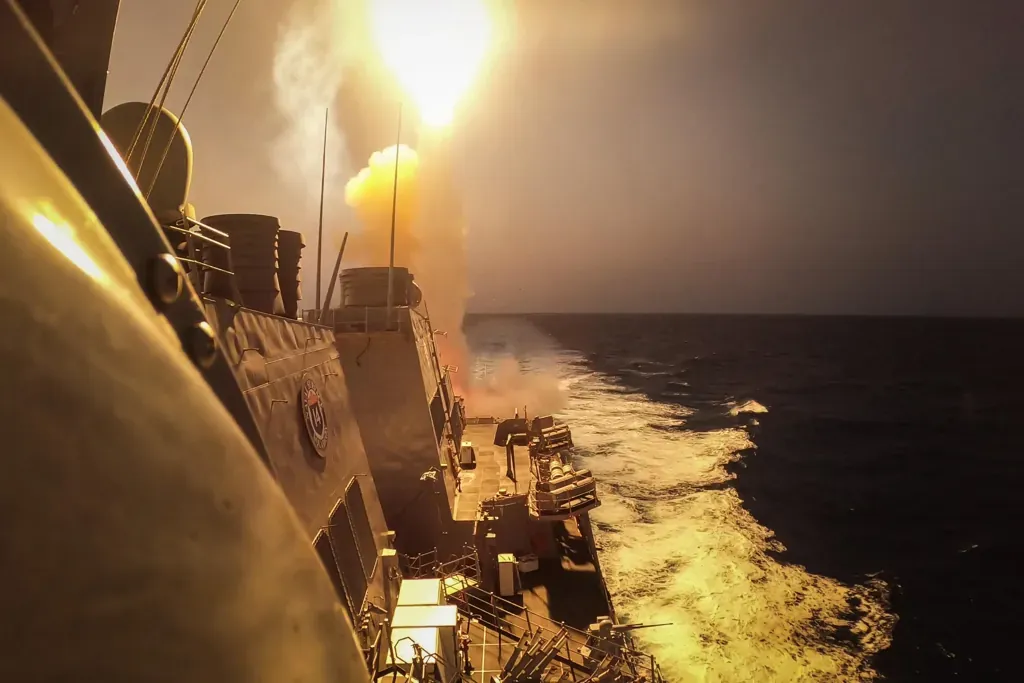
International naval forces, surveillance aircraft, commercial tracking systems and regional militaries remain part of the maritime-security environment. The United States, European countries and regional governments have also gained experience defending vessels against Houthi attacks.
But proximity changes the operating environment.
For shipping companies, the calculation is not simply whether a waterway is open.
It is whether a route is safe enough, predictable enough and economically viable enough to use.
A single attack can therefore have consequences far beyond the vessel directly targeted.
Washington faces a difficult choice
The United States has already fought the Houthis directly.
The current situation is different because Washington is simultaneously dealing with the broader Iran conflict.
A major American campaign against the Houthis could suppress their military capabilities.
It could also expand the war into another theater.
The United States therefore faces several objectives at once: protecting shipping, defending Saudi Arabia, preventing the Houthis from consolidating positions around Bab el-Mandeb, avoiding a broader regional escalation and keeping diplomatic channels open.
Reported U.S. contacts with Houthi representatives in Oman in September illustrate the complexity.
Reuters reported that U.S. officials met Houthi representatives in Oman following the Red Sea advance, with the discussions taking place against the background of the renewed Yemen fighting and the wider Iran war.
Military pressure and diplomacy are therefore operating simultaneously.
That is not unusual for Yemen.
Even during periods of intense fighting, channels involving Oman and the United Nations have remained important.
Saudi Arabia is managing two strategic risks
For Saudi Arabia, the Houthi offensive presents both a military and economic challenge.
The kingdom’s western coastline contains important ports and infrastructure, while its economy depends heavily on reliable energy exports.
Saudi Arabia has invested in reducing its dependence on vulnerable maritime routes, but alternative arrangements cannot eliminate the geographic importance of the Red Sea.
The Houthi advance therefore arrives at an especially sensitive moment.
Reuters reported that attacks associated with the escalation had affected Saudi energy infrastructure and that Riyadh was seeking international support as the Houthi advance accelerated.
Saudi policy now has to balance two immediate concerns:
- preventing the Houthis from establishing a durable position around Bab el-Mandeb; and
- protecting Saudi territory and critical infrastructure.
How far Riyadh chooses to go militarily could also influence whether Yemen returns to a much broader war.
Iran can gain from the pressure without controlling every move
The strategic benefit to Tehran does not depend on direct control of every Houthi operation.
A Houthi threat to Saudi Arabia forces Riyadh to allocate resources to its southern flank.
A threat to Bab el-Mandeb creates uncertainty around one of the world’s major shipping routes.
Attacks against energy infrastructure can contribute to wider pressure on global energy markets.
And a renewed Yemen war makes it more difficult for Saudi Arabia and other Gulf governments to concentrate exclusively on Iran.
That is strategic leverage.
It should not, however, be confused with direct command.
The distinction could become particularly important if diplomacy attempts to separate the Yemen conflict from the wider Iran war.
The Houthis have their own interests and may use their new position to pursue concessions from Saudi Arabia or Yemen’s internationally recognized government.
Any durable settlement is therefore likely to involve more than negotiations between Tehran and Riyadh.
China is also watching the Red Sea
The consequences extend beyond Washington, Riyadh and Tehran.
China depends heavily on stable energy supplies and international maritime trade.
Reuters reported that Beijing privately asked Iran to help restrain the Houthis after Saudi Arabia sought Chinese assistance as the offensive expanded. The report said China’s concerns included the potential effect on energy routes important to the country.
The development illustrates how the conflict is becoming difficult for major economic powers to ignore.
China has generally sought greater diplomatic influence in the Middle East without assuming the kind of direct military role associated with the United States.
But geography limits how completely outside powers can remain detached.
If major maritime chokepoints are disrupted simultaneously, the consequences can move quickly into global energy markets and supply chains.
Yemen’s peace process is under renewed pressure
The latest escalation threatens more than the battlefield balance.
It also threatens the political process that emerged after the 2022 truce.
The truce did not resolve Yemen’s underlying political divisions. But it created a period in which negotiations could take place without the level of nationwide warfare that had characterized earlier years.
The September offensive has damaged that environment.
Grundberg has called for communication channels to remain open and urged the parties to return to negotiations. The United Nations maintains that there is no military path to a lasting peace and that the possibility of a political settlement must be preserved.
The problem is that battlefield success can change the incentives for negotiation.
A faction gaining territory may have less reason to compromise.
A faction losing territory may have more reason to escalate.
And outside powers may pursue objectives that do not necessarily match those of Yemen’s domestic actors.
That combination has repeatedly complicated efforts to end Yemen’s war.
The decisive question: Can the Houthis hold the coast?
The next phase may depend on whether the Houthi territorial gains prove temporary.
If government-aligned forces push the Houthis away from the coast, the current escalation could remain a serious but relatively contained episode.
If the Houthis consolidate control over the western coast and strategic islands around Bab el-Mandeb, the consequences would be greater.
The movement would have a stronger position from which to threaten maritime traffic and negotiate with Saudi Arabia.
The Yemeni government would suffer another major territorial setback.
Saudi Arabia would face greater pressure along its southern border.
International naval forces could face a longer-term requirement to protect commercial shipping.
The United Nations continues to describe the situation as fluid.
That uncertainty is important.
In a rapidly changing coastal offensive, control of ports, roads and islands can shift quickly. A battlefield map produced today may not accurately describe the balance of power days later.
The Iran war now has a maritime geography
The wider regional conflict is increasingly defined not only by armies and missiles but also by geography.
The Strait of Hormuz sits at the entrance to the Persian Gulf.
Bab el-Mandeb sits at the southern entrance to the Red Sea.
Saudi Arabia lies between them.
That makes the kingdom unusually exposed to developments affecting both maritime systems.
The two conflicts remain distinct.
The Houthis are not simply another branch of Iran’s armed forces. Yemen has its own political history, military factions and unresolved domestic struggle.
But the strategic connections are becoming harder to separate.
The conflict in Yemen is now directly linked to international shipping, Saudi infrastructure and the wider confrontation involving Iran.
A new front does not mean a new war
Calling the Houthi offensive a “new front” requires some qualification.
Yemen has been at war for years.
The Houthis have fought Saudi Arabia before.
They have attacked commercial shipping before.
Iran has supported the movement for years.
What has changed is the combination of those factors at a moment when the wider region is already experiencing severe instability.
The Houthis are now positioned closer to Bab el-Mandeb.
Saudi Arabia is again conducting military operations inside Yemen.
Displacement is rising rapidly.
Shipping security is under renewed pressure.
And the Strait of Hormuz is already part of the wider regional confrontation.
That combination gives the current escalation a significance that earlier phases of Yemen’s war did not have.
Conclusion
The Houthis did not create the wider Iran war.
But their September offensive has created a new strategic problem within it.
By advancing along Yemen’s Red Sea coast and toward Bab el-Mandeb, the movement has placed itself at the intersection of three conflicts: Yemen’s unresolved civil war, the Saudi-Houthi confrontation and the broader regional struggle involving Iran.
The consequences are already spreading.
Saudi Arabia is under renewed attack.
Yemen’s civilian population is being displaced at extraordinary speed.
Humanitarian access is becoming more difficult.
The United Nations is warning about the risks to international navigation.
And governments far beyond the Middle East are watching the Red Sea because disruption there can affect energy, food and global trade.
The central question is now whether the Houthis will use their new position primarily as leverage for negotiations or attempt to consolidate a lasting military presence around Bab el-Mandeb.
That outcome will help determine whether the current escalation becomes another temporary phase in Yemen’s long war—or a durable new component of the wider Iran conflict.
For now, the geography has changed.
And with the Houthis positioned closer to Bab el-Mandeb, the consequences of Yemen’s war are no longer confined to Yemen.
Reporting Credit: United Nations Office of the Special Envoy for Yemen, for the September 10 briefing on the Houthi offensive, Mokha and the deteriorating Yemen peace process; United Nations Department of Political and Peacebuilding Affairs and Security Council, for assessments of the Bab el-Mandeb escalation, maritime security and regional consequences; International Organization for Migration, for displacement data from Yemen and cross-border movements into Djibouti; United Nations Office for the Coordination of Humanitarian Affairs and Office of the High Commissioner for Human Rights, for humanitarian and civilian-casualty assessments; Saudi Ministry of Foreign Affairs and Saudi Ministry of Defense, for official statements concerning Houthi attacks and Saudi defensive responses; Saudi-led Coalition Joint Forces Command, for official statements concerning maritime security and operations around Bab el-Mandeb; United Kingdom Foreign, Commonwealth & Development Office, for its official statements to the UN on the Yemen escalation and regional security.