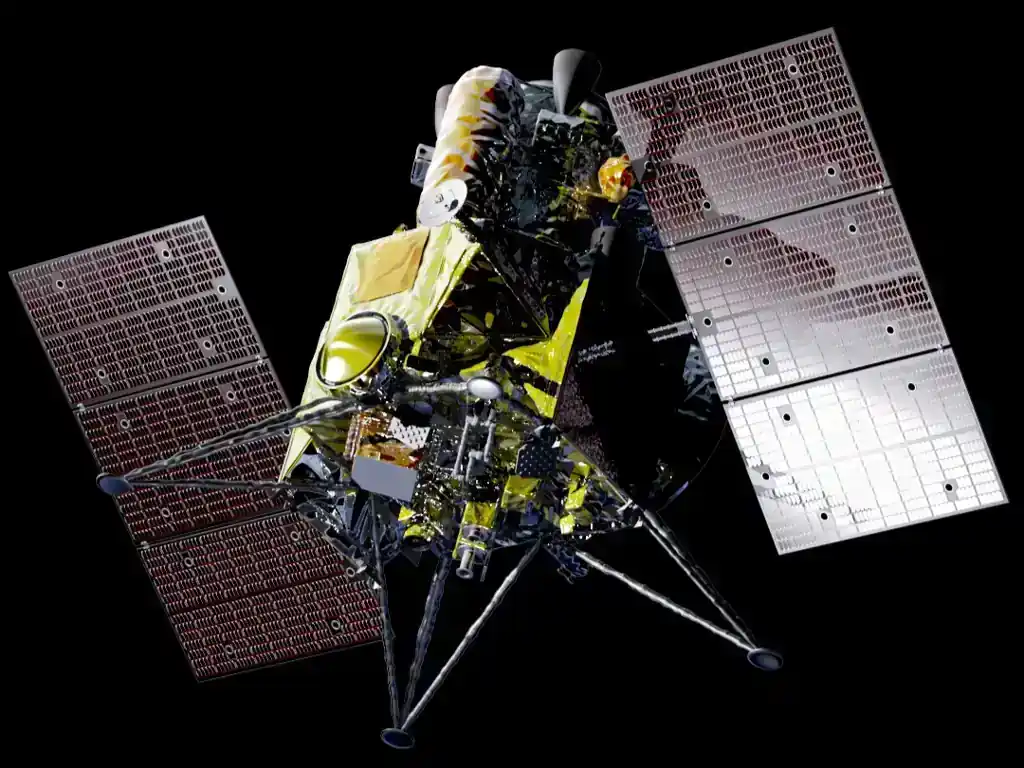
TANEGASHIMA, Japan — Japan launched its Martian Moons eXploration spacecraft on October 20, beginning a mission to investigate Mars’ two moons and return a sample from Phobos to Earth.
The Japan Aerospace Exploration Agency (JAXA) launched the spacecraft aboard its H3 rocket from Tanegashima Space Center. The mission aims to collect at least 10 grams of material from Phobos and deliver it to Earth in 2031. Scientists hope the findings will help explain how the moons formed and how the Martian system evolved.
The launch marks the start of a journey expected to last about five years. The spacecraft must travel to Mars, study both moons, operate near Phobos, collect samples and return them to Earth. Each stage presents technical challenges, and the planned return remains a mission objective rather than a guaranteed outcome.

H3 rocket successfully deploys spacecraft
JAXA confirmed that the H3 rocket’s 10th flight lifted off at 4:41:03 a.m. Japan Standard Time on October 20. The agency reported that the rocket followed its planned flight path and released MMX into its intended orbit about one hour, 11 minutes and 13 seconds after launch.
That confirmation establishes the success of the launch and initial deployment. It does not mean MMX has arrived at Mars or begun its scientific observations.
The mission is scheduled to reach the Martian system in 2027. The spacecraft will then conduct observations of Phobos and Deimos, with particular attention to Phobos, where it is intended to collect material for return to Earth.
Why scientists are investigating Mars’ moons
Phobos and Deimos are small, irregularly shaped bodies orbiting Mars. Their origins remain an open question in planetary science.
One explanation is that the moons formed from debris created by a major impact involving Mars. Under this hypothesis, material thrown into orbit eventually gathered into the bodies seen today.




Another possibility is that Mars captured the moons from elsewhere in the Solar System. They could be asteroids that passed close enough for the planet’s gravity to hold them in orbit.
Scientists have not established which explanation is correct. Studying the moons’ composition, structure and surface material could help determine which scenario better fits the evidence.
Phobos is the mission’s main target for close observation and sample collection. MMX will also examine Deimos, although the planned sample return is from Phobos.
The findings could help researchers understand not only the moons themselves but also the history of Mars and the movement of material through the early Solar System. Mars Moon Origins is a central scientific question the mission is designed to investigate.
A rover will examine Phobos’ surface
MMX carries Idefix, a compact rover developed jointly by Germany’s Aerospace Center (DLR) and France’s space agency, CNES.
The rover is intended to descend to Phobos and examine its surface. Its instruments will investigate properties such as the ground’s composition, temperature and mechanical characteristics. These measurements should help researchers understand the environment in which the main spacecraft will attempt to land and collect samples.
Idefix weighs about 25 kilograms. DLR contributed the rover’s mobility systems and scientific instruments, including a Raman spectrometer and a radiometer. CNES contributed camera systems, equipment for assessing the ground, and key onboard systems for power, communications and computing.
The rover has not yet deployed or reached Phobos. According to DLR, its surface operations are planned for around the turn of 2028 and 2029, with an intended exploration period of about 100 days. Its observations will help the mission team assess the moon’s surface and prepare for the spacecraft’s more demanding sampling operation.
Why returning a sample matters
Remote observations can reveal a great deal about a celestial body, but laboratory analysis of returned material offers additional ways to examine its composition.
MMX aims to collect at least 10 grams of material from Phobos. Scientists will be able to study the returned grains and rock fragments using laboratory methods that may provide more detailed information than instruments can obtain remotely. JAXA identifies determining the origin of Mars’ moons and understanding the evolution of the Martian system as major goals of the mission.
The sample could help researchers compare the material on Phobos with what they would expect from an asteroid or from debris produced by an impact on Mars. That evidence could help distinguish between the leading explanations for the moons’ origins, although the result may not settle every question.
Researchers may also investigate whether some material on Phobos originated on Mars. Material ejected from the planet by impacts could, in principle, reach its nearby moon. Whether the returned sample contains identifiable Martian material remains unknown.
The mission therefore offers a way to study both a small moon and the wider history of its planetary environment. It is not a mission to collect a sample directly from Mars.
International partners contribute instruments and expertise
JAXA leads MMX, with contributions from the United States, France, Germany and the European Space Agency (ESA).
NASA is contributing the MEGANE instrument, which will measure gamma rays and neutrons emitted from Phobos to help determine the elements present at its surface. The measurements are intended to help scientists assess the moon’s composition and investigate its origin.
France’s CNES and Germany’s DLR jointly developed the Idefix rover. Their contributions cover the rover’s mobility, scientific measurements, imaging and operating systems. The rover will provide close-up observations to complement measurements made by the main spacecraft.
ESA is also a partner in the mission. Its published mission overview outlines the planned journey, observations, sampling operations and return to Earth.
The partnership brings together spacecraft operations, scientific instruments and surface robotics. However, the mission’s success will depend on the spacecraft and its equipment performing as planned throughout the journey.
What happens next
The mission’s principal milestones remain ahead. JAXA’s mission plan and partner-agency updates outline the following schedule. Dates are planned targets, not completed events. <Cite refs={[“turn560747search4″,”turn560747search0″,”turn560747search1”]} />
- October 2026 — Launch: MMX lifted off from Tanegashima and entered its intended orbit, as JAXA confirmed.
- 2027 — Arrival at Mars: The spacecraft is expected to reach the Martian system and begin observations.
- From 2027 — Close study of Phobos: MMX is scheduled to enter an orbit that allows detailed examination of the moon and assessment of potential landing and sampling locations.
- Around late 2028 or early 2029 — Rover operations: Idefix is expected to reach Phobos and examine its surface.
- Around 2030 — Sample collection and return journey: The mission plan calls for MMX to collect at least 10 grams of material from Phobos before beginning its journey home. ESA’s timeline identifies November 2030 as the planned start of the return leg.
- 2031 — Planned return to Earth: The sample-return capsule is expected to deliver the material to Earth for recovery and scientific analysis.
These stages will require the spacecraft to navigate the Martian system, operate around a small body with very weak gravity and complete a controlled sampling procedure. The returned material will have scientific value only if the spacecraft can collect, preserve and deliver it successfully.
For now, the confirmed achievement is the launch and deployment of MMX. The mission’s larger scientific goals will depend on what the spacecraft and its rover discover in the years ahead.
Journos News reporting based on JAXA’s official launch confirmation and mission documentation, NASA’s MMX mission overview, and published mission updates from DLR and ESA. No direct interviews or independent technical verification were conducted for this report.