BOSTON, United States – Converse has apologized and removed a sneaker advertisement after critics said its imagery evoked the Ku Klux Klan and lynching, but the company has not explained how the campaign passed its internal review process.
The controversy centers on an image featuring K-pop singer Karina, a member of aespa and a Converse global ambassador, promoting the Chuck 70 X sneaker.
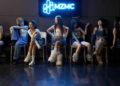
In the photograph, Karina wears a long white skirt and holds a pair of black high-top Converse shoes beneath a star-shaped spotlight. Critics said the lighting and composition created the appearance of a pointed white hood, while the shoes appeared to hang beside her in a way that evoked the feet of a lynching victim.

The image was posted on Converse’s social-media channels earlier in September. After criticism spread online, the company removed it and issued an apology.
The unresolved question is not whether the image caused offense. Converse itself acknowledged that it had “got this wrong.”
The unanswered question is how the image reached publication in the first place.
What the advertisement showed
The campaign was created to promote the Chuck 70 X, a newer version of Converse’s classic Chuck silhouette.
Converse’s own current product pages identify Karina as a brand ambassador and describe the Chuck 70 X as a collaboration involving her. The company markets the shoe as a reinterpretation of its classic design.




The disputed photograph used a tightly controlled visual composition.
Karina’s lower body is largely framed by white fabric. A star-shaped light creates a bright triangular form across the skirt, while the black shoes hang from her hands at either side.
Critics interpreted those elements together as resembling a hooded Ku Klux Klan figure alongside the apparent feet of a hanging person. The interpretation spread rapidly across social-media platforms and prompted questions about the company’s creative and approval process.
The historical associations are particularly serious in the United States.
The Ku Klux Klan has a long history of racial terrorism against Black Americans, including violence and lynching. Images associated with its white robes and pointed hoods therefore carry meanings far beyond ordinary fashion imagery.
That history is why the criticism focused not simply on an awkward advertisement, but on what viewers believed the composition evoked.
Converse acknowledged the problem
Converse responded with an apology after the backlash.
The company said it understood why the image was deeply upsetting, acknowledged that it had “got this wrong,” and said it had removed the image from its channels while working to remove it from other locations where it appeared.
The company also said the incident “should not have happened.”
That language is significant because Converse did not defend the image as being misunderstood or argue that the criticism was unjustified.
Instead, it accepted responsibility for publishing the material and promised to do better.
But the statement stopped there.
Converse did not publicly identify the people or agency responsible for the creative work. It did not explain which internal teams reviewed the image. And it did not describe what changes it would make to its approval procedures.
The approval process remains unclear
Questions about approval became a central part of the backlash.
Commercial advertising typically involves multiple stages of creative development, production, review and publication. Depending on the campaign, photographs can pass through photographers, creative teams, brand teams, marketing executives, agencies, legal reviewers and regional or global approval structures.
The public record in this case does not establish which of those stages the Converse image passed through.
When asked specifically how the company screens advertising before publication and how this particular advertisement was approved, Converse declined to provide additional information.
That leaves an important distinction.
There is evidence that the advertisement was produced, published and later removed.
There is not public evidence establishing who specifically approved the final image or whether anyone inside the company raised concerns before publication.
Claims that a particular employee, agency or executive approved the image would therefore go beyond the available evidence.
Why the composition drew such a strong reaction
The criticism was based on the combination of several visual elements rather than on the Converse shoes themselves.
The pointed white shape came from the lighting and the skirt. The black shoes created the second visual element that critics associated with hanging footwear. Together, critics said the composition resembled imagery connected to racial violence.
Some commentators argued that the resemblance was too visually specific to have passed unnoticed.
Photographer Stephanie Schwartz, for example, argued publicly that lighting, shadow and composition are deliberate decisions in photography. Other commentators similarly questioned how multiple people involved in producing the advertisement could have failed to recognize the association.
Those are interpretations of the creative process, however, not evidence of intent.
There is currently no public evidence establishing that Converse deliberately intended to reference the Klan or lynching.
That distinction matters because the company’s apology establishes that it recognized the effect of the image, but does not establish why the image was designed that way or what its creators intended.
A second image intensified the controversy
The backlash also expanded beyond the Karina photograph.
Another Converse campaign image, associated with a collaboration with Danish lifestyle brand Palmes, showed people using a ladder to reach shoes positioned on a tree branch.
Some social-media users interpreted that image as another reference to lynching because of the combination of the tree, hanging shoes and people below it.
The second image was part of a separate campaign and should not automatically be treated as evidence that the two concepts were deliberately connected.
But its circulation during the controversy intensified questions about the brand’s visual review process.
Converse has not publicly said whether the two campaigns were reviewed by the same creative teams or whether the imagery was developed under a common concept.
Karina’s role is also separate from the approval question
Karina’s participation has drawn attention because she is the featured talent in the Chuck 70 X campaign.
Converse’s product pages currently promote the Chuck 70 X with Karina and identify her as a global brand ambassador.
There is no public evidence establishing that Karina designed, selected or approved the disputed image.
Her appearance in the photograph therefore should not be treated as evidence of responsibility for the campaign’s creative decisions.
Her management company, SM Entertainment, had not publicly responded to requests for comment in the reporting reviewed.
The controversy exposes a difficult problem for global brands
The episode illustrates a recurring problem in international advertising: a visual concept created for fashion or product marketing can acquire very different meanings depending on the audience and historical context.
But this is not simply a question of cultural interpretation.
The photograph was published by a major American brand with a global audience. That means its creative review process has to account for historically sensitive imagery, especially when the visual language can reasonably evoke racial violence.
The public evidence does not establish whether Converse lacked such a review, whether a review occurred and missed the association, or whether concerns were raised but the campaign was nevertheless approved.
Those are materially different possibilities.
Only the company can establish which one occurred.
What the company has not disclosed
As of September 21, Converse has not publicly answered several basic questions surrounding the campaign:
- Who created the disputed photograph?
- Which agency, photographer or creative team produced it?
- Who gave final approval?
- Was the image reviewed by Converse’s global marketing leadership?
- Was it reviewed for cultural or racial sensitivity?
- Did anyone object before publication?
- Was the second Palmes image reviewed through the same process?
- What changes, if any, will Converse make to its advertising review system?
The absence of answers does not establish that the company ignored these issues.
It does mean the public cannot currently determine where the review process failed.
The removal answers one question, not the larger one
Removing the advertisement stopped its continued distribution through Converse’s own channels.
The apology acknowledged the harm caused by the image.
But neither action explains how the campaign reached publication.
That distinction is increasingly important for major brands operating in global markets. Once an advertisement has been produced and approved, the most consequential decision may already have happened before the public sees it.
In this case, the public saw the final photograph only after it had passed whatever creative and marketing process Converse used.
The company has acknowledged the outcome.
It has not disclosed the process.
Until it does, the precise reason the image was approved remains unknown.
Reporting Credit: Converse — product and campaign information, public apology and removal of the disputed advertisement; Nike — corporate ownership relationship; SM Entertainment — representation of Karina, with no substantive response identified in the reporting reviewed.