KINSHASA, Congo – No Ebola cases have been detected among more than 200 passengers quarantined aboard a river boat near Kinshasa, Congo’s health authorities said Saturday, easing concerns that the country’s rapidly spreading outbreak could reach the capital.
The passengers were placed in quarantine Thursday at the port of Maluku, about 65 kilometers (40 miles) from Kinshasa, after a traveler who had previously been aboard the vessel died with symptoms associated with Ebola. Specialist health teams were sent to the port to assess passengers and collect samples from anyone showing suspicious symptoms.
The National Institute of Biomedical Research, which oversees testing, said all suspected cases tested negative for the Bundibugyo virus, the strain responsible for the current outbreak. The Ministry of Health also said the vessel had been decontaminated and urged residents to remain calm.

Testing eases fears of Ebola reaching Kinshasa
The results were significant because Kinshasa, Congo’s densely populated capital, has not recorded a confirmed Ebola case in the current outbreak.
Africa Centres for Disease Control and Prevention Director-General Jean Kaseya said Thursday that the passenger who later died had fallen ill and disembarked nearly three weeks earlier in Pimu, in Mongala province, more than 1,000 kilometers from Kinshasa along the Congo River.
The passenger’s death had triggered concern in the capital, which is geographically distant from the eastern areas where the outbreak has been concentrated. The quarantine and subsequent testing were intended to determine whether the virus had been carried toward Kinshasa by other people aboard the vessel.
Congo faces rapid transmission beyond monitored contacts
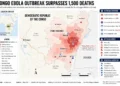
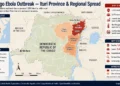
The outbreak has continued to expand since it began in May, with confirmed cases reaching 4,200, including more than 1,900 deaths, according to the supplied reporting. The outbreak has been described as the fastest in history in terms of transmission and is the second-largest Ebola outbreak on record, behind the 2014-2016 outbreak in West Africa.
Health authorities have reported that between 60% and 70% of new cases in the current outbreak are being detected outside the group of contacts already under monitoring. They have described the pace of transmission as alarming and faster than efforts to trace potential infections.
■ Related News



Ebola can spread through contact with bodily fluids, including blood, vomit and semen, as well as contaminated materials and surfaces such as clothing and bedding. The nature of transmission makes rapid identification and monitoring of contacts central to efforts to contain an outbreak.
Health groups warn response is struggling to keep pace
Doctors Without Borders said this week that the outbreak was continuing to spread at an alarming and unprecedented rate. The medical charity also said the expanding response was still not reaching communities quickly enough to break chains of transmission.
For now, laboratory results from the quarantined river boat have removed an immediate concern about infections among its passengers. Congo’s health authorities nevertheless face the broader challenge of slowing transmission in an outbreak that continues to spread beyond people already being monitored.
This report is based on reporting by The Associated Press.