BUNIA, Democratic Republic of the Congo – The Democratic Republic of Congo’s Ebola outbreak has surpassed 4,000 reported deaths as the health response faces renewed disruption from insecurity, population displacement and restricted access to affected communities.
The latest national figures cited by Congolese health authorities put the outbreak at 4,018 deaths among 8,300 confirmed cases. The outbreak is caused by the Bundibugyo virus and has spread across seven provinces.
The figures represent a substantial increase from the World Health Organization’s Sept. 23 reporting cutoff, when WHO recorded 7,890 confirmed cases and 3,799 deaths across 63 affected health zones in seven provinces.

Ebola outbreak has spread across seven provinces
WHO reported that the outbreak had reached 63 health zones across Bas-Uélé, Haut-Uélé, Ituri, North Kivu, South Kivu, Sud-Ubangi and Tshopo by Sept. 23.
Ituri remained the most heavily affected province, while North Kivu was also experiencing substantial transmission.
The addition of Sud-Ubangi and Dungu health zone in Haut-Uélé expanded the geographical reach of the outbreak and increased concerns about further spread, including across international borders.
WHO’s regional office said surveillance teams were working to identify suspected cases, investigate alerts and follow contacts, but access to some communities remained difficult.
By Sept. 30, WHO reported that surveillance had expanded significantly, with thousands of alerts being generated each day and more than 85% of identified contacts being followed.



Ebola transit center destroyed by fire
The response suffered a major setback at the Kigonze displacement site near Bunia in Ituri province.
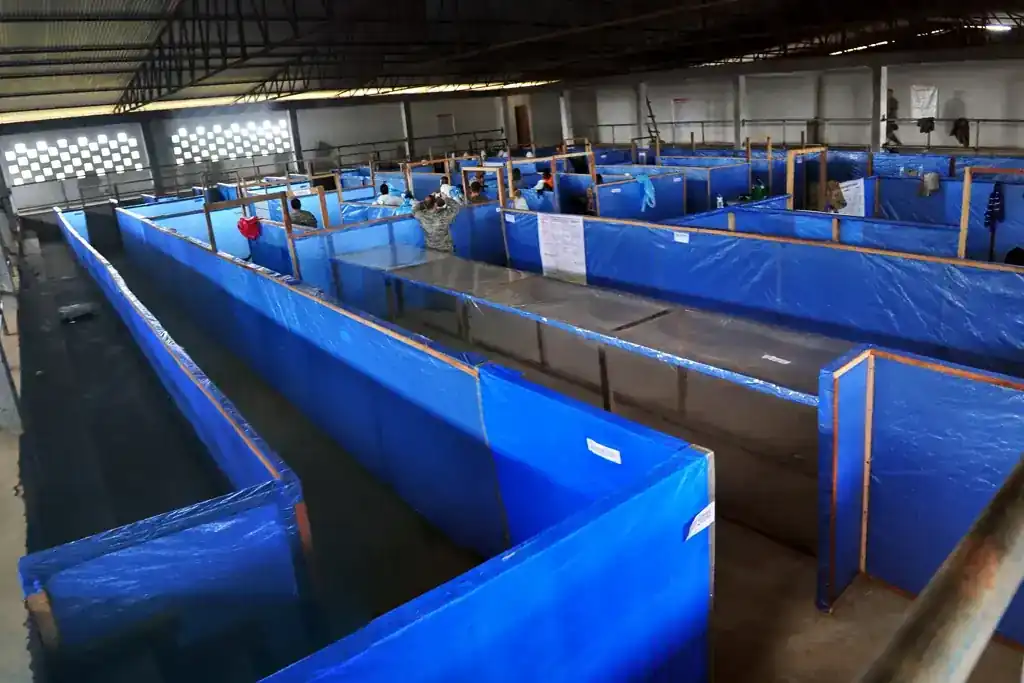
The United Nations reported that an eight-bed Ebola transit center at the site was burned during a period of heightened insecurity.
The facility was operated by International Medical Corps and supported by more than 50 staff, many of whom were themselves displaced people. The UN said the loss of the center reduced the response’s capacity to receive people suspected of having Ebola before transferring them to specialized treatment facilities.
The UN has not established publicly that the center itself was deliberately targeted.
The circumstances surrounding the fire remain under review by national and provincial authorities. The UN has called for health facilities and humanitarian personnel to be protected.
Thousands of displaced people fled the site
The Kigonze site had been sheltering nearly 19,000 displaced people.
The United Nations had already warned that security conditions around the site had deteriorated, with reports of armed violence, threats, intimidation, arrests and forced displacement.
Humanitarian organizations were repeatedly prevented from entering the site to assess needs and provide assistance.
The UN said the deterioration in security caused families to leave the site, further complicating the work of health and humanitarian teams.
For Ebola responders, population movement creates additional difficulties in identifying cases, monitoring contacts and maintaining continuity of care.
Insecurity is complicating disease surveillance
WHO has identified insecurity, population movement and limited access to health services as continuing challenges to the response.
Surveillance is particularly important during an Ebola outbreak because health teams must identify suspected cases quickly, investigate contacts and isolate people who may have been exposed.
WHO reported that community trust is also critical to this process.
In Bunia, surveillance teams have encountered families reluctant to report illness or permit investigations. WHO said community volunteers have been deployed to strengthen early detection and contact tracing.
By late September, WHO said approximately 680 community volunteers had been deployed across 17 health zones, with plans to expand that network.
North Kivu remains a concern
North Kivu is among the provinces affected by the outbreak and has recorded substantial transmission.
WHO’s Sept. 23 data recorded 1,480 confirmed cases in North Kivu, while Ituri remained the largest affected area with more than 6,000 confirmed cases.
The spread into North Kivu is particularly significant because insecurity and armed-group activity can restrict access to communities and health facilities.
WHO has emphasized that the number of reported cases must be interpreted alongside the ability of surveillance teams to reach affected populations.
A decline in reported cases in a particular area cannot automatically be treated as proof that transmission has stopped if health teams cannot reliably access communities and identify cases.
Health workers face difficult operating conditions
The Ebola response depends on health workers, surveillance teams, laboratory personnel, community volunteers and humanitarian staff operating in areas where security conditions can change rapidly.
WHO said limited human resources and difficulties accessing certain localities remained challenges to the response.
The organization has deployed epidemiologists and field coordinators while supporting community surveillance and contact-tracing activities.
The destruction of the Kigonze transit center adds another logistical burden because replacing a facility requires new equipment, staff and operating capacity.
UN Senior Ebola Coordinator Julien Harneis said the loss of a transit or treatment center means the response loses both capacity and previous investment while teams must begin rebuilding services.
Bundibugyo presents a specific medical challenge
The current outbreak is caused by the Bundibugyo species of Ebola virus rather than the Zaire species responsible for several previous major Ebola outbreaks.
That distinction matters because medical countermeasures developed specifically for Zaire Ebola cannot automatically be assumed to have the same effectiveness against Bundibugyo.
The Congolese Health Ministry has said research efforts are underway to evaluate potential treatments against the strain.
In July, the ministry announced that the first patient had been enrolled in the PARTNERS clinical trial, coordinated in the Democratic Republic of Congo by the National Institute of Biomedical Research. The study is evaluating the monoclonal antibody MBP134 and the antiviral remdesivir, administered individually or in combination.
WHO has also reported that vaccines and other countermeasures are being evaluated as part of the response.
Congo is continuing to expand surveillance
Despite the worsening death toll, the response has also expanded its surveillance capacity.
WHO reported that daily alerts had risen substantially since the beginning of the outbreak, with approximately 2,000 alerts being reported each day by late September.
The organization said around 90% of those alerts were being verified by field teams.
Contact tracing had also increased to more than 85%, according to WHO’s Sept. 30 account.
These measures are intended to identify infections earlier and interrupt chains of transmission.
Their effectiveness, however, depends on continued access to affected communities and the ability of health workers to operate safely.
The humanitarian and health crises are increasingly connected
The Ebola outbreak is unfolding alongside a wider humanitarian crisis in eastern Congo.
Displacement has placed large numbers of people in temporary settlements, while insecurity has made access to those communities more difficult.
The Kigonze incident illustrates how those problems can directly affect disease control: the same population movement that increases health risks can also make it harder for responders to maintain treatment, surveillance and contact tracing.
The United Nations has stressed that displacement sites should retain their civilian and humanitarian character and that movements of displaced people should be voluntary, safe and dignified.
The outbreak remains active
The latest national figures indicate that the outbreak has now crossed 4,000 reported deaths and 8,300 confirmed cases.
WHO’s most recent detailed epidemiological report available before those figures recorded 7,890 confirmed cases and 3,799 deaths as of Sept. 23.
The difference reflects the continuing accumulation of cases and deaths after the WHO reporting cutoff rather than a contradiction between the two datasets.
The outbreak has expanded to seven provinces and 63 health zones, while insecurity and displacement continue to complicate access.
The destruction of the Kigonze transit center has further reduced treatment and screening capacity in an area already affected by population movement.
For the Democratic Republic of Congo and its international partners, the immediate challenge is therefore not only treating people who become infected but maintaining the surveillance, treatment, laboratory and community systems needed to identify transmission before it spreads further.
The death toll has passed 4,000, but the epidemiological picture remains dependent on access to affected communities, reliable surveillance and the continued ability of health workers to operate safely.
Reporting Credit: Democratic Republic of Congo Ministry of Health; World Health Organization; United Nations Office for the Coordination of Humanitarian Affairs; Africa Centres for Disease Control and Prevention; National Institute of Biomedical Research; provincial health authorities; International Medical Corps.