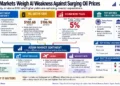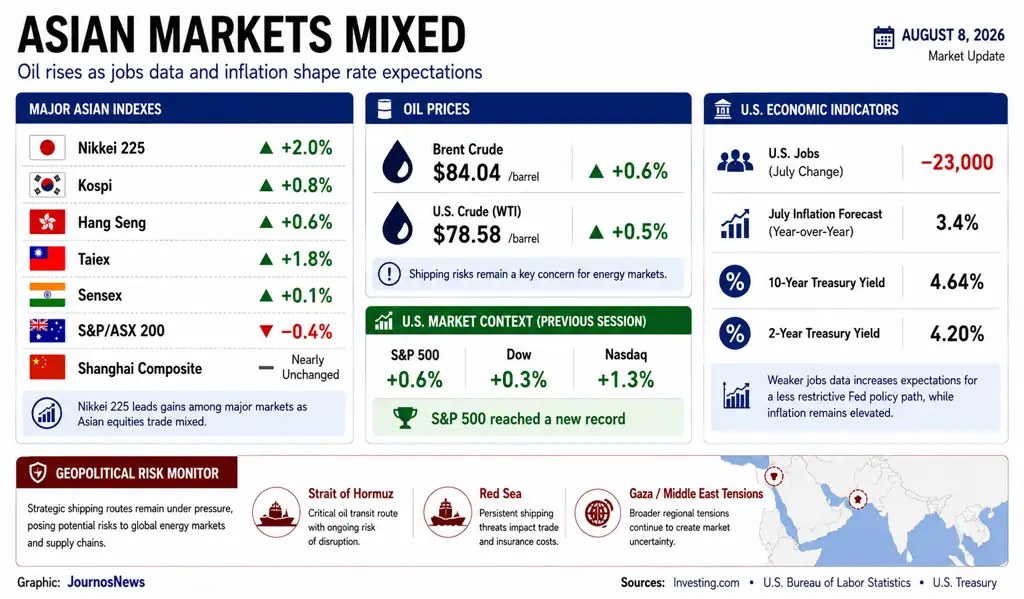
BANGKOK , Thailand – Asian stock markets traded mixed Monday after U.S. equities extended their weekly gains, while higher oil prices added to investor concerns over inflation and potential disruptions to major shipping routes.
Japan’s Nikkei 225 led regional gains, rising 2% to 66,890.02 as technology shares advanced. Tokyo Electron gained 3.5% and Advantest rose 4.9%, helping lift the broader Japanese market.
South Korea’s Kospi rose 0.8% to 6,305.86, although major semiconductor companies declined. Samsung Electronics fell 0.9% and SK Hynix dropped 1.3%, with analysts cited by The Associated Press saying foreign investors were taking profits from recent technology gains and shifting some holdings toward other sectors, including defense.

Hong Kong’s Hang Seng rose 0.6% to 25,810.95, while the Shanghai Composite was little changed at 3,941.48. Taiwan’s Taiex gained 1.8%, India’s Sensex edged up 0.1% and Australia’s S&P/ASX 200 declined 0.4% to 9,231.
Oil prices rise as shipping risks remain in focus
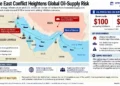
Oil prices moved higher as developments involving Gaza, Iran and Yemen raised concerns about potential disruptions to strategically important shipping routes.
Brent crude, the international benchmark, rose 0.6% to $84.04 a barrel, while U.S. benchmark crude gained 0.5% to $78.58.
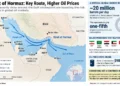
The move followed Israel’s rejection of a Gaza agreement announced by U.S. President Donald Trump and developments surrounding possible arrangements between Iran and Oman over the Strait of Hormuz.
According to The Associated Press, Iran suggested that vessels linked to what it described as “hostile countries” could be barred from the waterway. Separately, Iran-backed Houthi rebels in Yemen attacked a government-held port on the Red Sea coast, adding to concerns about commercial shipping and the potential for renewed conflict.
■ Related News




Higher oil prices can add to inflationary pressure by increasing transportation and production costs, making energy markets an important consideration for investors assessing the outlook for interest rates.
U.S. jobs report changes rate expectations
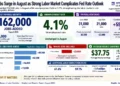
Asian markets were also responding to Friday’s U.S. employment report, which showed employers unexpectedly cut 23,000 jobs last month.
The weaker labor-market reading increased expectations that the Federal Reserve could delay further interest-rate increases as policymakers balance employment conditions against persistent inflation.
U.S. stocks responded positively to the report. The S&P 500 rose 0.6% to 7,757.64, surpassing its previous record, while the Dow Jones Industrial Average gained 0.3% to 54,036.93.
The Nasdaq composite advanced 1.3% to 26,690.62, supported by gains in major technology companies. Nvidia rose 2.3% and Broadcom gained 1.7%.
The employment report also included significant downward revisions to earlier figures. Payroll estimates for May and June were reduced by a combined 103,000 jobs, raising additional questions about the strength of consumer spending as inflation remains elevated.
Treasury yields declined following the report. The 10-year Treasury yield fell to 4.64% from 4.67%, while the two-year yield, which is more sensitive to expectations for Federal Reserve policy, slipped to 4.20% from 4.22%.
U.S. inflation data next in focus
Investors are now awaiting U.S. inflation data due later in the week for further indications of the Federal Reserve’s policy direction.
The consumer price index is expected to show July inflation at 3.4%, slightly below June’s 3.5% rate. According to the supplied AP reporting, inflation has remained above 3% for most of the year.
The data will provide another measure of whether price pressures are easing sufficiently for the Federal Reserve to consider changes to monetary policy.
Currency markets were relatively subdued early Monday. The U.S. dollar rose to 158.37 Japanese yen from 157.71 yen, while the euro slipped to $1.1553 from $1.1568.
For Asian investors, the combination of resilient equity markets, weaker U.S. employment data, persistent inflation and higher energy prices leaves monetary policy and geopolitical risks as key factors shaping trading in the week ahead.
This report is based on reporting by The Associated Press.