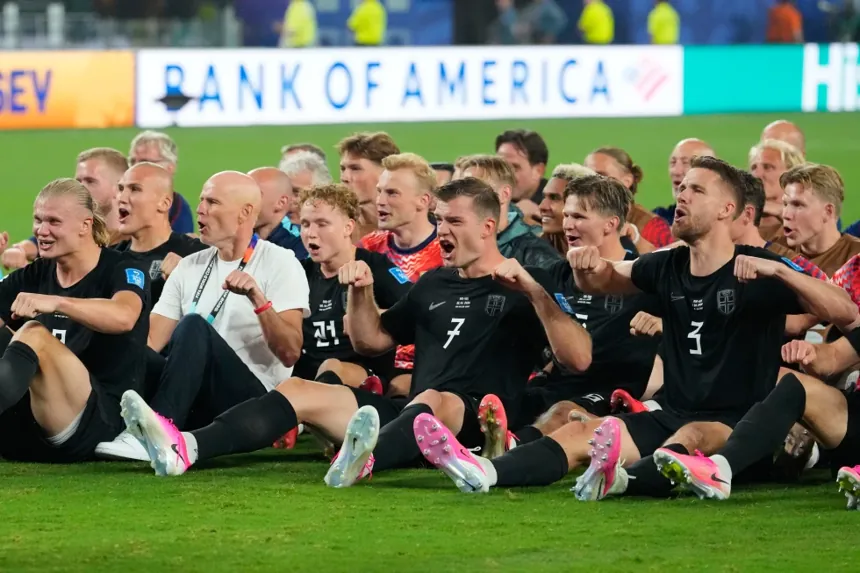
GREENSBORO, North Carolina — Norway’s successful return to the FIFA World Cup has attracted attention both on and off the field, with social media claims circulating that the national team brought food from home because it did not trust the quality of food available in the United States.
However, officials working with the team say those claims are inaccurate. According to Norway’s head chef, the decision to import selected products from Norway was made to maintain consistency in players’ diets and provide familiar foods during a demanding international tournament, not because of concerns about American food standards.
The Norwegian squad is based in Greensboro, North Carolina, during the 2026 World Cup, which is being jointly hosted by the United States, Canada and Mexico.

Imported Foods Intended to Maintain Routine
Aron Espeland, the team’s head chef, said athletes competing at the highest level often rely on familiar foods and established nutrition routines to support performance and recovery.
He said the team has had access to high-quality ingredients in the United States and has combined locally sourced products with a limited selection of foods brought from Norway.
According to Espeland, approximately 580 kilograms (1,276 pounds) of food were shipped from Norway, significantly less than claims circulating online that suggested the team imported around 1,000 kilograms (2,200 pounds).
The shipment included Norwegian salmon and trout, halibut, brown cheese and Jarlsberg cheese.
Espeland also rejected claims that the team imported oranges from Norway. Instead, players receive freshly squeezed orange juice prepared using oranges sourced locally in the United States.



Common Practice Among International Teams
Sports nutrition specialists say transporting selected food items to international tournaments is a longstanding practice among elite teams and should not be interpreted as criticism of a host country’s food system.
National teams frequently travel with chefs and nutrition staff who help maintain established dietary plans during major competitions.
Examples from previous World Cups include South American teams transporting meat products to tournaments abroad and the United States national team bringing familiar food items during international competitions.
Experts note that consistency can help athletes manage travel demands, training schedules, recovery requirements and changing environmental conditions.
Nutrition Experts Emphasize Performance Needs
Rafaela G. Feresin, an associate professor of nutrition at Georgia State University, said the primary objective of bringing familiar ingredients to international events is to reduce uncertainty and maintain stable nutritional routines.
She said such decisions are focused on performance preparation rather than judgments about local food quality.
Sports dietitian Amy Goodson, who has worked with professional sports organizations, said nutrition plays a critical role in athletic performance at elite tournaments such as the World Cup.
According to Goodson, athletes competing at the highest level must carefully manage energy levels, hydration, recovery and overall health during compressed competition schedules.
Maintaining consistent access to familiar foods can help support those goals, particularly when teams are operating in different countries, climates and time zones.
Viral Claims Misrepresent Team’s Approach
The online allegations emerged as Norway enjoyed a strong showing during its first World Cup appearance since 1998.
While the team did transport some food products from Norway, officials and nutrition experts say the practice reflects standard preparation used by many elite sports organizations worldwide.
Team representatives emphasized that their experience sourcing food in the United States has been positive and that locally available ingredients remain an important part of daily meal preparation throughout the tournament.
The case highlights how routine logistical decisions by professional sports teams can sometimes be mischaracterized online, particularly during high-profile international events that attract global attention.
Tags: Norway, FIFA World Cup 2026, United States, Sports Nutrition, Aron Espeland, Greensboro, Fact Check, Norway National Team, World Cup, Athlete Nutrition, Soccer, Viral Claims