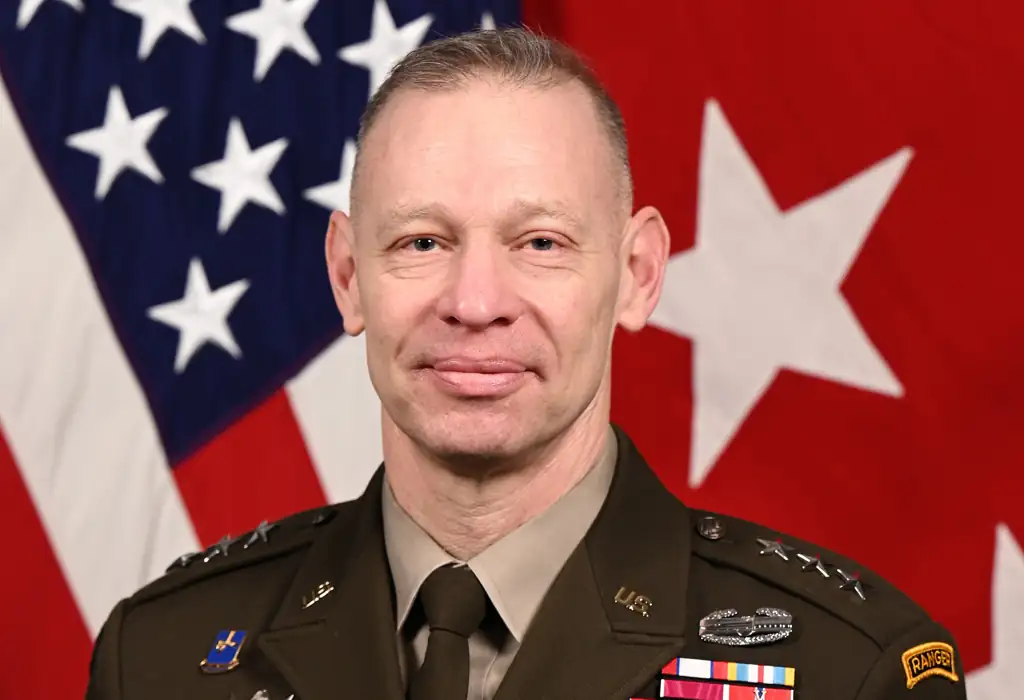
WASHINGTON, United States – The Pentagon has accused Army Lt. Gen. Brett Sylvia of improperly disclosing classified information to journalists about the war involving Iran, Russia’s war in Ukraine and other subjects, following his removal from a senior military planning position. The Defense Department says an investigation by the Air Force Office of Special Investigations led to personnel action and that the matter was referred to the Justice Department. But the publicly available information reviewed for this report does not establish that Sylvia committed a criminal offence, and accounts of the allegations remain disputed.
Chief Pentagon spokesman Sean Parnell said on October 29 that the department had taken action after an “extensive Air Force OSI investigation” to protect sensitive information. He did not identify Sylvia by name in the statement but said the case, along with others, had been referred to the Justice Department for potential further legal action.
The allegations have drawn additional scrutiny because of conflicting accounts from Pentagon sources, Sylvia’s reported denial and questions about the evidentiary value of polygraph examinations. The Justice Department has acknowledged ongoing investigations into possible classified-information leaks, but no criminal charge against Sylvia has been established in the public record reviewed for this report.

Removal Followed Investigation Into Alleged Disclosures
Defense Secretary Pete Hegseth removed Sylvia from his position as director for strategy, plans and policy on the Joint Staff on October 28, according to officials cited in reporting about the personnel decision.
The initial public explanation for the departure did not identify a reason. The following day, Parnell confirmed that an Air Force Office of Special Investigations inquiry had preceded the Pentagon’s personnel action.
A Pentagon official speaking anonymously subsequently alleged that Sylvia had disclosed classified information concerning the Iran war and Russia’s war in Ukraine to journalists. The official also claimed that Sylvia had failed three polygraph examinations related to questions about sharing information with the press.
Those specific claims have not been substantiated by publicly released investigative records. The Pentagon has not published the complete investigation, test records, forensic findings or evidence identifying the information allegedly disclosed.
The distinction matters: an official account of an investigation is not the same as the public release of evidence establishing the underlying allegations.
■ Related News



The J5 Role and Its Importance to Military Planning
Sylvia served as director of the Joint Staff’s Directorate for Strategy, Plans and Policy, commonly known as J5. The US Army’s official General Officer Management Office biography lists him as a lieutenant general and identifies the position as his assignment beginning in December 2025.
The J5 directorate supports the chairman of the Joint Chiefs of Staff in developing military strategy, policy and plans. Its work involves coordinating military planning and considering how national security objectives translate into military options and priorities.
The role is influential, but it should not be confused with command of operational forces. The Pentagon has separately been reported as emphasizing that the Iran campaign’s operational planning falls under US Central Command, rather than Sylvia personally.
The position nevertheless places its director close to sensitive strategic discussions involving the United States and its allies. Allegations that someone in such a role disclosed protected information therefore raise questions about access controls, internal security procedures and the handling of military information.
The Joint Staff initially issued a statement thanking Sylvia and his family for 32 years of service. It later withdrew that statement, saying it had determined that the original wording did not appropriately reflect the circumstances of the personnel matter. The Joint Staff declined to comment further, citing the ongoing personnel process.
No successor to Sylvia had been publicly identified in the reporting reviewed for this article.
Pentagon Claims Three Polygraph Tests Were Failed
The claim that Sylvia failed three polygraph examinations came from an unnamed Pentagon official, not from publicly released test results.
Polygraph examinations measure physiological responses during questioning. They do not directly establish whether a person has disclosed classified information, and their results should not be treated as conclusive proof of misconduct or criminal guilt.
The Pentagon has not released the examination dates, questions, examiner reports, testing conditions or underlying assessments. Without those records, the public cannot independently evaluate the claim or determine how investigators used the results.
Even if the examinations formed part of the investigation, their role must be distinguished from other evidence, such as communications, witness accounts, device records and the classification status of information allegedly disclosed.
A personnel decision can be made through administrative processes without establishing criminal liability. A criminal case, by contrast, requires prosecutors to assess admissible evidence and applicable law. The fact that a department refers a matter to prosecutors does not establish that charges will follow.
Conflicting Accounts Complicate the Pentagon’s Allegations
The public accounts of Sylvia’s case are not uniform.
Two Pentagon sources cited by CBS disputed the allegations against Sylvia, saying the accusations were not true, even while confirming that his removal was connected to the polygraph examinations. Their statements conflict with the account provided by the Pentagon official who alleged that Sylvia failed the tests and disclosed classified information.
A colleague cited in separate reporting said Sylvia denied leaking classified material while acknowledging that he had interacted with journalists. Contact between senior military officials and reporters is not, by itself, evidence of an unauthorized disclosure. The relevant questions are what information was shared, whether it was classified or otherwise protected, and whether the disclosure was authorized.
Another account attributed to an internal investigative report described Sylvia as having admitted to certain disclosures and cooperating with investigators, including providing his personal phone for forensic examination. That account also described communications through Signal and meetings with journalists.
However, the underlying report has not been independently authenticated for this article. Its reported contents therefore cannot be treated as an independently verified investigative finding. The distinction is especially important where the account includes alleged admissions, deleted communications and descriptions of information said to have been shared.
Sylvia did not immediately respond to requests for comment reported by several outlets. A direct response from Sylvia or his legal representative, including a detailed answer to the specific allegations, remains necessary before publication approval.
Justice Department Referral Does Not Mean Criminal Charges
Parnell said the Pentagon had referred the matter to the Justice Department for potential further legal action. The department did not publicly announce a charge against Sylvia in the material reviewed for this report.
A Justice Department spokesperson has separately been quoted as confirming that the department has ongoing investigations related to possible leaks of classified information. That general acknowledgment does not independently confirm the status, scope or investigative steps in Sylvia’s individual case.
The stages of a criminal process are distinct. A referral occurs when one agency sends information to prosecutors for review. Prosecutors may assess whether an investigation is warranted, seek additional evidence or decide that no action is appropriate.
An investigation does not mean a person has been charged. An indictment or criminal complaint is a formal accusation under the legal process, not a finding of guilt. A conviction requires a guilty plea or a finding of guilt through the applicable court process.
No public charge, indictment or conviction involving Sylvia was identified in the material reviewed for this report. The Justice Department’s specific position on the referral, including whether it has opened or continued an individual investigation, remains to be established directly.
Case Adds to Wider Pentagon Leak Crackdown
Sylvia’s removal comes amid a broader effort by Hegseth’s Defense Department to identify unauthorized disclosures to the news media.
The department announced a joint effort with the Justice Department in July to identify sources of classified-information leaks and pursue potential prosecutions. The effort has included increased scrutiny of officials’ contacts with journalists and the use of polygraph examinations, according to reporting on the administration’s measures.
The department has also imposed tighter rules on journalists working at the Pentagon. The restrictions prompted objections from press organizations and led some reporters and news outlets to surrender their Pentagon credentials rather than accept the new conditions.
The policies have intensified a longstanding tension between national-security agencies and the press. Government officials have a responsibility to protect classified information, particularly where disclosure could expose military operations, personnel or intelligence sources to harm. Journalists, meanwhile, have a public-interest role in reporting on government decisions and military policy.
Those interests are not automatically incompatible. The central issue is whether officials disclose protected information without authorization, and whether investigations into those disclosures are conducted fairly, transparently where possible and consistently with applicable law.
The available evidence does not establish that every personnel departure or leak inquiry under Hegseth is part of a coordinated effort to remove particular officials. Each case requires its own evidence and explanation.
Questions Remain About Evidence and Due Process
The Pentagon has publicly described an investigation and a personnel decision, but it has not released the evidence needed to independently assess the allegations against Sylvia.
Important questions remain unanswered: what specific information investigators believe was disclosed; when the alleged disclosures occurred; whether the information was formally classified; which communications or meetings were examined; and what evidence supports the department’s claims beyond the reported polygraph results.
The Justice Department’s handling of the referral also remains unclear. Its acknowledgment of broader leak investigations does not resolve whether prosecutors have opened a specific case, whether further evidence is being collected or whether any charges are being considered.
Sylvia’s reported denial and the conflicting accounts from Pentagon sources make a direct response particularly important. The public also needs a clearer explanation of the standards used to distinguish authorized engagement with journalists from an unlawful disclosure of protected information.
For now, the established facts are that Sylvia was removed from his Joint Staff post, the Pentagon says an Air Force Office of Special Investigations inquiry preceded the personnel action, and the department referred the matter to the Justice Department. The allegations of leaking, the claimed polygraph failures and the reported admissions remain subject to further verification.
Reporting Credit: Reporting based on the US Army General Officer Management Office biography for Lt. Gen. Brett G. Sylvia; the October 29, 2026 public statement by Chief Pentagon spokesman Sean Parnell, as reproduced in contemporaneous reporting; and reported accounts of the Pentagon investigation, Joint Staff personnel statements and the Justice Department’s general acknowledgment of ongoing leak investigations. The underlying AFOSI investigative report, polygraph records, formal referral and a direct response from Sylvia or his representative were not available for independent examination.