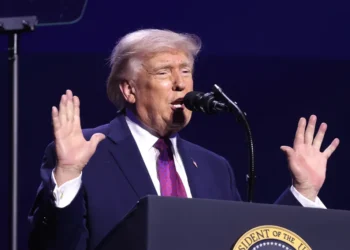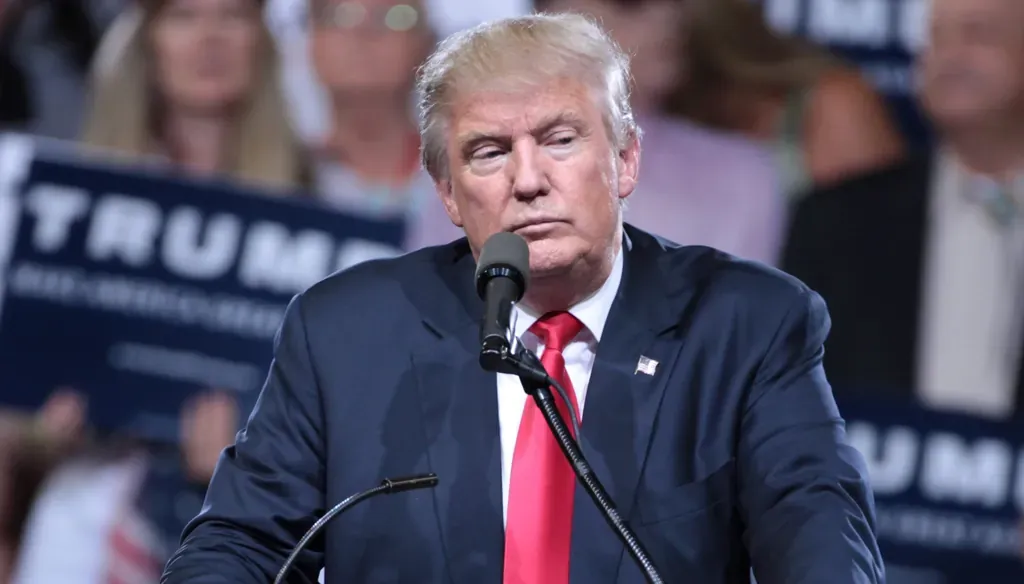
WASHINGTON, United States – The November 3, 2026, midterm elections will test President Donald Trump’s influence over the Republican Party and determine which party controls Congress for the next two years. The results could also shape the political direction of Democrats as they debate how to challenge the administration and prepare for the 2028 presidential election.
The election will decide every seat in the House of Representatives and 33 regularly scheduled Senate seats. Two additional Senate special elections are also scheduled. Republicans currently control both chambers, but Democrats are seeking the gains needed to change that balance.
The stakes extend beyond a contest between two parties. A Republican defeat could expose weaknesses in Trump’s political coalition and raise questions about who will lead the party after his second term. A strong Republican result could reinforce his influence and strengthen the position of candidates who support his political approach.

Democrats face a different challenge. They must persuade voters that they offer a credible alternative while managing disagreements between established party leaders and progressive activists.
Neither party can know the full consequences before votes are counted. The election will provide a measure of public opinion, but it will not settle every internal dispute or determine who will run for president in 2028.
Congressional Control Is the Immediate Prize
The House and Senate have different party balances, election maps and powers. Those differences make the fight for each chamber a separate political contest.
The House Clerk reported 218 Republicans, 214 Democrats, one independent and two vacancies as of October 19. The vacancies are in Florida’s 20th District and Texas’s 23rd District. The two seats do not change the fact that Republicans hold the chamber, but they leave the current membership unusually narrow.
Democrats need a net gain of four seats to reach 218 seats in a full 435-member House. The outcome will depend on individual district races, turnout and the ability of each party to defend its vulnerable seats.
■ Related News



The Senate presents a harder path. Its current lineup is 53 Republicans, 45 Democrats and two independents. Both independents caucus with Democrats, giving the Democratic-aligned side 47 votes. Democrats need a net gain of four seats to reach 51 and take control.
Thirty-three regular Senate seats are up for election. The contests include several open seats and races in states where the parties have different levels of strength. The Cook Political Report’s October 20 ratings placed Alaska, Iowa, Kansas, Maine, Michigan, Ohio and Texas in its toss-up category. It rated Georgia and North Carolina as likely or solid Democratic, while several other Republican-held seats remained in safer categories. These ratings are forecasts, not election results.
The Senate map makes the Democratic route to a majority difficult. The party must win several competitive contests while protecting its own vulnerable seats. A strong national result could help, but state-level candidates and local political conditions will also matter.
Polls Show Democratic Opportunity, Not a Guaranteed Victory
National polling suggests Democrats have an opportunity to gain ground. It does not establish that they will win either chamber.
An October 28 polling average published by On Point Politics placed Democrats ahead by 9.9 percentage points on the generic congressional ballot. Its average included 349 polls and combined surveys with different samples and methods. Individual polls varied, making the average a broad indicator rather than a forecast of the final seat count. <Cite refs={[“turn919261search15”]}/>
An October AP-NORC survey offered another measure of voter sentiment. It found that 47% favored Democratic control of the House, compared with 38% who preferred continued Republican control. On Senate control, 46% favored Democrats and 38% favored Republicans. Fifteen percent were unsure.
The same survey found that 36% approved of Trump’s job performance, while 64% disapproved. It interviewed 1,119 adults from October 8 to 12 using the probability-based AmeriSpeak panel. Its margin of sampling error was plus or minus 3.9 percentage points.
These figures indicate dissatisfaction with the administration and an opening for Democrats. But national opinion does not translate directly into congressional seats. House elections are decided in individual districts, while Senate races depend on statewide electorates.
Voter priorities also differ between parties. A Pew Research Center survey conducted September 28 to October 4 found that 84% of registered voters considered the economy very important to their midterm vote. Healthcare ranked at 68%, education at 62%, immigration at 59% and foreign policy at 57%.
The survey also showed differences between supporters of the two parties. Immigration was very important to 72% of Republican candidate supporters and 53% of Democratic supporters. Healthcare was very important to 82% of Democratic supporters and 53% of Republican supporters.
The figures suggest that both parties face pressure to address everyday concerns. Democrats have emphasized living costs and healthcare. Republicans have placed greater emphasis on immigration, crime and the size of government. Voters will decide whether those messages match their priorities.
Trump’s Influence Faces a Midterm Test
Trump has reshaped the Republican Party since his first presidential campaign in 2016. His political approach placed immigration, national identity, trade, distrust of established institutions and direct confrontation with political opponents at the center of the party’s message.
His coalition brought together long-standing Republican voters and groups of working-class voters who had become less attached to traditional party loyalties. His political appeal also extended beyond some of the demographic groups that had previously formed the Republican Party’s strongest base.
That coalition is not uniform. Republican voters differ on trade, foreign policy, government spending, immigration and the role of the federal government. Some support Trump’s confrontational approach. Others may agree with parts of his agenda but remain concerned about economic conditions or the conduct of the administration.
The midterms will test whether Trump’s personal influence can still bring those groups together. If Republican candidates perform well, he can argue that his political approach remains effective. If they lose seats, critics within the party may question whether his leadership has become an electoral liability.
A poor result would not automatically end his influence. Trump remains president through January 2029, regardless of which party controls Congress. He would retain the constitutional powers of the presidency, including his veto authority and control over the executive branch.
His influence over Republican voters, endorsements and party organization could also remain substantial after an electoral setback. The central question would be whether elected Republicans become more willing to challenge him or continue to depend on his political support.
The Republican Party’s Succession Question
The election will also affect the Republican Party’s discussion about its future after Trump’s second term.
Vice President JD Vance is widely discussed as a potential successor. But he has not announced a presidential campaign. In an October 19 interview, Vance said he had not decided whether to run in 2028. He also said he believed Trump would endorse him if he entered the race, while acknowledging that he had not discussed the matter with the president.
Secretary of State Marco Rubio has also attracted attention as a possible contender. Rubio said in September that he had no plans to run for president at that time and was focused on his government responsibilities. His remarks did not amount to a formal declaration or a permanent rejection of a future campaign.
Other Republicans could enter the discussion as the political landscape changes. But public attention, favorable polling or speculation from political commentators does not make someone a candidate. A formal campaign would require a decision and the steps that follow it.
The midterm results could influence this succession debate in several ways. A strong Republican performance could strengthen Trump’s claim that his approach remains popular and give his preferred successor an advantage. A poor result could encourage other Republicans to argue for a different direction.
Vance and Rubio also represent different political profiles. Vance has become closely associated with Trump’s populist coalition and domestic political agenda. Rubio’s public role in foreign policy gives him a different profile within the administration. Neither man’s future position is settled.
The election will not choose the Republican presidential nominee. It could, however, influence fundraising, endorsements, political organization and the strength of competing factions before the next presidential campaign begins.
Democrats Face a Debate Over Leadership and Direction
Democrats are seeking to regain congressional power while deciding what kind of opposition they should present to Trump.
House Democratic Leader Hakeem Jeffries has made affordability central to the party’s campaign. He has called for action on healthcare costs, tariffs and economic pressures. He has also argued that Democrats would use control of the House to challenge the administration and increase congressional oversight.
Senate Democratic Leader Chuck Schumer has emphasized jobs, healthcare, immigration, voting rights and economic policy. His public policy agenda reflects the party’s established leadership priorities. But Democrats continue to face pressure from activists who want more aggressive action on economic inequality, housing, healthcare and other issues.
The division is not simply between moderates and progressives. It also concerns how Democrats should win elections and use power. Some leaders favor a broad coalition that includes centrist voters in competitive districts and states. Progressive activists argue that the party must offer stronger policies on wages, housing, healthcare and corporate influence.
The Democratic Socialists of America has become one organized force in that debate. Its national and local chapters have endorsed candidates across the country. The organization listed 131 endorsed candidates on November 3 ballots in 30 states and Washington, D.C., according to an October 26 review. Ten were running for the US House, while others sought state and local offices.
Those endorsements do not mean every candidate shares the same political position or that all Democrats support democratic socialism. The candidates have their own platforms and political constituencies. Their election results will help show how much support their campaigns can attract.
The results could also affect the standing of Jeffries and Schumer. If Democrats gain control of one or both chambers, party leaders may argue that their strategy worked. If they fall short, activists and elected officials may demand a change in messaging, leadership or policy priorities.
What the Results Could Mean for 2028
The midterms will influence the political environment before the next presidential election, but they will not determine the nominees.
For Republicans, the question is how the party will maintain its coalition after Trump leaves office. Vance, Rubio and other potential contenders will face pressure to show whether they can attract Trump’s supporters while reaching voters who may not share his political style.
For Democrats, the debate concerns which candidate and political message can unite the party’s different factions. A strong midterm performance could give established leaders greater influence. It could also strengthen progressive candidates who argue that their policies and organizing efforts helped produce the gains.
A poor result could intensify the debate over whether Democrats should move toward the political center, adopt more ambitious economic policies or change their leadership approach.
Fundraising and endorsements will become important indicators as the next presidential cycle approaches. But early political activity should not be confused with a formal campaign. Candidates will still need to build organizations, secure support and compete in state primaries.
The results will also affect which lawmakers gain national attention. Members who lead important investigations, negotiate legislation or become prominent voices within their parties may emerge as potential national figures.
Three Possible Outcomes Could Reshape Washington
The election could produce several different combinations of congressional control. Each would create a different relationship between the White House and Congress.
If Republicans retain both chambers, Trump would continue working with a Congress controlled by his party. Republican leaders would have a better chance of advancing legislation, confirming presidential nominees and limiting investigations led by Democrats. But a narrow majority would still require party unity. Disagreements among Republicans could block legislation even when the party controls both chambers.
If Democrats win the House but Republicans retain the Senate, the two parties would share control of Congress. Democrats could lead House committees, hold hearings and conduct investigations into the administration. They could also shape legislation and use the House’s control over spending bills. The Republican-led Senate would remain responsible for considering presidential nominations and deciding whether to approve legislation that requires its consent.
If Democrats win both chambers, they could exercise stronger oversight and set the congressional agenda. House and Senate committees could investigate administration policies, demand documents and question government officials. Democrats could also advance legislation on healthcare, spending, housing and other priorities.
A Democratic majority would not automatically remove Trump from office or end his executive powers. The president would remain in office through the end of his term. Legislation would still require approval by both chambers and the president’s signature, unless Congress overrides a veto with the constitutionally required votes.
The Senate’s role would be particularly important for presidential appointments and judicial nominations. A change in Senate control could make confirmation hearings and votes more difficult for the administration.
Budget negotiations would also become more complicated under divided government. Congress must pass funding measures or other legislation to keep federal agencies operating. Disputes over spending could raise the risk of a government shutdown.
The midterms could therefore change the balance of power without ending the political conflict between the White House and Congress.
A Verdict on Political Power, Not the End of an Era
The November 3 election will provide a significant measure of Trump’s political standing and the public’s response to his administration. It will also test whether Democrats can turn dissatisfaction into congressional gains.
But the results will not offer a simple verdict on either party’s future. A Republican victory would not prove that all voters support Trump’s policies. A Democratic victory would not establish that the country has embraced every position held by the party’s progressive wing.
The most consequential question may be what each party does after the votes are counted. Republicans will have to decide how closely their future depends on Trump. Democrats will have to decide whether their best path is to strengthen established leadership, embrace more progressive demands or build a coalition that combines both.
The midterms will not decide the 2028 presidential election. They will help determine the political conditions in which that contest begins—and how much power each party has to shape the years ahead.
Reporting Credit: Reporting by Journos News, based on official congressional membership and vacancy records; US Senate party division records; Federal Election Commission reporting schedules; public polling data and methodology published by Pew Research Center and the AP-NORC Center; published congressional leadership statements; official candidate and party materials; and published records of 2026 Democratic Socialists of America endorsements. Election forecasts are attributed to the organizations that produced them and are not presented as official results.