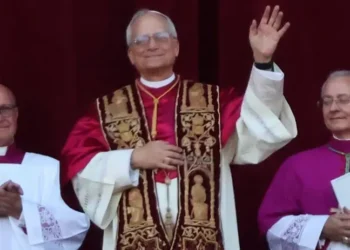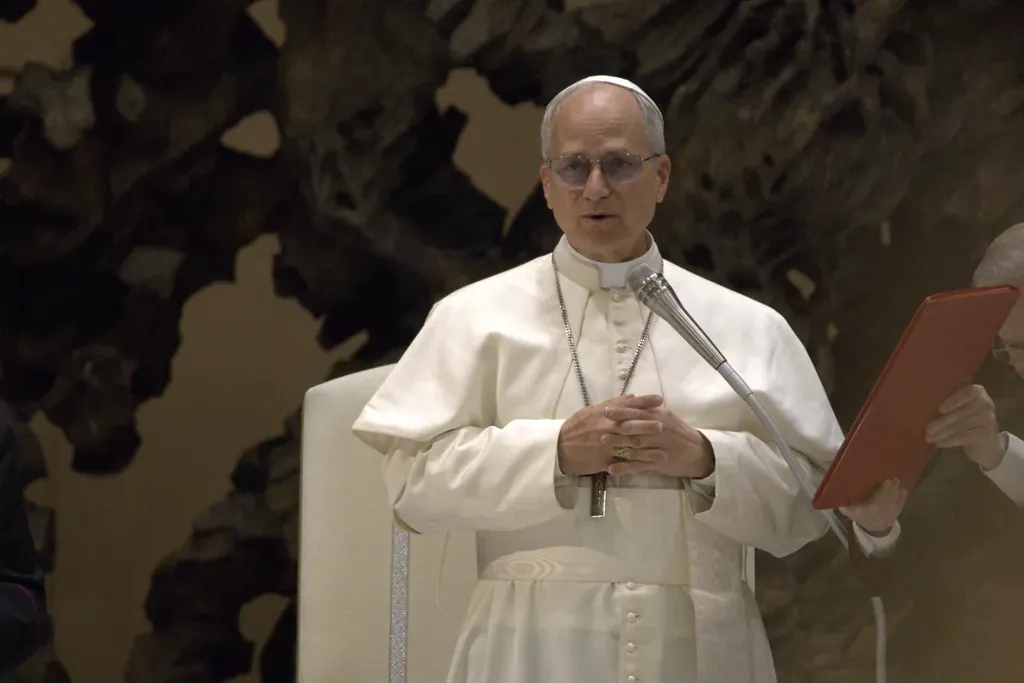
VATICAN CITY– Pope Leo XIV has submitted a mail-in ballot for the November 3 U.S. midterm elections, the Holy See Press Office confirmed on October 30. The Vatican said the pope voted as a United States citizen and described participation in democratic processes as both a right and a duty.
The announcement makes Leo the first known sitting pope to vote in a U.S. election. The historical claim should remain qualified: available public records and reporting do not establish that no previous pope ever voted in an election elsewhere.
The pope, born Robert Francis Prevost in Chicago, submitted his ballot in Chicago, according to the Holy See Press Office. The Vatican also confirmed that he had voted when eligible during his years living in Peru. It did not identify his choices or disclose how he marked the ballot.

What the Vatican Confirmed
The Holy See Press Office issued its statement on October 30 in response to questions from journalists. It said Leo had exercised his voting rights as a U.S. citizen whenever he was eligible.
The statement confirmed that he had submitted his mail-in ballot in Chicago, describing the participation as consistent with a long-standing practice of civic engagement.
It also addressed his years in Peru, where Leo served as a missionary and later as a bishop. The Vatican said he exercised his right to vote there whenever he was eligible.
The statement concluded by expressing the pope’s belief in the right and duty of citizens to participate in democratic processes. It did not identify any candidate, political party or ballot measure he supported. <Cite refs={[“turn941783search3”]}/>
The Vatican’s wording is important. It presents the vote as an exercise of Leo’s rights as an individual citizen. It does not describe the ballot as an endorsement by the Catholic Church or an institutional political position.
■ Related News
Why the Vote Is a Papal First
Leo’s participation is historically unusual because a sitting pope has now confirmed voting in a national election in the country where he was born.
He is the first pope born in the United States. His election as pontiff in May 2025 placed an American citizen at the head of the Catholic Church while preserving his personal citizenship and ability to participate in U.S. elections.
Available historical reporting has found no known example of Leo’s immediate predecessors voting in elections in their countries of origin while serving as pope. Pope Francis retained Argentine citizenship, while John Paul II was Polish and Benedict XVI was German. However, the absence of a documented example is not proof that no previous pontiff ever voted.
The most defensible description is therefore that Leo is the first known sitting pope to vote in a U.S. election. A broader claim that he is the first pope ever to vote in any country’s election would require more complete historical evidence.
His U.S. Citizenship and Voting Rights
Leo was born Robert Francis Prevost in Chicago, Illinois, on September 14, 1955. His American citizenship allows him to vote in U.S. elections even while serving as pope and living in Vatican City.
The Illinois State Board of Elections says U.S. citizens living overseas can vote in federal elections through absentee voting procedures. The state also provides voting-by-mail options for eligible registered voters.
Illinois law does not require voters to live in the state on Election Day if they qualify under the applicable overseas-voting provisions. Election authorities administer ballot applications and returns according to the voter’s registration and voting jurisdiction.
The Vatican confirmed that Leo’s ballot was submitted in Chicago. It did not publish his ballot, disclose his selections or provide details about how the completed ballot was returned.
What the Illinois Records Show
Before the Vatican’s confirmation, information about the pope’s ballot request emerged from election records and statements attributed to the Will County Clerk’s Office.
The office’s chief of staff, Kim Fladhammer, was quoted as confirming that Robert Francis Prevost appeared on the list of people who requested a mail-in ballot for the November election. The request was reported as having been made on October 3.
The reported request date is distinct from the Vatican’s confirmation that the pope had submitted his completed ballot. The Holy See statement did not specify when he returned it. <Cite refs={[“turn177608search12″,”turn177608search2”]}/>
Publicly reported Illinois election records also describe Prevost’s previous participation in primary and general elections. They indicate that he requested Democratic primary ballots in 2008 and 2010, and Republican primary ballots in 2012, 2014 and 2016.
Those records do not reveal which candidates he selected. A primary ballot request also does not establish permanent party membership. Illinois voters can choose which party’s primary ballot they want when voting in a primary. They do not have to register as members of that party.
The records also show that Prevost voted in several general elections, including those in 2012, 2014, 2018 and 2024. These records document participation, not his candidate preferences or political allegiance.
His Voting History in Peru
The Holy See Press Office also confirmed that Leo voted when eligible during his years living in Peru.
Prevost spent many years in the country, first as a missionary and later as bishop of Chiclayo. He became a Peruvian citizen in 2015, giving him citizenship in both the United States and Peru.
The Vatican did not provide specific election dates or identify the elections in which he participated. Its statement establishes that he voted when eligible during his residence in Peru, but it does not provide a complete voting history.
That distinction prevents the statement from being used to infer whether he participated in any particular Peruvian election, including the country’s 2026 presidential and congressional contests.
A Personal Civic Act, Not a Church Endorsement
The Vatican’s statement focuses on civic participation rather than political preference. It does not identify the candidates Leo supported or suggest that his vote represents the position of the Catholic Church.
A pope’s public statements on social and political issues can carry international influence. But the act of casting a personal ballot is separate from an official Church endorsement of a candidate or party.
The distinction is especially important in the United States, where the midterm elections will determine control of Congress and shape the political environment during the remainder of President Donald Trump’s term.
Leo’s participation does not establish support for any political faction. The Vatican has disclosed no information about his selections, and the ballot remains private.
The November 3 Midterm Election
The United States will hold its midterm elections on November 3, 2026. Voters will choose all 435 members of the House of Representatives and candidates in 35 Senate contests, alongside governors and state and local officials.
The Illinois election calendar confirms November 3 as the general election date. Its voting-by-mail rules allow eligible voters to request and submit ballots before Election Day.
Leo’s ballot is therefore one individual vote within a much larger national election. Its historical significance comes from the unusual position of the voter: a sitting pope exercising the rights of a U.S. citizen while leading the Catholic Church from the Vatican.
The Vatican has confirmed the submission and explained the pope’s view of civic participation. It has not disclosed his choices. The significance of the event rests on the confirmed act of voting, not on speculation about whom he supported.
Reporting Credit: Reporting by Journos News, based on the October 30, 2026, statement of the Holy See Press Office; the Vatican News account of the announcement; Illinois State Board of Elections information on voting by mail and overseas voting; and publicly reported Illinois election-record details attributed to the Will County Clerk’s Office. Historical claims are qualified to reflect the limits of available public evidence.