WASHINGTON, United States – The United States has imposed a new visa restriction policy targeting foreign nationals whom the Trump administration says are responsible for, or complicit in, South African laws and policies involving race-based discrimination, incitement of violence and uncompensated land seizures.
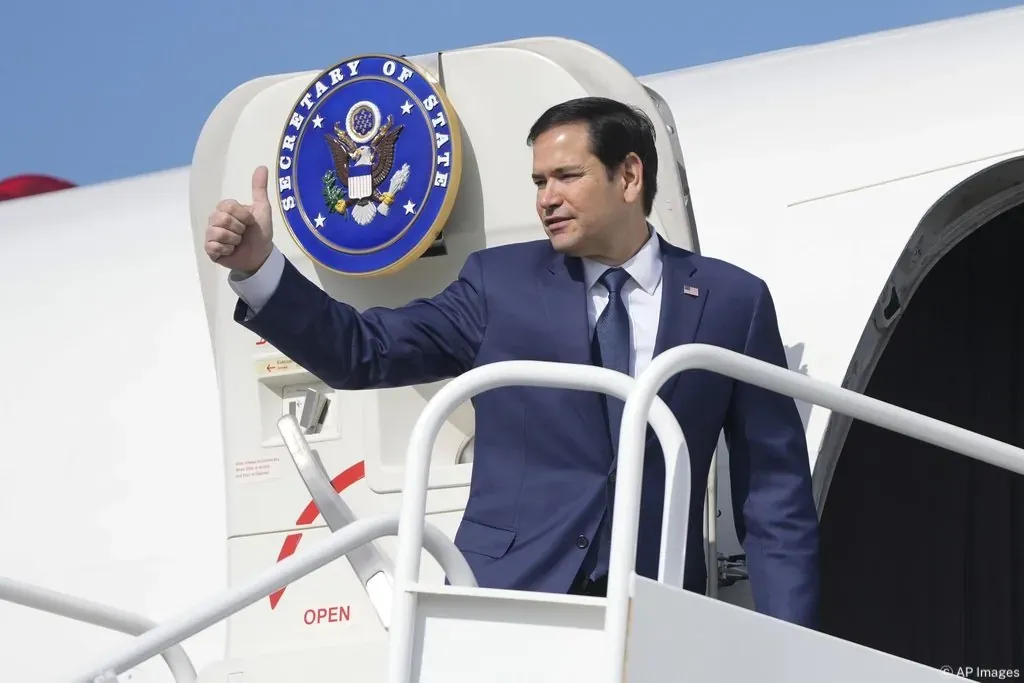
Secretary of State Marco Rubio announced the policy on Sept. 15 under Section 212(a)(3)(C) of the U.S. Immigration and Nationality Act. The provision allows the secretary of state to deem a foreign national inadmissible when their entry could have potentially serious adverse foreign-policy consequences for the United States.
The measure does not amount to a blanket visa ban on South African citizens. It is directed at individuals Washington determines are responsible for, or complicit in, the specified policies. The U.S. government has not publicly identified the people who could be affected.

Washington cites land and race policies
Rubio said the new restrictions respond to what the administration describes as discriminatory legislation, threats of land expropriation without compensation and rhetoric that could incite violence against minority racial or ethnic groups in South Africa.
The announcement builds on President Donald Trump’s Executive Order 14204, issued in February 2025, which directed U.S. agencies to take measures against South Africa over concerns the administration raised about its treatment of Afrikaners and other issues involving the country’s domestic and foreign policies.
The administration has also criticized South Africa’s land-reform policies and its legal action against Israel at the International Court of Justice.
The latest policy, however, specifically establishes visa restrictions for individuals linked to the policies described in Rubio’s announcement.
South Africa rejects Washington’s characterization
South Africa has rejected the U.S. government’s characterization of its domestic policies.



Pretoria says its land-reform measures are intended to address inequalities created by apartheid and colonial-era land ownership patterns. The government has also rejected allegations that Afrikaners are subject to systematic persecution.
South Africa’s foreign ministry said Washington had misrepresented the country’s policies and emphasized South Africa’s sovereign authority to legislate on domestic matters.
The disagreement therefore involves competing interpretations of the same policies. Washington describes some measures as discriminatory or potentially threatening to minority groups, while Pretoria presents them as part of efforts to address historical racial inequality.
No individual targets have been named
The State Department’s announcement establishes the criteria for the restrictions but does not provide a public list of affected individuals.
That leaves the immediate scope of the policy unclear. It is not yet known how many foreign nationals will ultimately be subjected to the restrictions or which specific officials or other individuals will be affected.
The policy can also extend to certain family members of people covered by the restrictions, according to the State Department.
The absence of named targets means the announcement currently establishes a mechanism for imposing restrictions rather than identifying a completed list of visa bans.
Relations between Washington and Pretoria have deteriorated
The visa policy is the latest development in a broader deterioration in U.S.-South African relations.
Trump’s administration previously suspended much of U.S. assistance to South Africa and took diplomatic measures against Pretoria. The administration has also pursued a policy giving priority to Afrikaner refugees in U.S. resettlement efforts.
Washington and Pretoria have disagreed over South Africa’s land policies, its treatment of racial minorities and its foreign-policy positions, including its case against Israel at the International Court of Justice.
South African officials have argued that the dispute reflects an effort by Washington to interfere with domestic policymaking and have called for continued diplomatic engagement.
Further measures could follow
The U.S. ambassador to South Africa has indicated that the visa restrictions could be followed by additional measures, increasing uncertainty over the future direction of the bilateral relationship.
The timing also places the dispute against a broader diplomatic calendar. South African Foreign Minister Ronald Lamola is expected in the United States for the United Nations General Assembly as tensions between the two governments continue.
For now, the new policy gives Washington another instrument for applying pressure to individuals connected to policies it opposes without imposing restrictions on South African nationals as a group.
Its practical impact will depend on whom the United States ultimately designates and whether Pretoria changes any of the policies cited by Washington.
Reporting Credit: U.S. Department of State — visa restriction policy and legal authority; White House — Executive Order 14204 and U.S. policy toward South Africa; South African government and Department of International Relations and Cooperation — official response and positions on land reform and racial policy.