LONDON, United Kingdom — The British government has given the head of the country’s air traffic control provider one week to explain a technical failure that disrupted thousands of flights, while ordering an independent review into the resilience of the system.
Transport Secretary Heidi Alexander summoned NATS Chief Executive Martin Rolfe on Wednesday after the failure at the company’s flight processing system caused widespread cancellations and delays at airports across Britain.
More than 2,000 flights had been cancelled over Tuesday and Wednesday as airlines worked to recover from the outage, with hundreds of thousands of passengers affected by the disruption and its knock-on effects.

Alexander told Parliament that the outage was linked to a technical problem at NATS’ Swanwick site and said she did not believe the incident was unavoidable. The government has nevertheless said it continues to have confidence in Rolfe while he conducts the investigation.
Government demands answers from NATS
The government instructed Rolfe to carry out a full investigation into what happened and report back within a week.
The investigation is expected to establish the cause of the failure, examine the response and identify measures needed to prevent a recurrence. NATS said the technical problem itself had been resolved, although the disruption continued as airlines and airports dealt with displaced aircraft, crews and passengers.
NATS said the failure occurred in its flight processing system. The company has rejected suggestions that the incident was caused by a cyberattack, while saying a full investigation is required to determine exactly what went wrong.
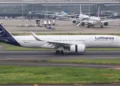
The outage affected major airports including Heathrow, Gatwick, Manchester and Stansted. Heathrow was particularly affected, with significant cancellations continuing after the original system problem had been fixed.
■ Related News

Airlines demand stronger action
The disruption has renewed criticism of NATS following previous technical failures.
Ryanair and Wizz Air have called for changes at the organization, with Ryanair also demanding that Rolfe leave his position. Airlines have argued that repeated failures have imposed substantial costs on carriers and passengers and exposed weaknesses in Britain’s air traffic control infrastructure.
The latest incident follows a major NATS failure in August 2023 that caused widespread flight cancellations and delays. Another technical problem affected UK air traffic control in July 2025, adding to concerns about the resilience of the system.
NATS has defended its operations and apologized for the latest disruption. Rolfe said the company’s immediate priority had been restoring the system and managing the resulting backlog before turning to the investigation into the failure itself.
CAA launches independent review
The government has also asked the Civil Aviation Authority to conduct an independent review of the incident.
The CAA said NATS would provide a technical report and that the regulator would examine what happened and how well NATS is equipped to provide a resilient service in the future.
The regulator has also said passengers affected by the outage should continue to receive assistance from airlines. Under its current interpretation of passenger-rights rules, cancellations and delays directly caused by the NATS failure are likely to qualify as “extraordinary circumstances,” meaning passengers are generally unlikely to be entitled to compensation for those delays.
Airlines must still provide eligible passengers with options for refunds or rerouting and provide appropriate care, including meals and accommodation when required.
The review comes as Parliament considers broader changes to passenger protections, increasing pressure on the government to address both the reliability of the national air traffic control system and the consequences when critical aviation infrastructure fails.
For now, NATS remains responsible for completing the immediate investigation, while the CAA review will provide an independent assessment of the system’s resilience.
Reporting Credit: UK Department for Transport — government response and ministerial oversight; Civil Aviation Authority — independent review and passenger-rights guidance; NATS — technical incident information and operational response.