FAIRFORD, United Kingdom – The United States has withdrawn all of its bombers deployed to RAF Fairford in England and returned the aircraft to their home stations in the United States, the Pentagon confirmed Sunday, days after British authorities arrested suspects in an investigation into possible terrorist activity near the base.
The Pentagon did not publicly say that the redeployment was ordered because of the investigation. It said operational security had prevented the United States from confirming the movement in real time and that its bomber force remained ready to conduct global missions from U.S. bases.
The move removes the entire U.S. bomber contingent that had been operating from Fairford, an important forward location for American long-range aircraft in Europe.

All Deployed Bombers Return to U.S.
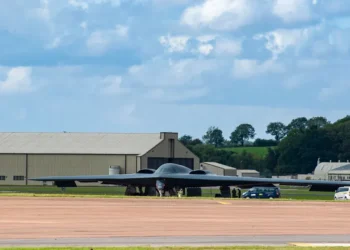
The Pentagon said all U.S. bombers that had been deployed to RAF Fairford had redeployed to their home stations in the United States.
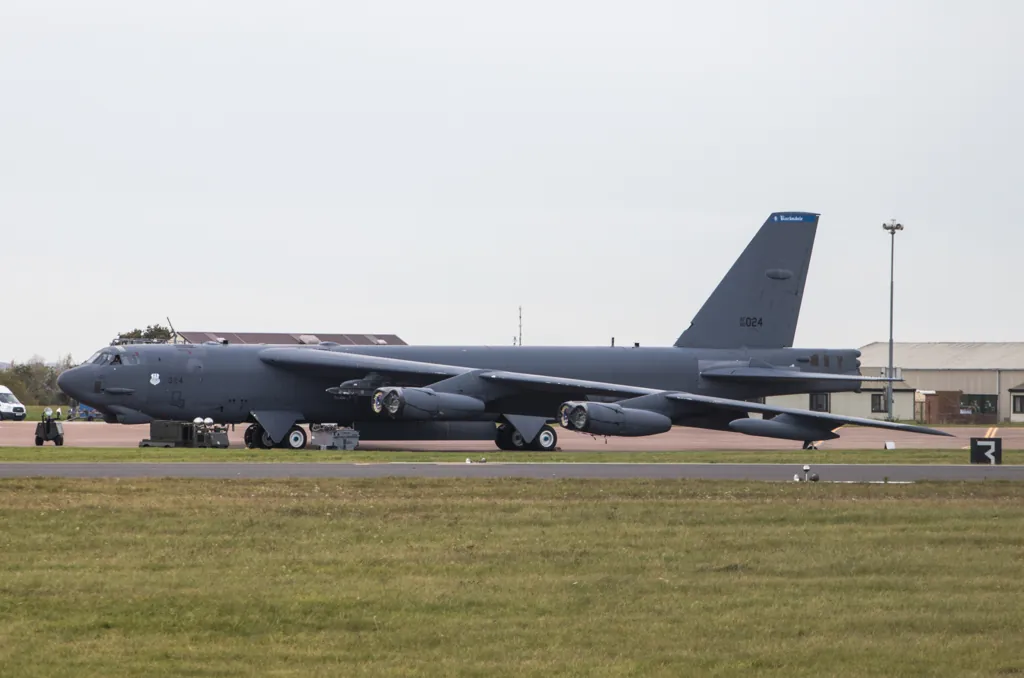
The statement referred to America’s bomber force, including B-1, B-2 and B-52 aircraft, and said the crews and aircraft remained capable of providing precision global strike operations from the continental United States.
That means the withdrawal from Fairford does not represent the end of the U.S. bomber force’s ability to conduct long-range operations.
It also does not mean that the United States has abandoned RAF Fairford or ended its wider military presence in Britain.
Reuters reported that about a dozen B-1 bombers had been operating from the base during the U.S. conflict with Iran. The aircraft had been used in operations against Iranian targets.
■ Related News



Withdrawal Follows RAF Fairford Investigation
The redeployment comes after a security incident near RAF Fairford on Sept. 27.
British Counter Terrorism Policing said officers responded after receiving information about three suspicious vehicles traveling toward the airbase shortly after midnight. Five men were arrested in the Whelford area on suspicion of explosives offenses and preparation of a terrorist act.
The vehicles were examined by police, military personnel and forensic specialists.
Counter Terrorism Policing later said no improvised explosive devices were found, although investigators recovered a quantity of petrol from the vehicles. The five men were released on police bail while the investigation continued.
Police have emphasized that the investigation remains active and that the circumstances, motivation and possible connections of those involved have not been established.
Sixth Suspect Arrested in London
The investigation subsequently expanded beyond Gloucestershire.
On Oct. 1, Counter Terrorism Policing announced the arrest of a dual British-Iranian national in Westminster, London, on suspicion of preparing terrorist acts under Section 5 of the Terrorism Act 2006.
Police also searched two properties in London and questioned another British man under caution.
The dual national was later released on bail.
In its Oct. 3 update, Counter Terrorism Policing identified him as a 25-year-old dual U.K.-Iranian national and said the investigation into the events near RAF Fairford was continuing.
All six people detained in connection with the investigation have therefore been released on bail, while police continue examining the case.
Possible Foreign-State Involvement Remains Under Investigation
British authorities have not established publicly that Iran directed the suspected plot.
Counter Terrorism Policing said investigators were examining multiple lines of inquiry, including the possibility of foreign-state involvement. Police have cautioned against speculation while the investigation proceeds.
U.K. Prime Minister Andy Burnham has separately said there were strong indications that Iran played a part in the incident. Iran has denied involvement.
Those competing positions remain unresolved.
JournosNews therefore does not characterize Iran as responsible for the incident. The available official police information establishes an investigation into suspected terrorist activity and possible foreign-state involvement, but not a final attribution.
Why RAF Fairford Matters
RAF Fairford is a Royal Air Force base in Gloucestershire that has long served as a forward operating location for U.S. strategic bombers.
Its importance increased during the current conflict with Iran, when American bombers operated from the base before carrying out missions in the wider Middle East.
The base’s location gives U.S. aircraft a forward position closer to the European and Middle Eastern operating areas than their permanent stations in the United States.
The withdrawal therefore changes the location from which the deployed bomber force operates, even though the Pentagon says the aircraft remain available for global missions from American territory.
Security Concerns Around U.S. Bases
The Fairford investigation comes amid heightened security concerns surrounding U.S. military facilities connected to the Iran conflict.
The Pentagon’s statement stressed that U.S. bomber operations are routinely conducted around the world and that the force remains prepared to deliver precision global strike capabilities.
The statement did not identify the Fairford investigation as the reason for the redeployment.
That distinction is important because the timing of the withdrawal does not by itself establish causation.
The bombers were removed after the arrests and while the investigation was continuing, but the Pentagon has not publicly stated that the suspects caused the aircraft to be withdrawn.
No Evidence of an Attack on the Base
The Sept. 27 incident also should not be described as a successful attack on RAF Fairford.
British police reported suspicious vehicles near the base and subsequent arrests. Investigators examined the vehicles and found petrol but no improvised explosive devices.
The police investigation concerns alleged preparation of terrorist acts rather than a confirmed attack against the airbase itself.
The distinction is significant because the current evidence describes a suspected plot or preparatory activity, not a completed attack on the facility.
U.S. Bomber Capability Remains Intact
The Pentagon’s position is that the redeployment does not diminish the underlying capability of the U.S. bomber force.
B-1, B-2 and B-52 aircraft can operate from American bases and deploy to other locations when required.
The United States therefore retains the ability to conduct long-range bomber operations even after removing the aircraft from Fairford.
What has changed is the forward deployment at the British base.
For Britain, the investigation also highlights the security implications of hosting a facility that has become closely associated with U.S. military operations in the Middle East.
For Washington, the move separates the bomber force from a location that has become the focus of an ongoing counterterrorism investigation.
Investigation Continues
British counterterrorism authorities have not closed the case.
Police said the investigation remains focused on establishing what happened near RAF Fairford, what the suspects knew, their possible motivations and whether any foreign state or proxy network was involved.
The release of the suspects on bail does not mean the investigation has ended or that authorities have cleared them.
The United States, meanwhile, has removed all deployed bombers from Fairford but says its bomber crews and aircraft remain ready for global operations.
The immediate military change is therefore clear: the U.S. bomber contingent has left RAF Fairford.
The reason for that decision beyond the Pentagon’s stated operational-security considerations remains undisclosed.
Reporting Credit: U.S. Department of Defense/Pentagon; U.S. Air Force; U.S. European Command; U.K. Counter Terrorism Policing; Gloucestershire Police; U.K. government and security authorities; Iranian government statements.