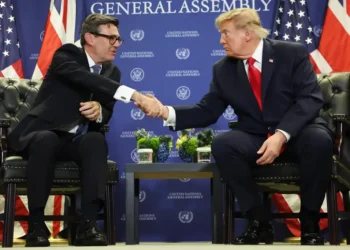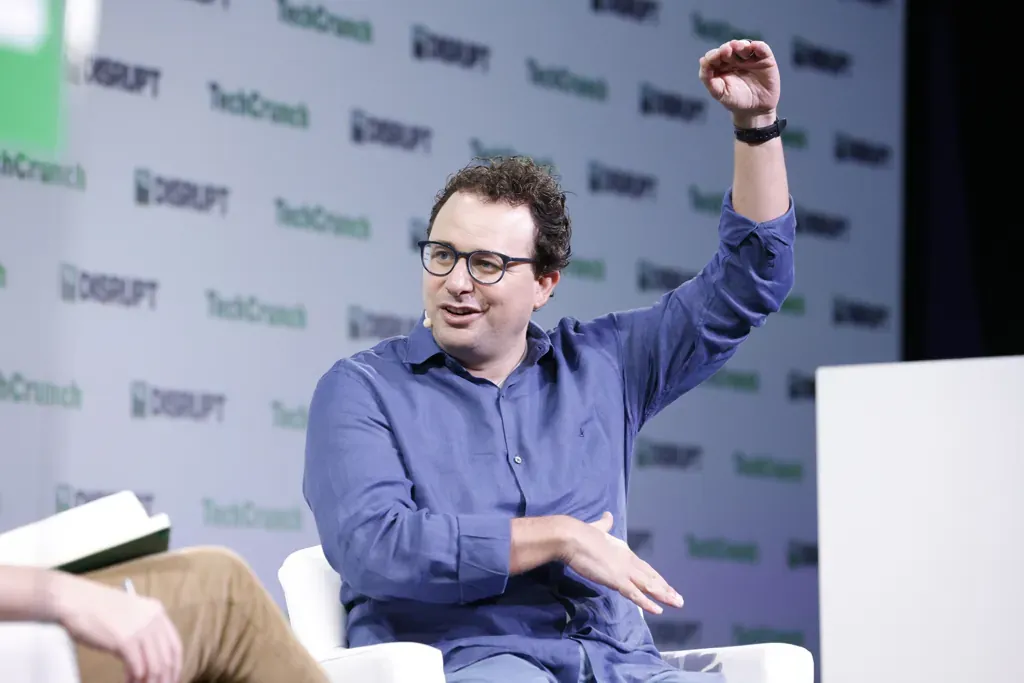
WASHINGTON, United States – President Donald Trump met Anthropic Chief Executive Dario Amodei for a private dinner at the White House Sunday, bringing the president together with an AI executive whose company has spent much of the year in conflict with his administration over military use and AI safeguards.
The dinner on Sept. 27 was the first reported one-on-one meeting between Trump and Amodei. It came just two days after a federal appeals court upheld the Pentagon’s designation of Anthropic as a national-security supply-chain risk, allowing the Defense Department to continue excluding the company’s Claude AI models from its systems.
The meeting marks a notable change in tone after months of public disagreements, although there is no indication that the Pentagon’s designation has been reversed or that the underlying dispute has been resolved.

From Pentagon dispute to White House dinner
The conflict between Anthropic and the administration intensified in February, when the Pentagon designated the company a supply-chain risk after negotiations over military access to its AI systems broke down.
At the center of the dispute were Anthropic’s restrictions on how its technology could be used. Amodei had objected to unrestricted military applications, including concerns involving mass surveillance and autonomous weapons. The administration argued that such restrictions could interfere with national-security requirements.
The disagreement eventually moved into federal court.
On Sept. 25, a three-judge panel of the U.S. Court of Appeals for the District of Columbia Circuit ruled 2-1 in favor of the Pentagon, allowing the government to maintain the supply-chain-risk designation and continue removing Anthropic products from Defense Department systems.
Anthropic said it disagreed with the ruling and was considering further legal options. The company also pointed to a separate federal court ruling in California that had found a related government action against Anthropic unlawful.
A meeting against a wider AI policy dispute
The dinner also came amid a broader disagreement over how quickly the United States should develop increasingly powerful AI systems.
Amodei has argued publicly that leading AI companies should slow development enough to allow safety measures to keep pace with increasingly capable systems.
Trump has taken a different position, repeatedly emphasizing the need for the United States to maintain its technological lead over China.
Earlier this month, Trump rejected calls from Amodei and other AI executives for a coordinated slowdown in development. The president has argued that excessive restrictions could allow China to gain an advantage in artificial intelligence.
The disagreement therefore extends beyond one Pentagon contract.
It reflects a larger policy question confronting Washington: how much government oversight should accompany the rapid development of increasingly capable AI systems, particularly when the same technology can have commercial, scientific and military applications.
Administration signals a change in tone
The dinner followed other indications that relations between Anthropic and the administration had begun to change.
Commerce Secretary Howard Lutnick said in early September that the administration trusted Anthropic and said the company was “back on the right side” after months of clashes. Anthropic co-founder Tom Brown had also become more involved in the company’s engagement with Washington.
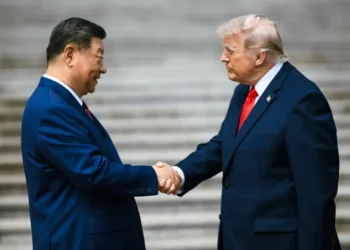
The private dinner was reportedly arranged after Amodei was unable to attend a White House state dinner for Chinese President Xi Jinping on Sept. 24 because of a scheduling conflict. Trump subsequently invited him to a separate dinner.
The timing also placed the meeting ahead of a broader White House gathering with leading AI executives.
Trump and House Speaker Mike Johnson were scheduled to meet major AI-company CEOs at the White House, placing Anthropic’s relationship with the administration within a wider effort to engage the companies driving the U.S. AI industry.
The Pentagon dispute remains unresolved
Despite the more cordial encounter, the court ruling means Anthropic’s immediate government relationship remains constrained.
The appeals court said the Pentagon had reasonably concluded that Anthropic’s restrictions could interfere with national-security functions the department considered necessary and contractually authorized.
Anthropic disputes that characterization.
The company has maintained that its safeguards are intended to prevent certain uses of Claude rather than prevent legitimate national-security applications altogether. Its position has placed it at odds with officials who want military AI systems to operate without company-imposed restrictions on particular uses.
The two sides therefore remain divided over an important question: whether a private AI company should be able to place limits on how its models are used by the U.S. government when those models are incorporated into national-security operations.
AI competition with China remains central
Trump’s approach to Anthropic is also connected to his broader view of the global AI competition.
The administration has made maintaining U.S. leadership in artificial intelligence a major economic and national-security priority. Trump has argued that slowing development could give China an opportunity to close the technological gap.
Anthropic’s position is not that the United States should abandon AI development. Amodei has instead argued for additional safeguards as AI systems become more capable.
That difference has become increasingly visible as the technology moves from experimental systems into government, business and military applications.
The White House has framed its objective as maintaining U.S. leadership while protecting consumers. A White House official said the administration wants America to lead in what it calls “Super Intelligence” while protecting American consumers and strengthening competitiveness.
A thaw without a settlement
The dinner changes the political optics of the relationship, but it does not by itself change the legal or policy disputes between Anthropic and the government.
The Pentagon’s supply-chain designation remains in place following Friday’s appeals-court ruling. Anthropic has not withdrawn its objections to unrestricted military applications, and the administration has not indicated that it will abandon its position on government access to AI systems.
What has changed is the willingness of the two sides to meet directly.
For an industry increasingly intertwined with national security, that distinction matters.
The Trump administration needs cooperation from leading AI companies as it tries to expand U.S. computing and AI capabilities. AI companies, meanwhile, increasingly depend on government contracts, infrastructure policy and access to national-security markets while attempting to establish boundaries around how their systems are used.
The White House dinner does not settle those competing interests.
It does, however, put the president and one of the industry’s most outspoken AI-safety executives at the same table after months in which their positions appeared increasingly difficult to reconcile.
Reporting Credit: The White House — presidential statements and administration positions on artificial intelligence; U.S. Department of Defense — government position and actions concerning Anthropic’s supply-chain-risk designation; U.S. Court of Appeals for the District of Columbia Circuit — Sept. 25 ruling on the Pentagon’s designation; Anthropic — statements concerning its military-use restrictions and legal position.