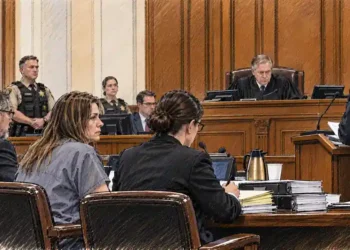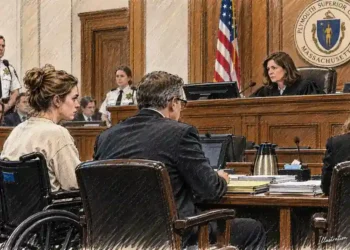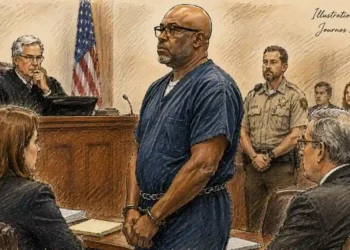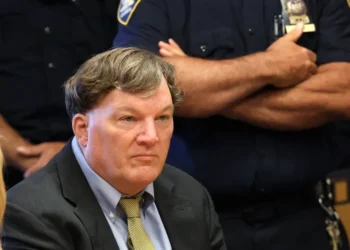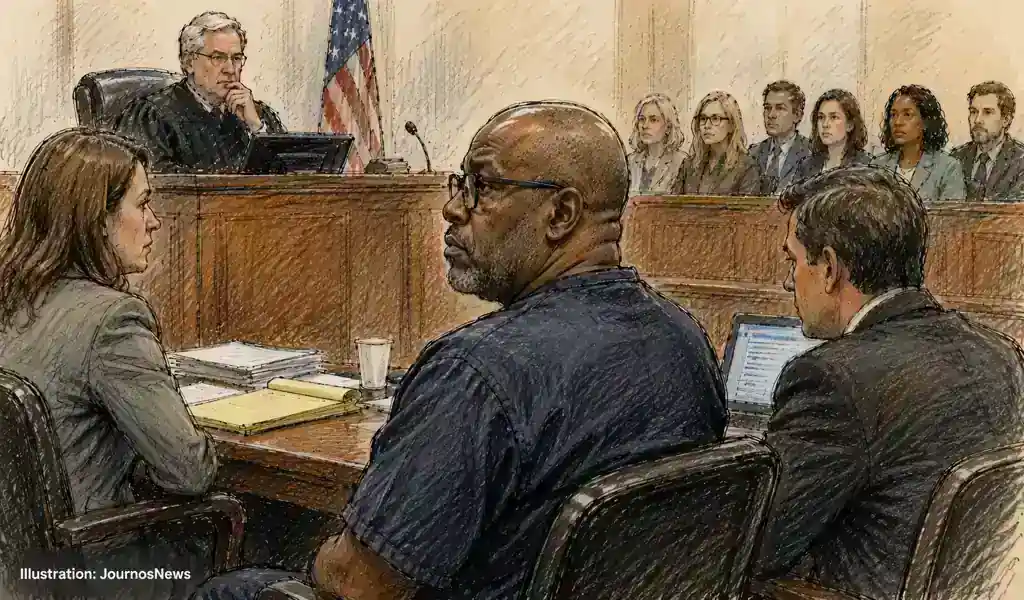
NEVADA, Las Vegas – Closing arguments are beginning Monday in the murder trial of Duane “Keffe D” Davis, the only person ever charged in connection with the 1996 killing of rapper Tupac Shakur, bringing a nearly 30-year-old homicide case to its final stage.
Davis, 63, faces one count of murder with a deadly weapon with the intent to promote, further or assist a criminal gang. He has pleaded not guilty and faces a possible life sentence if convicted.
After closing arguments, Judge Carli Kierny is expected to turn the case over to the jury for deliberations.

Prosecutors say Davis orchestrated the attack
Prosecutors do not allege that Davis personally fired the shots that killed Shakur.
Instead, they say Davis was the leader who organized the attack and supplied the gun to members of the group traveling with him in a white Cadillac.
The prosecution’s case rests heavily on Davis’ own statements over the years. Investigators played recordings of interviews and conversations in which Davis described being in the Cadillac, obtaining the firearm and handing it toward the back seat before the shooting.
Prosecutors argue that those accounts amount to admissions of his involvement and are consistent enough to establish his role in the killing.
Under Nevada law, prosecutors do not have to prove that Davis personally pulled the trigger if they establish that he intentionally helped facilitate the murder.
■ Related News




Defense attacks Davis’ credibility
Defense attorney Michael Sanft has presented a fundamentally different explanation.
He argues that Davis exaggerated his involvement for money, publicity and notoriety, and that his accounts cannot be trusted simply because he repeatedly told versions of the story.
The defense has emphasized the absence of physical evidence independently placing Davis in Las Vegas at the time of the shooting.
Retired Las Vegas homicide detective Dan Long, who interviewed Davis in 2009, testified that he believed Davis’ account but acknowledged that investigators were unable to independently verify several important details.
Davis did not testify during the trial.
The 1996 shooting
Shakur was in Las Vegas on September 7, 1996, attending a Mike Tyson boxing match at the MGM Grand with Death Row Records co-founder Marion “Suge” Knight.
Earlier that evening, Shakur’s entourage became involved in a confrontation with Orlando “Baby Lane” Anderson, Davis’ nephew and a member of a rival gang.
Prosecutors say the confrontation provided the motive for the subsequent attack.
Later that night, Shakur and Knight were traveling in a BMW when a white Cadillac pulled alongside them near the Las Vegas Strip.
Gunfire erupted.
Shakur was struck multiple times and died six days later at age 25. Knight survived the shooting after suffering injuries.
The shooter remains unidentified
One of the most significant unresolved questions is who actually fired the fatal shots.
Prosecutors have not identified the shooter in court.
Davis has provided varying accounts over the years. In some versions, he identified Anderson as the gunman; in others, he said he did not know who fired the shots. Anderson died in an unrelated shooting in 1998. The other two men believed to have been in the Cadillac have also died.
Davis is therefore the only surviving person known to have been inside the Cadillac.
Davis’ words are the centerpiece of the case
Prosecutors presented hours of recordings during the trial.
Those recordings included police interviews, documentary appearances, other public statements and conversations with investigators.
Davis also co-authored the 2019 memoir “Compton Street Legend,” in which he described his involvement in the events surrounding Shakur’s death.
The prosecution argues that the repeated nature of Davis’ accounts makes it difficult to dismiss them as simple boasting.
The defense says the opposite: that the inconsistencies demonstrate why the statements should not be treated as reliable confessions.
Physical evidence remains a major issue
The defense has repeatedly pointed to the lack of physical evidence connecting Davis directly to the crime.
Long testified that investigators could not independently establish that Davis was in the Cadillac that night through records such as phone data or rental records.
Investigators also discussed a Las Vegas hotel bill discovered at Davis’ residence, but questions remained about its date and the current location of the evidence.
That evidentiary gap is likely to be central to the defense’s closing argument.
The prosecution, meanwhile, is expected to argue that the age of the case explains why investigators have fewer physical records than would be available in a modern homicide investigation.
A gang rivalry sits behind the prosecution’s theory
Prosecutors have also presented evidence about the violent rivalry between the South Side Compton Crips and the Mob Piru gang, which was associated with Shakur and Death Row Records.
A former gang investigator testified that Davis was a senior figure whose authority could influence whether younger members carried out violent acts.
The prosecution’s theory is that the confrontation involving Anderson created an immediate motive for retaliation.
The defense disputes that Davis’ alleged position or past statements are enough to prove that he organized the killing.
Jury faces a credibility question
The trial ultimately presents jurors with competing interpretations of the same central evidence.
The prosecution says Davis repeatedly described his role in the shooting because he was telling the truth.
The defense says he repeatedly described his role because he benefited from telling sensational stories about one of the most famous unsolved killings in music history.
The jury must determine whether the evidence proves Davis’ guilt beyond a reasonable doubt.
What Happens Next
Closing arguments will be followed by jury instructions from Judge Kierny and deliberations by the jury.
A verdict could provide the first criminal judgment in the nearly three-decade-old investigation into Shakur’s killing.
Regardless of the outcome, the case has already become one of the most closely watched criminal trials in hip-hop history.
Key Facts
- Defendant: Duane “Keffe D” Davis
- Age: 63
- Charge: Murder with a deadly weapon involving criminal-gang activity
- Victim: Tupac Shakur
- Killing: September 7, 1996
- Location: Las Vegas, Nevada
- Shakur’s age at death: 25
- Davis’ plea: Not guilty
- Prosecution witnesses: 24
- Defense witnesses: 3
- Alleged shooter: Not identified by prosecutors
- Closing arguments: August 31, 2026
- Next stage: Jury deliberations
- Status: TRIAL — CLOSING ARGUMENTS
Reporting Credit: Eighth Judicial District Court of Nevada, Clark County — trial proceedings and court rulings; Clark County District Attorney’s Office — prosecution; Las Vegas Metropolitan Police Department — homicide investigation.